Bayeux and the D-Day Museum Circuit
If you’re planning a trip to the D-Day beaches, there’s one decision that will shape your whole visit: where to base yourself. And for most first-time visitors, the answer is Bayeux.
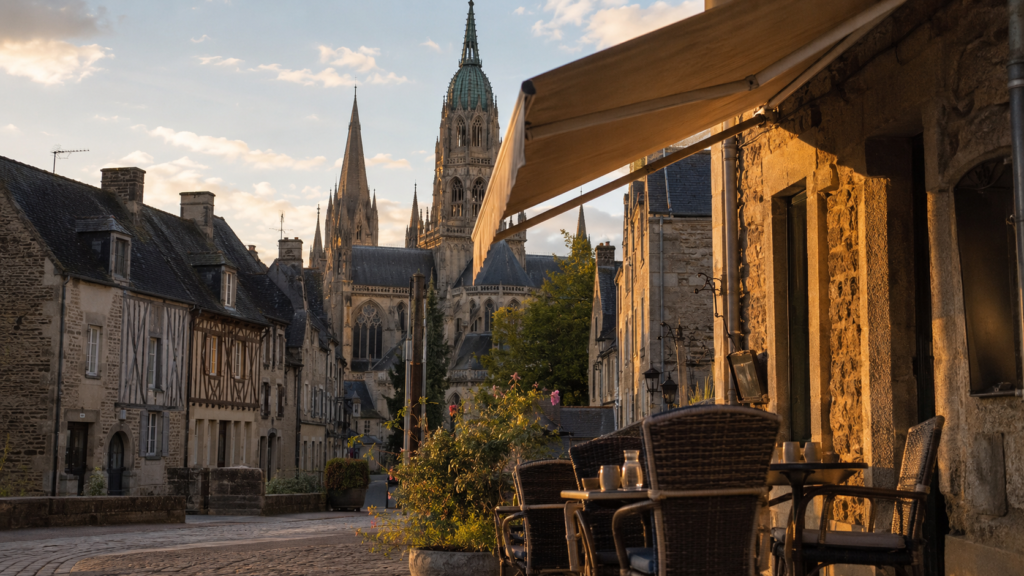
This small cathedral town sits just ten minutes’ drive from the coast, escaped the war almost untouched, and is ringed by the finest collection of WWII museums anywhere in the world. Over three or four days you can build what I think of as the D-Day museum circuit — a loop of five essential museums, each telling a different part of the story, all within easy reach of your Bayeux hotel.
This guide covers the full circuit: what each museum actually covers (they overlap far less than you’d expect), how long to allow, which ones to prioritise if you’re short on time, and how to weave the beaches and cemeteries in between.
Why base yourself in Bayeux?
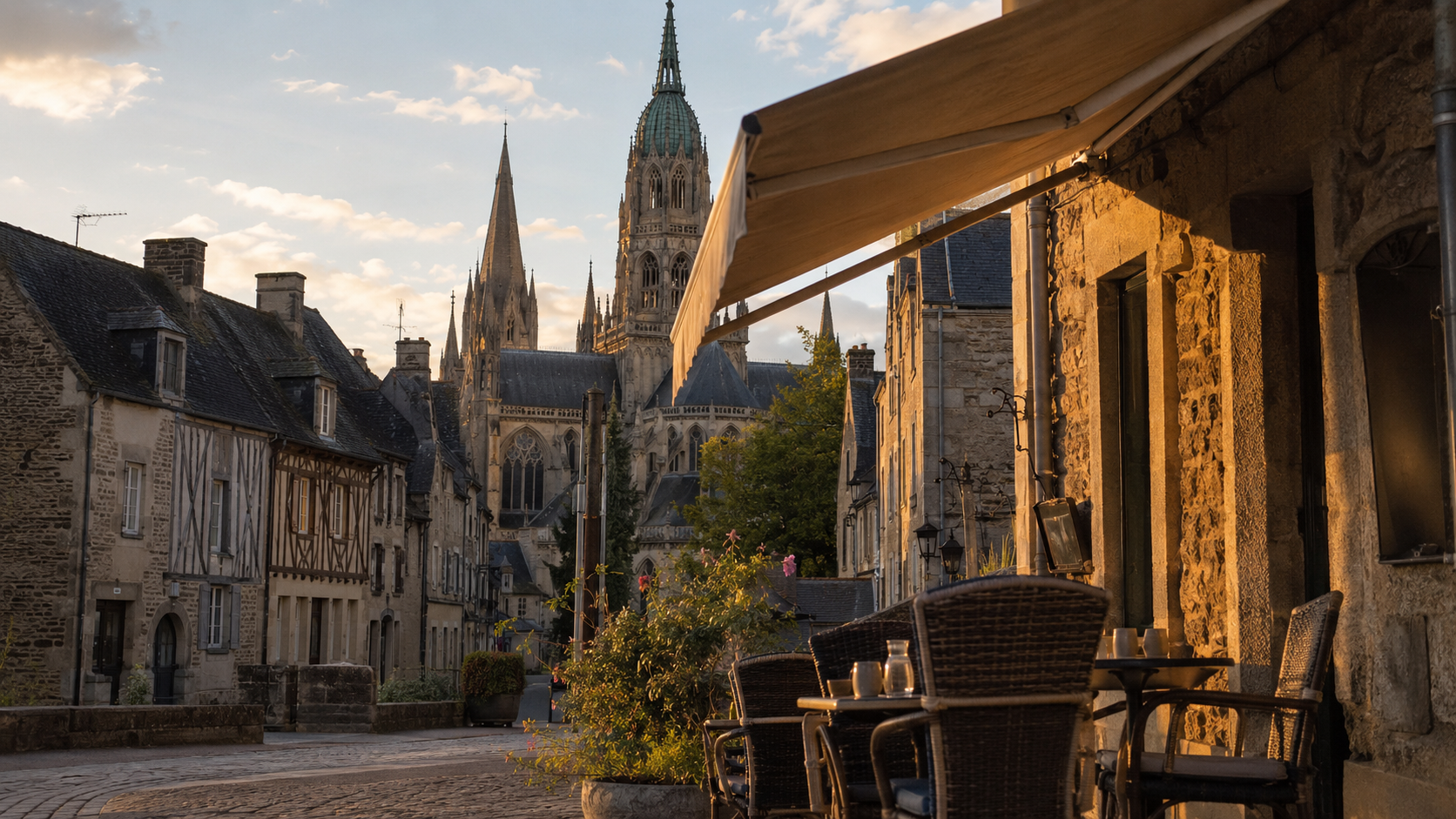
Bayeux was the first major town liberated after the landings — British troops entered on 7 June 1944, the day after D-Day — and, remarkably, it survived the Battle of Normandy with barely a scratch. While Caen, Saint-Lô, and Le Havre were flattened, Bayeux kept its medieval streets, its glorious cathedral, and its famous tapestry.
Free Download
The WWI Battlefield Visitor Checklist
Everything to see, pack, and plan before you visit the Western Front — straight to your inbox.
No spam — just battlefield travel guides. Unsubscribe any time.
That makes it a genuinely lovely place to stay, not just a convenient one. You get cobbled lanes, good restaurants, and a walkable centre — plus the largest British war cemetery in Normandy on the edge of town. From Bayeux, every major D-Day site is within a 45-minute drive: Omaha Beach is 20 minutes, Arromanches 15, the American Cemetery 25, and Utah Beach about 45.
Practical tip: Bayeux fills up fast between April and September, and books out completely around the D-Day anniversary on 6 June. If you’re travelling in early June, book accommodation six months ahead — I’m not exaggerating.
The circuit at a glance
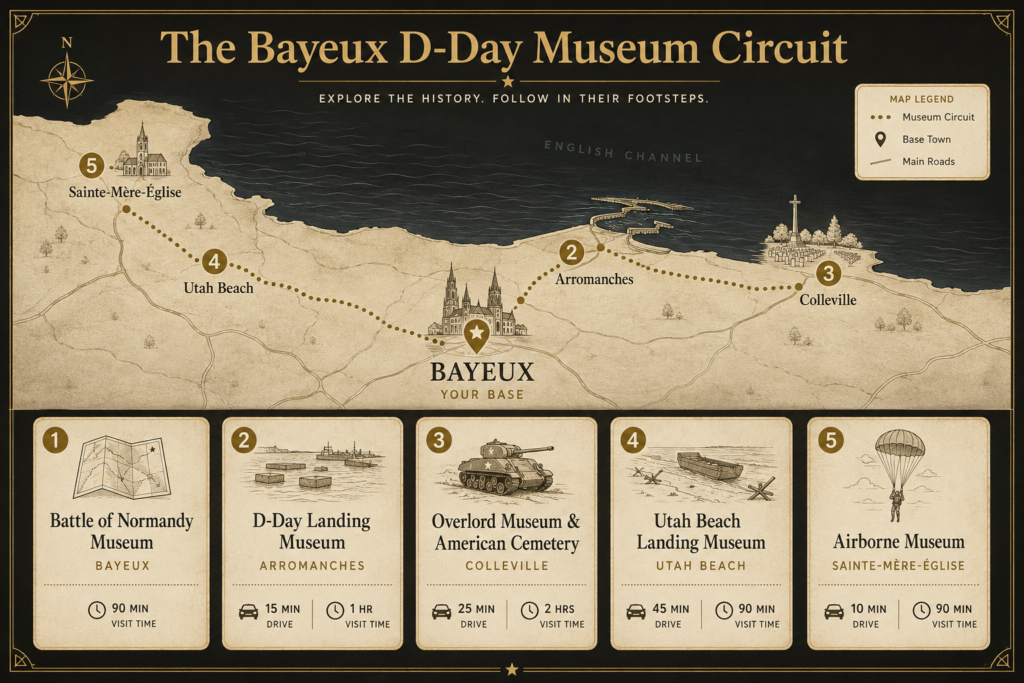
The five museums below form the core circuit. Each is genuinely distinct:
- Musée Mémorial de la Bataille de Normandie (Bayeux) — the strategic overview of the whole 77-day campaign
- Musée du Débarquement (Arromanches) — the Mulberry harbours and the logistics miracle
- Overlord Museum (Colleville-sur-Mer) — vehicles, equipment, and life on the ground, beside the American Cemetery
- Utah Beach Landing Museum (Sainte-Marie-du-Mont) — the American landings in the west, with an original B-26 bomber
- Airborne Museum (Sainte-Mère-Église) — the paratroopers who dropped in before dawn
If you have time for a sixth, the Mémorial de Caen sits 30 minutes east and zooms out to the entire war and its causes — brilliant, but a half-day commitment in itself.
Museum 1: Musée Mémorial de la Bataille de Normandie, Bayeux
Start here, on your first morning, before you see anything else. The Battle of Normandy Memorial Museum is the only museum on the circuit that covers the whole campaign — not just 6 June, but the brutal eleven weeks that followed, from the bocage fighting to the closing of the Falaise Pocket in late August.
Walking through it first gives you the framework that makes everything else make sense. You’ll understand why the Mulberry harbours mattered, why Caen took so long to fall, and why the fighting inland was in many ways worse than the landings themselves.
Allow 90 minutes to two hours. It’s a five-minute walk from the town centre, and the Bayeux War Cemetery and Memorial to the Missing sit directly opposite — visit them together. The cemetery holds over 4,000 Commonwealth graves, and the Latin inscription on the memorial has a poignant symmetry: the descendants of William the Conqueror’s companions returning to liberate his homeland.
WWI Cemeteries and Memorials: A Guide to CWGC Sites in Belgium and France — for readers interested in how the CWGC works
Museum 2: Musée du Débarquement, Arromanches
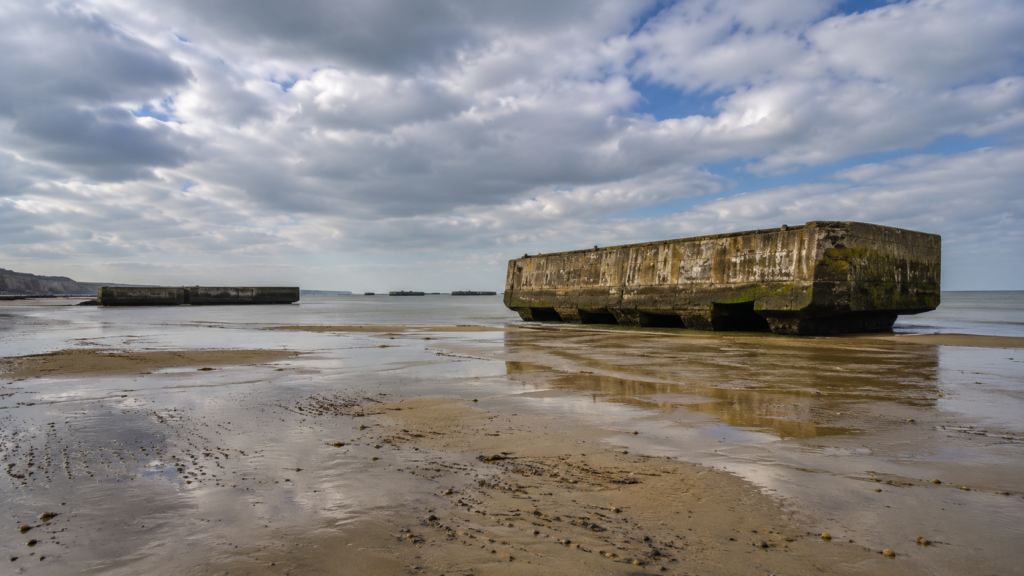
Fifteen minutes north of Bayeux, Arromanches-les-Bains was the site of Mulberry B — the artificial harbour towed across the Channel in pieces and assembled off the beach in days. The concrete caissons are still there, visible in the bay at every tide, which makes this the only museum on the circuit where the main exhibit is sitting outside the window.
The museum, rebuilt and reopened in 2023, tells the logistics story: how the Allies supplied an invasion force of millions without capturing a working port. Working models show how the floating roadways rose and fell with the tide. It’s the engineering chapter of D-Day, and children tend to love it — moving parts, giant machines, and the wreckage visible on the sand.
Time your visit for low tide if you can, then walk down onto the beach among the harbour remains. Allow an hour for the museum, plus beach time.
Museum 3: Overlord Museum, Colleville-sur-Mer
The Overlord Museum sits at the roundabout leading to the Normandy American Cemetery, which makes pairing them the natural move — museum first, cemetery after.
This is the hardware museum of the circuit: one of the largest private collections in Normandy, with more than 35 vehicles including tanks, half-tracks, and artillery, arranged in dioramas built from a single collector’s lifetime of gathering. Where the Bayeux museum gives you strategy, Overlord gives you the physical scale and weight of the thing — you stand next to a Tiger-hunting Sherman and understand something no map can convey.
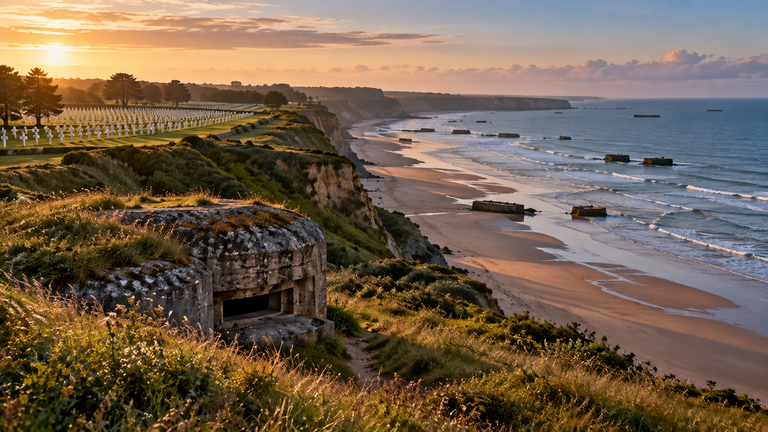
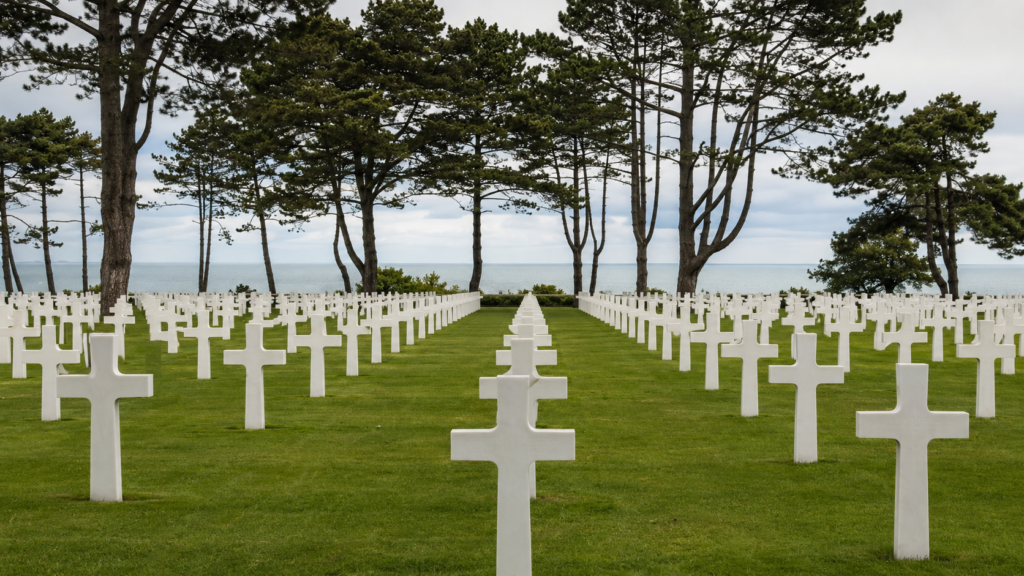
Allow an hour, then give the American Cemetery itself the unhurried time it deserves. The rows of white marble crosses and Stars of David above Omaha Beach are the emotional centre of any Normandy trip.
The American Cemetery at Colleville-sur-Mer: A Visitor’s Guide · Omaha Beach: What to See, Where to Stay, and How to Honour the Fallen
Museum 4: Utah Beach Landing Museum
The western end of the circuit takes you into the Cotentin Peninsula, about 45 minutes from Bayeux — and it’s worth every mile. The Utah Beach museum is built into the dunes on the landing beach itself, partly inside a captured German strongpoint.
Its centrepiece is one of only a handful of surviving B-26 Marauder bombers anywhere in the world, displayed in a purpose-built hangar. The museum covers the American 4th Infantry Division’s landing — the most successful of the five beaches, thanks partly to being accidentally landed in the wrong (and better) place — and the follow-up drive to cut off Cherbourg.
Allow 90 minutes. The café upstairs looks straight out over the beach, and it’s one of my favourite lunch stops in Normandy.
Museum 5: Airborne Museum, Sainte-Mère-Église
Ten minutes inland from Utah Beach, Sainte-Mère-Église was among the first places liberated on D-Day — and famously, paratrooper John Steele spent the night hanging from the church spire by his parachute canopy. A dummy paratrooper hangs there to this day.
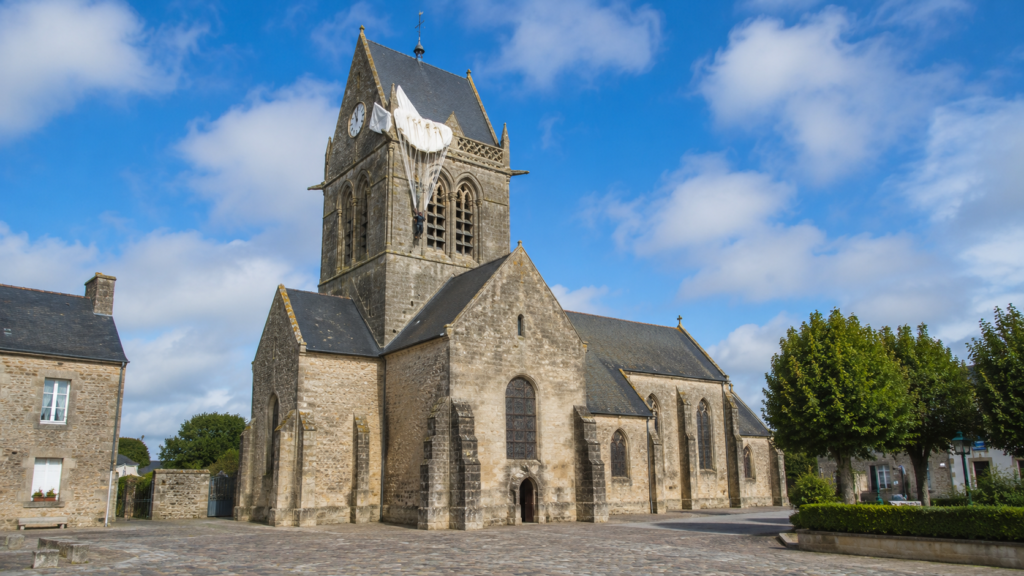
The Airborne Museum opposite the church tells the story of the 82nd and 101st Airborne Divisions, who dropped into the dark hours before the seaborne landings. You walk through an original Waco glider and a C-47 transport aircraft, and a simulation gallery puts you inside the aircraft on the night jump. Of all the circuit museums, this is the one that best conveys the fear and chaos of the operation.
Allow 90 minutes to two hours. Combine it with Utah Beach for a full western day out.
Suggested three-day itinerary
Day 1 — Bayeux and the British sector: Battle of Normandy Museum, Bayeux War Cemetery, afternoon at Arromanches (museum + beach at low tide), evening exploring Bayeux and the tapestry.
Day 2 — The American beaches east: Overlord Museum, Normandy American Cemetery, Omaha Beach, Pointe du Hoc late afternoon (the light is best then).
Day 3 — The western circuit: Utah Beach Landing Museum, lunch overlooking the beach, Airborne Museum at Sainte-Mère-Église, return via the German cemetery at La Cambe if time allows — a sobering counterpoint.
Pointe du Hoc: The Ranger Assault That Changed History · The Complete Guide to Visiting the D-Day Beaches in Normandy
Tickets, passes, and guided options
Most museums charge €8–€12 for adults, with family tickets available. There’s no single circuit pass covering all five, but several offer small discounts if you show a ticket from another — always ask at the desk.
If you’d rather not drive, guided day tours from Bayeux cover most of the circuit sites with expert commentary, and honestly, a good guide transforms the beaches — much of what happened there is invisible without someone to point it out. Half-day and full-day options run from Bayeux year-round.
If you’re coming from the UK without a car, see our guide to The Best D-Day Guided Tours from the UK.
Before you go
A little reading beforehand pays off enormously on the ground. Antony Beevor’s D-Day: The Battle for Normandy is the single best one-volume account, and Stephen Ambrose’s Band of Brothers pairs perfectly with the Airborne Museum.
Final thoughts
The genius of the Bayeux circuit is that no two museums tell the same story. Strategy in Bayeux, logistics at Arromanches, hardware at Overlord, the beaches at Utah, and the night drop at Sainte-Mère-Église — by the end of three days, you’ll understand D-Day not as a single event but as an enormous, fragile, astonishing undertaking. And you’ll have done it all from one of the loveliest small towns in France.