Visiting the Battle of Hastings Site: Battle Abbey and 1066 Country
Where History Turned: Visiting the Battle of Hastings Site
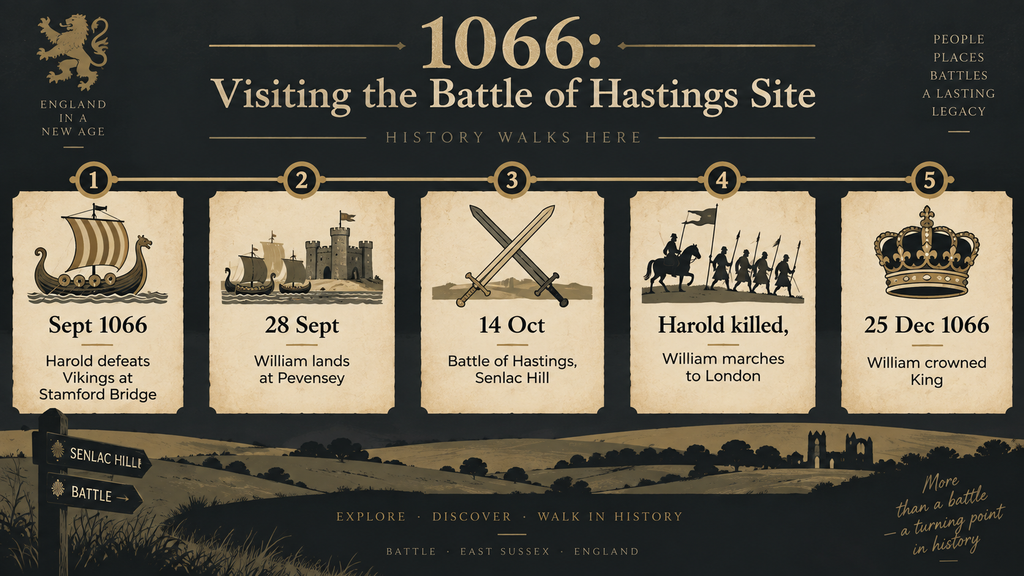
On 14 October 1066, an army led by William, Duke of Normandy, met the forces of King Harold II on a low ridge in East Sussex — and changed the course of English history in a single day. Today, that ridge sits inside the small, evocative town of Battle, and the Battle of Hastings site at Battle Abbey remains one of the most complete and moving medieval battlefields you can visit anywhere in Europe.
Unlike many ancient battle sites where you’re left guessing at the terrain, Battle Abbey preserves the actual ground. English Heritage manages the site today, and a walk across the battlefield trail — with the abbey ruins rising behind you — makes 1066 feel remarkably close.
Getting to Battle Abbey
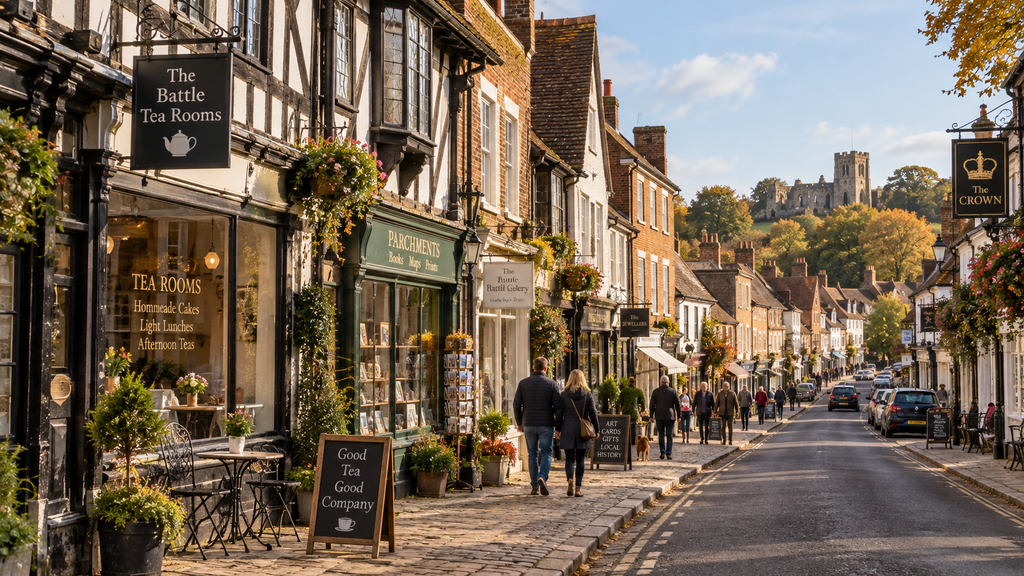
Battle sits about an hour from London by train (direct services run from London Charing Cross to Battle station, roughly a 15-minute walk from the abbey gatehouse), making it an easy day trip from the capital. Drivers can reach the site via the A21, with a car park directly opposite the abbey entrance. The town itself is worth lingering in — a genuine “1066 Country” high street of tea rooms, independent shops, and timber-framed buildings that has grown up around the abbey for nearly a thousand years.
What to See at the Battlefield
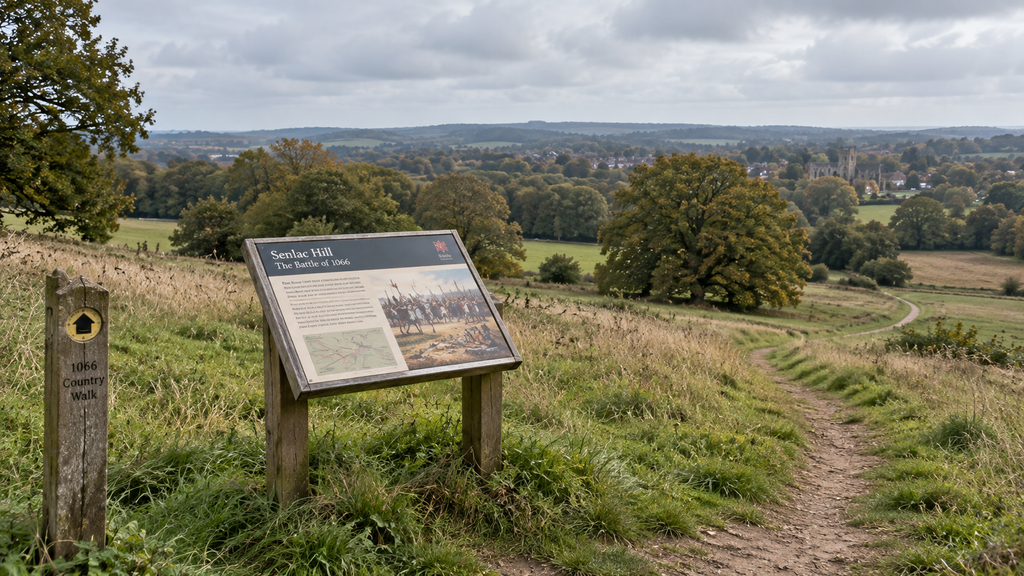
The centrepiece of any visit is the battlefield walking trail, a circular route of roughly 1.5 miles that traces the slopes of Senlac Hill, where Harold’s shield wall held its ground, and the lower approach where the Norman cavalry and archers advanced. Interpretation panels and an audio guide (included with admission) narrate the battle in sequence, pointing out the terrain features — the ridge, the marshy ground, the slope — that shaped the fighting.
Free Download
The WWI Battlefield Visitor Checklist
Everything to see, pack, and plan before you visit the Western Front — straight to your inbox.
No spam — just battlefield travel guides. Unsubscribe any time.
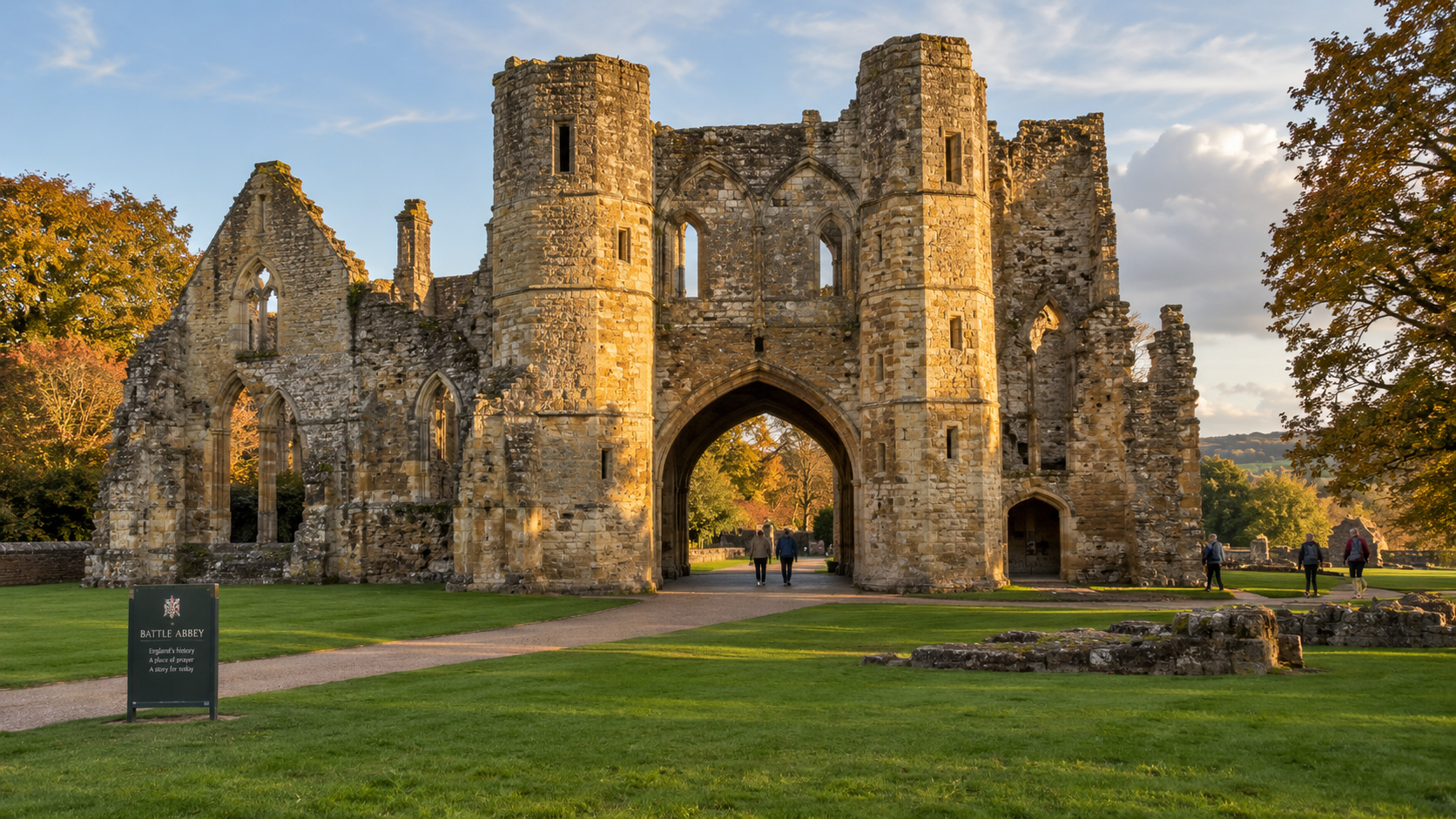
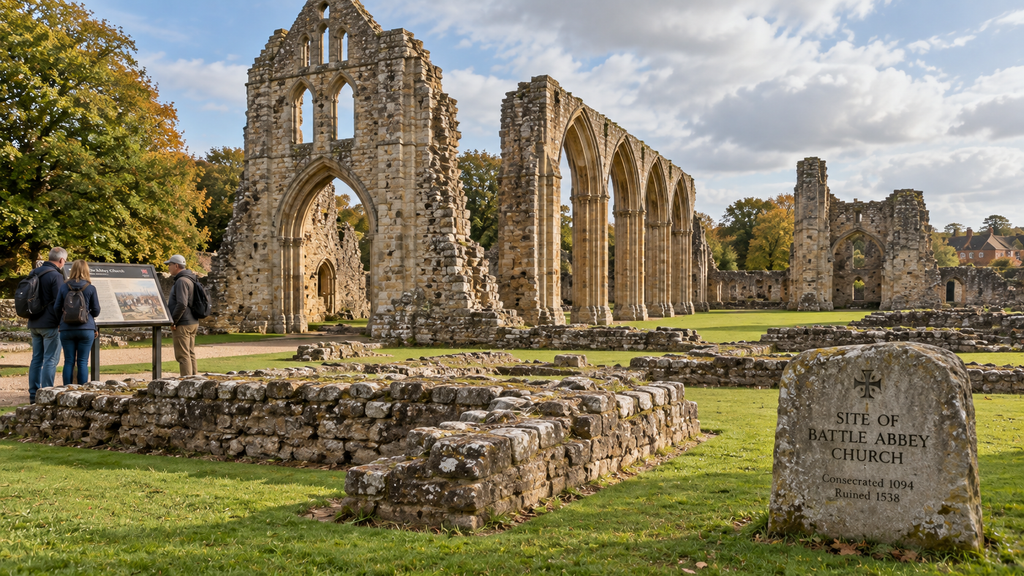
At the summit stands the spot traditionally marked as where Harold fell, now the site of the abbey’s high altar. William founded Battle Abbey here shortly after his victory, reportedly as penance for the bloodshed, and the ruins of the abbey church and the surviving monastic buildings — including the well-preserved gatehouse — are included in the ticket price.
A newer addition worth budgeting time for is the 1066 Battle of Hastings Experience, an interactive exhibition that uses models, film, and artefacts to set the political background — Edward the Confessor’s death, the succession crisis, Harold’s rival claimants — before you head out onto the field itself.
Practical Visitor Information
- Opening hours: Typically open daily in summer (April–September) and weekends only in winter months — check the English Heritage website before travelling, as hours shift seasonally.
- Admission: English Heritage members go free; non-members can buy on the day or online in advance, and joining English Heritage is worth it if you’re visiting several sites in the region.
- Time needed: Allow 2–3 hours to properly cover the exhibition, the battlefield trail, and the abbey ruins.
- Accessibility: Much of the battlefield trail is on grass slopes and can be uneven; a firmer, shorter accessible route is also available.
- Best time to visit: Late September or October, close to the battle’s anniversary, when English Heritage often runs a costumed re-enactment weekend — a spectacular, if busy, way to see the battle brought to life.
Where to Stay in 1066 Country
Battle itself has a handful of characterful inns and B&Bs within walking distance of the abbey, ideal if you want to explore the town at a slower pace. For those combining the trip with the coast, nearby Hastings (about 15 minutes away) offers a wider range of accommodation and the chance to pair the battlefield with Hastings Castle and the Old Town.
Nearby 1066 Country Sites
If you have more time, the wider “1066 Country” area rewards a longer stay:
- Hastings Castle — the ruined Norman castle built shortly after the invasion, with clifftop views over the town.
- Pevensey Castle — where William’s fleet actually landed before marching to Hastings, combining a Roman fort with later Norman fortifications.
- Bodiam Castle — a short drive away, one of England’s most photogenic moated medieval castles (a later addition to the region, but a natural pairing for a longer trip).