Russia’s Historic Landmarks: A Journey Through Time
Russia is a vast land of contrasts, where the echoes of history resonate through its iconic landmarks. From the cathedrals of Moscow to the steppes of Siberia, Russia’s historic landmarks offer a unique journey through time, capturing the essence of its rich and turbulent past. These landmarks provide a window into a nation that has shaped and been shaped by countless events over the centuries.
The Kremlin and Red Square: The Heart of Russian Power
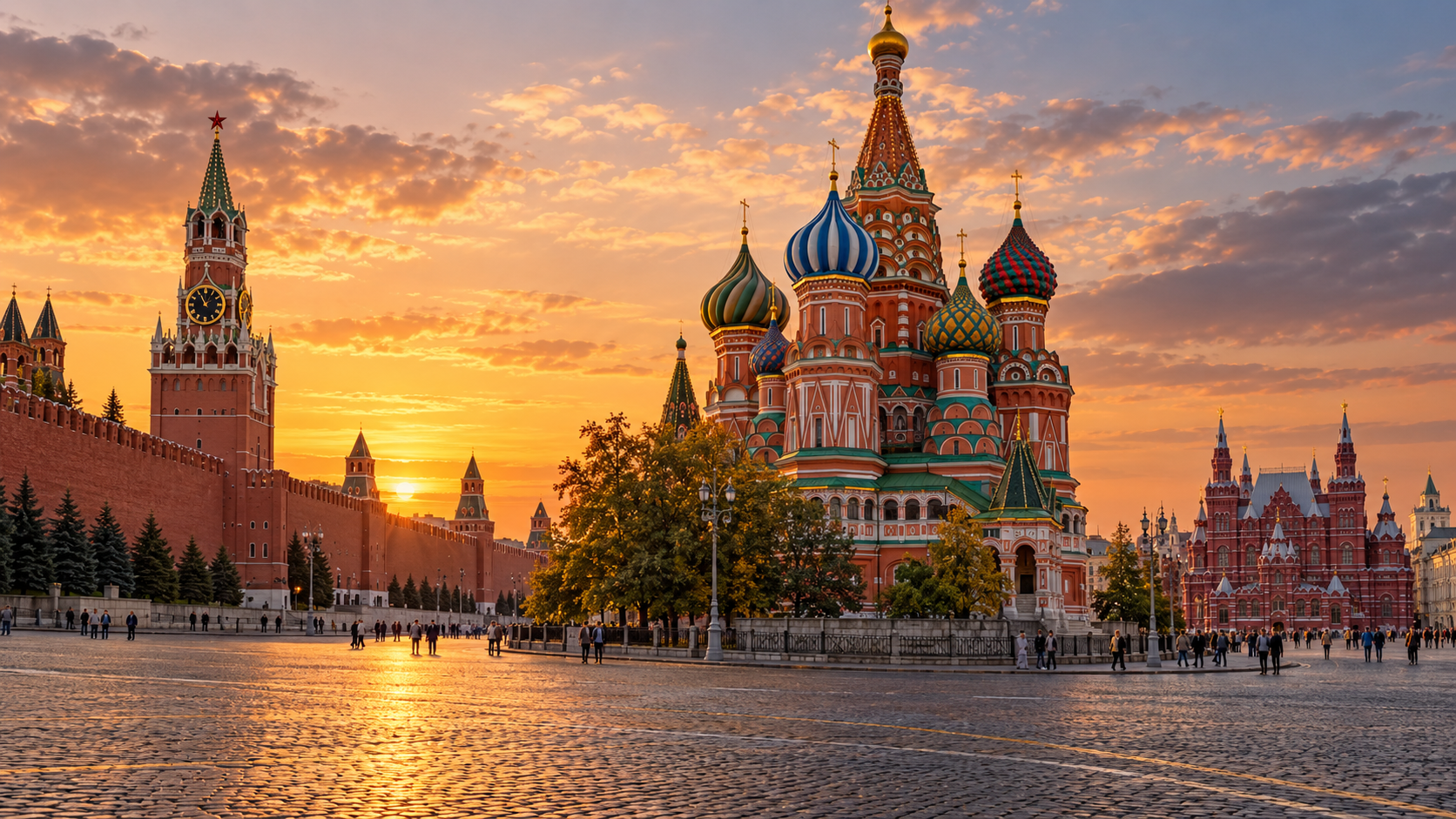
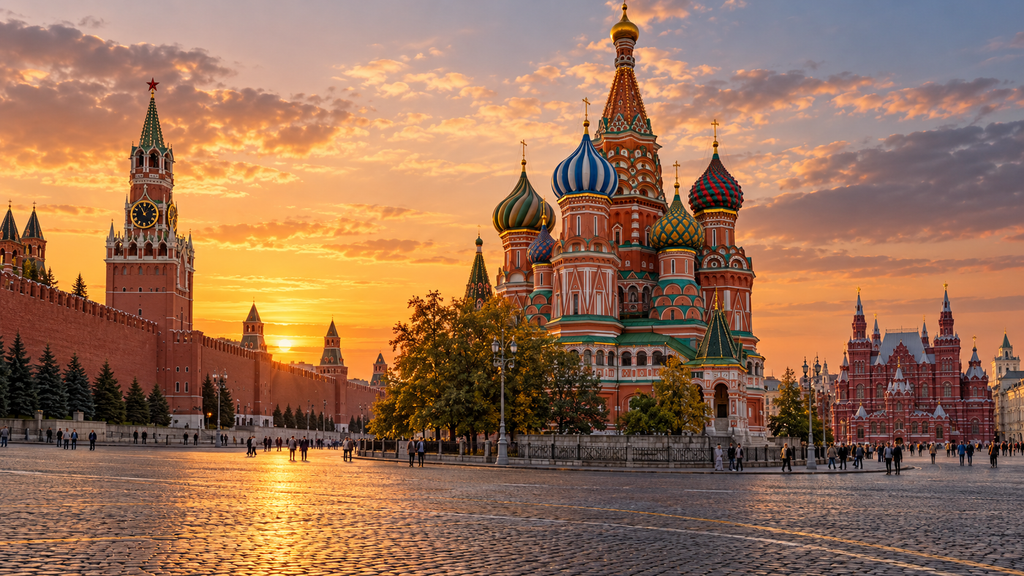
No journey through Russia’s history would be complete without a visit to the Kremlin and Red Square in Moscow. These iconic symbols of Russian power and culture are more than just tourist attractions—they are living relics of the nation’s past.
The Kremlin has served as the residence of Russian tsars, Soviet leaders, and now the Russian president. Its walls and towers have witnessed the rise and fall of empires, revolutions, and the Cold War. Inside, the opulent cathedrals, palaces, and the Armory Museum offer a glimpse into the grandeur of Russia’s imperial past.
Just outside the Kremlin walls lies Red Square, the epicenter of Russian history. The colorful domes of St. Basil’s Cathedral rise against the backdrop of the GUM department store, Lenin’s Mausoleum, and the State Historical Museum. Red Square has been the stage for some of Russia’s most significant events. From Soviet military parades to public executions during the Tsarist era. Today, it remains a powerful symbol of the nation’s enduring legacy.
Free Download
The WWI Battlefield Visitor Checklist
Everything to see, pack, and plan before you visit the Western Front — straight to your inbox.
No spam — just battlefield travel guides. Unsubscribe any time.
Saint Petersburg: The Window to the West
Founded by Peter the Great in 1703, Saint Petersburg was envisioned as Russia’s “window to the West.” This stunning city, built on a network of canals, is often referred to as the “Venice of the North.” Its baroque and neoclassical architecture reflects the influence of European styles. A unique blend of Russian tradition and Western modernity.
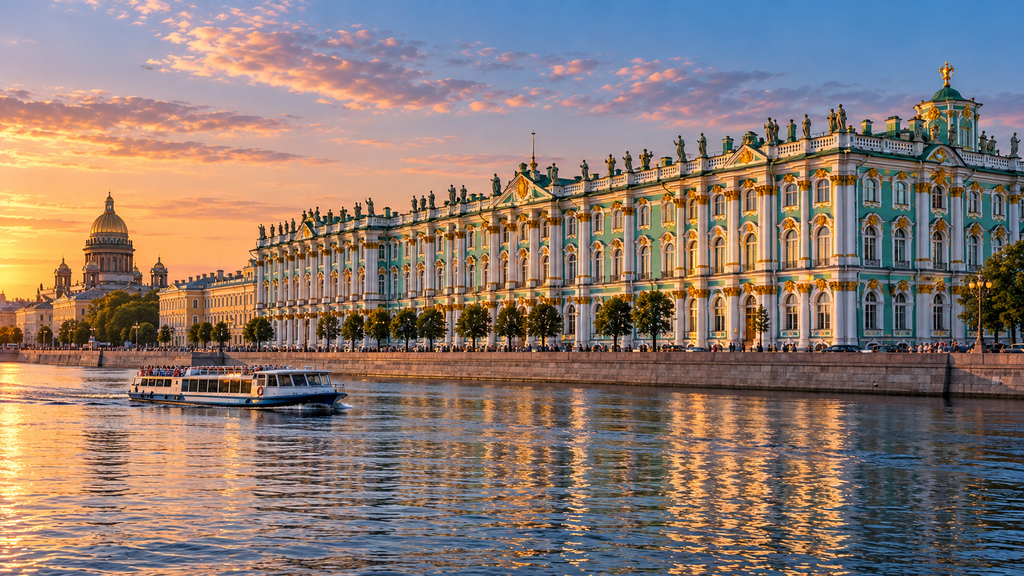
The Winter Palace, part of the Hermitage Museum, stands as a testament to the opulence of the Russian Empire. The palace, with its vast collection of art and artifacts, offers a glimpse into the lives of the Russian tsars. The museum’s treasures span millennia, from ancient civilizations to modern masterpieces. This makes it one of the most significant cultural institutions in the world.
Saint Petersburg is also home to the Church of the Savior on Spilled Blood. this is a stunning example of Russian Revival architecture. Built on the site where Emperor Alexander II was assassinated in 1881, the church’s intricate mosaics and colorful domes are a visual feast, embodying the complexity of Russia’s spiritual and political history.
The Golden Ring: A Journey Through Medieval Russia
The Golden Ring offers a fascinating journey through a series of ancient towns northeast of Moscow. This route is dotted with onion-domed churches, fortified monasteries, and quaint wooden houses. This journey takes travelers back to the roots of Russian civilization.
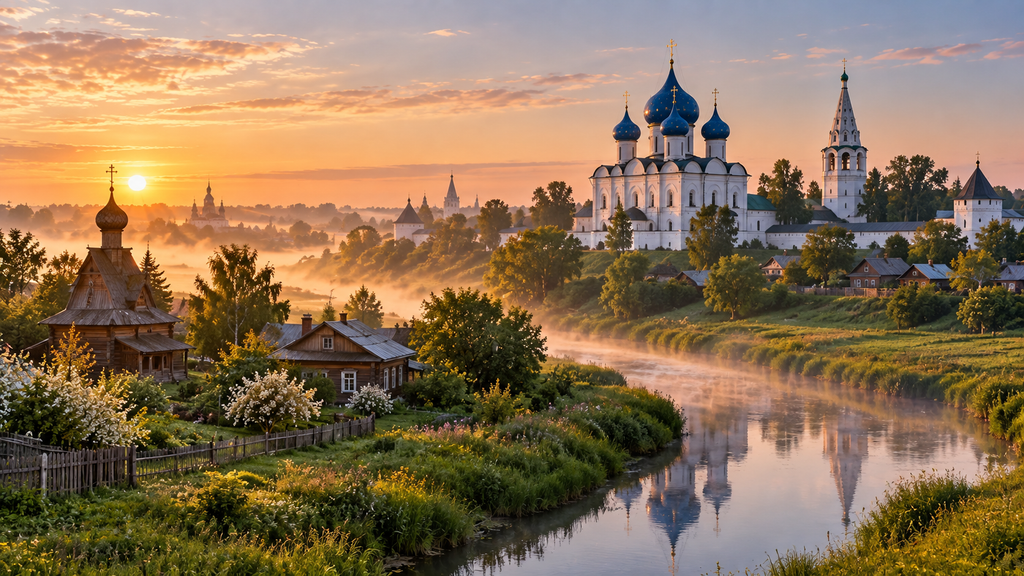
Suzdal, one of the most picturesque towns in the Golden Ring, is a living museum of Russian architecture. Here, the white stone Cathedral of the Nativity, with its blue domes speckled with gold stars, stands as a testament to the town’s religious significance. The nearby wooden Church of Saint Nicholas, dating back to the 18th century, showcases the traditional craftsmanship of Russian carpenters.
Another highlight of the Golden Ring is the city of Vladimir, once the capital of medieval Russia. The Assumption Cathedral and the Golden Gate, a triumphal arch from the 12th century, are must-see landmarks that offer a glimpse into the glory of Russia’s past.
Lake Baikal: The Sacred Sea of Siberia
Venturing further east, the breathtaking Lake Baikal offers a different kind of historical experience. Known as the “Pearl of Siberia,” Baikal is the world’s deepest and oldest freshwater lake. It holds about 20% of the planet’s unfrozen freshwater reserve.
Beyond its natural beauty, Lake Baikal is steeped in indigenous culture and spiritual significance. The native Buryat people consider the lake to be sacred. Its shores are dotted with shamanistic sites and ancient rock carvings. A journey to Baikal is a spiritual pilgrimage, offering insight into the traditional beliefs that have shaped this remote region.
Kazan: The Crossroads of Cultures
Kazan, the capital of the Republic of Tatarstan, is a city where East meets West, and Islam meets Orthodoxy. This vibrant city, with its rich cultural heritage, is a symbol of Russia’s diverse and multi-ethnic identity.
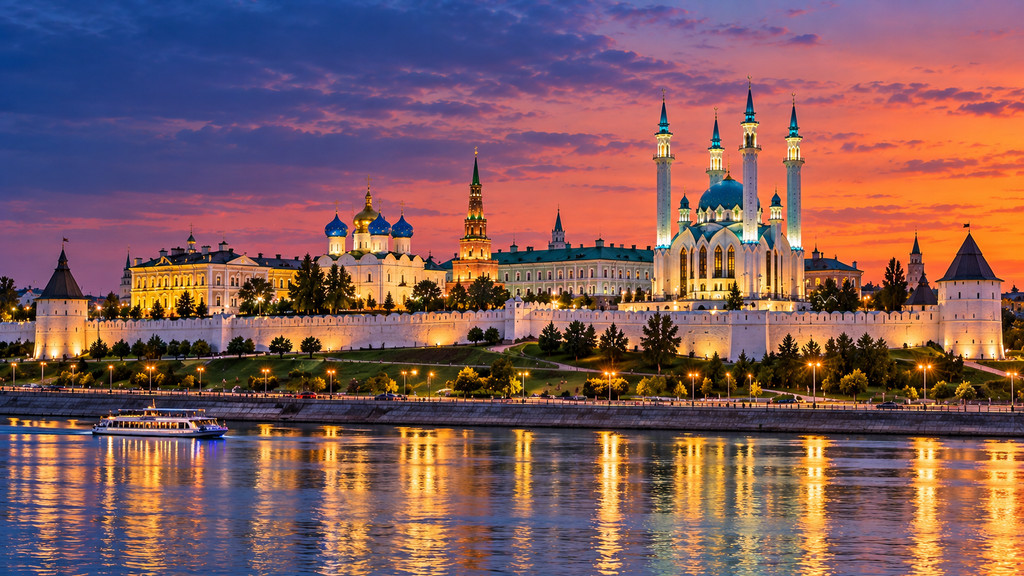
The Kazan Kremlin, a UNESCO World Heritage site, is a striking example of this cultural fusion. The stunning Kul Sharif Mosque, one of the largest in Europe, stands alongside the Annunciation Cathedral. It reflects the peaceful coexistence of different religions in the region. The city is a blend of Russian and Tatar influences, with its colorful markets, traditional Tatar cuisine, and lively festivals offering a unique experience for visitors.
The Trans-Siberian Railway: A Journey Like No Other
Finally, no exploration of Russia’s historic landmarks would be complete without mentioning the Trans-Siberian Railway. This legendary train journey, spanning over 9,000 kilometers from Moscow to Vladivostok, is the longest railway line in the world. It connects the European and Asian parts of Russia. The Railway crosses seven time zones and some of Earth’s most remote and beautiful landscapes.
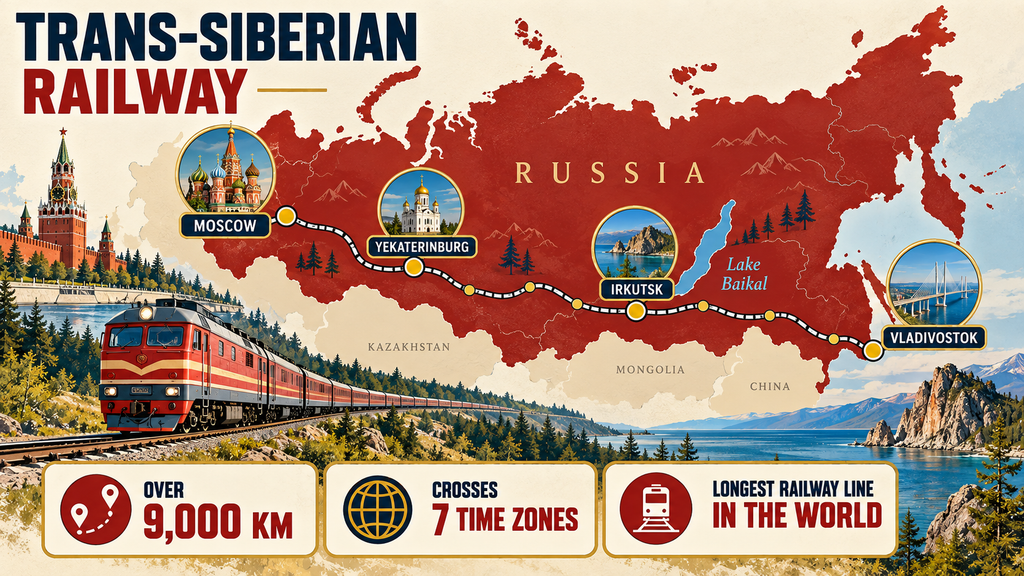
The Trans-Siberian Railway is not just a means of travel; it is a journey through Russia’s diverse cultures, landscapes, and history. Travelers can stop at historic cities like Yekaterinburg, where the last Russian tsar, Nicholas II, and his family were executed, or Irkutsk, known as the “Paris of Siberia” for its rich cultural heritage.
A Journey Through Russia’s Historic Landmarks
Russia’s historic landmarks are more than just tourist attractions. They are gateways to understanding the complex and fascinating history of this vast nation. From the imperial splendor of Moscow and Saint Petersburg to the ancient towns of the Golden Ring and the remote beauty of Siberia, each landmark tells a story of Russia’s past, its people, and its enduring spirit.
Whether you’re walking through the halls of the Kremlin, standing on the shores of Lake Baikal, or traveling across the endless steppes on the Trans-Siberian Railway, you’re not just witnessing history—you’re experiencing it.
You might also like: