Marathon Battlefield: Visiting the Site of Ancient Greece’s Greatest Victory
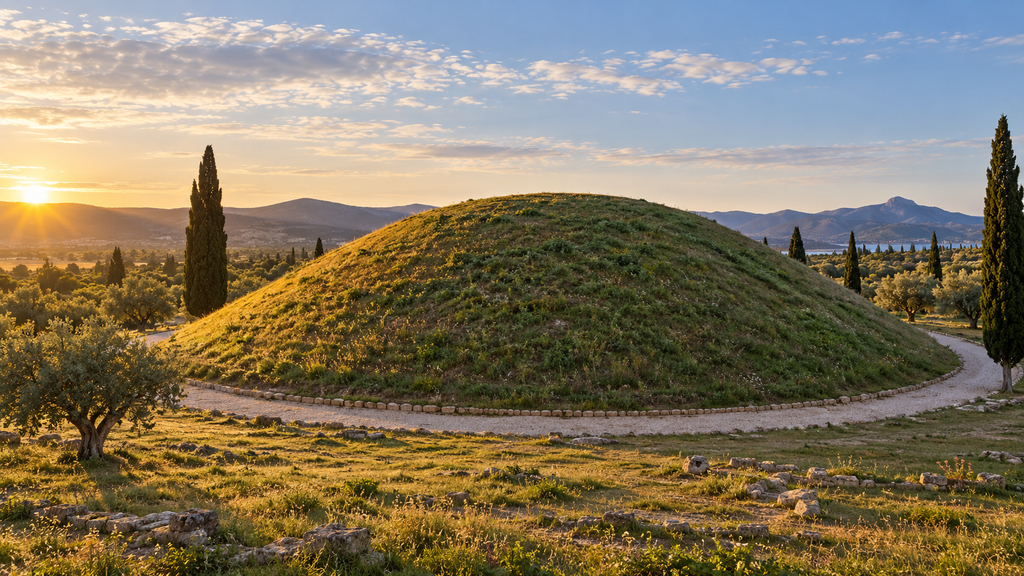
Forty-two kilometres north-east of Athens, a grassy mound rises nine metres out of a quiet plain of olive groves and fields. It does not look like much from the road. Yet the Marathon battlefield is where, in 490 BC, a citizen army of Athenians and Plataeans charged a Persian invasion force and won a victory that changed the course of Western history.
Without Marathon there might have been no Athenian Golden Age – no Parthenon, no Sophocles, no democracy as we came to understand it. The battle also gave us the name of the world’s most famous running race.
This guide covers what happened here, what you can still see, how to get to the Marathon battlefield from Athens, current opening hours and tickets, and how to fit it all into a day.
What happened at the Battle of Marathon
In the late summer of 490 BC, a Persian fleet sent by King Darius I landed on the Bay of Marathon. Its commanders, Datis and Artaphernes, came to punish Athens for backing the Ionian Revolt. With them was Hippias, the exiled former tyrant of Athens, who hoped to be restored to power.
Free Download
The WWI Battlefield Visitor Checklist
Everything to see, pack, and plan before you visit the Western Front — straight to your inbox.
No spam — just battlefield travel guides. Unsubscribe any time.
Athens marched out roughly 10,000 hoplites to block the road to the city. Only one ally came: around 1,000 men from the small city of Plataea. Sparta promised help but would not march until its religious festival ended. For several days the two armies faced each other across the plain.
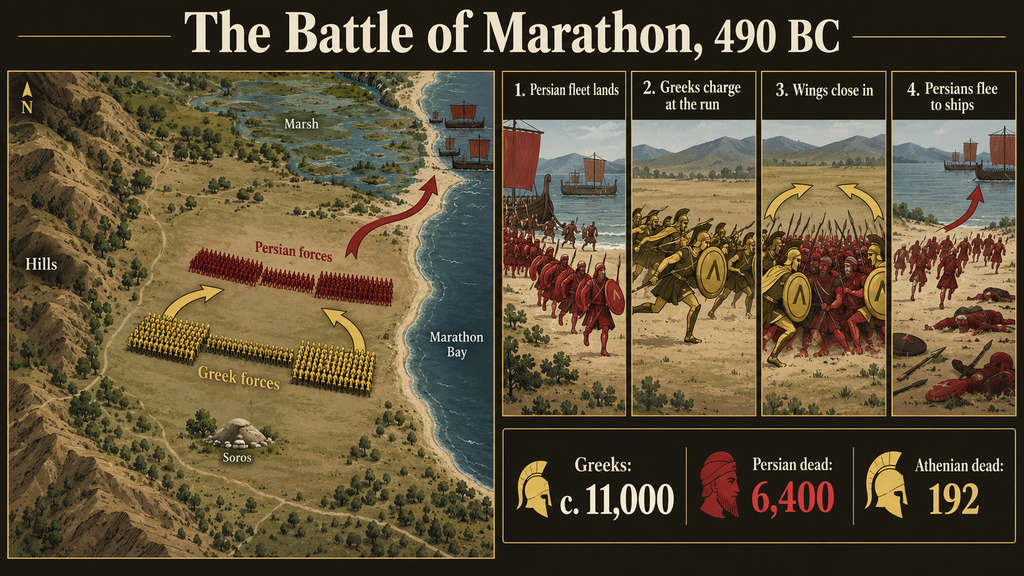
The Athenian general Miltiades then gambled. He thinned his centre and packed his wings, and the line advanced at a run across the last stretch to limit the damage from Persian archers. The Persian centre pushed through, but the Greek wings broke their opponents and then turned inwards, trapping the Persians in a double envelopment. Survivors fled to their ships through the marshes at the northern end of the plain.
The historian Herodotus records 6,400 Persian dead against just 192 Athenians – among them the polemarch Callimachus. The Athenian army then marched straight back to Athens to stop the Persian fleet landing at Phaleron. The Persians saw the city defended and sailed home.
Where the marathon race comes from: Herodotus tells of the runner Pheidippides covering about 240 km to Sparta before the battle to ask for help. The story of a messenger running from Marathon to Athens to announce victory and collapsing dead appears only centuries later. It inspired the marathon at the first modern Olympics in 1896.
Marathon did not end the Persian Wars – Xerxes returned ten years later, which brought Thermopylae and Salamis. But it proved the Persians could be beaten on land, and it made the hoplite citizens of Athens confident in their young democracy.
What to see at the Marathon battlefield
The ancient battlefield is now partly farmland and partly suburb, so there is no single fenced site. Instead, four or five scattered places tell the story. Allow time to drive between them.
The Tomb of the Athenians (the Soros)
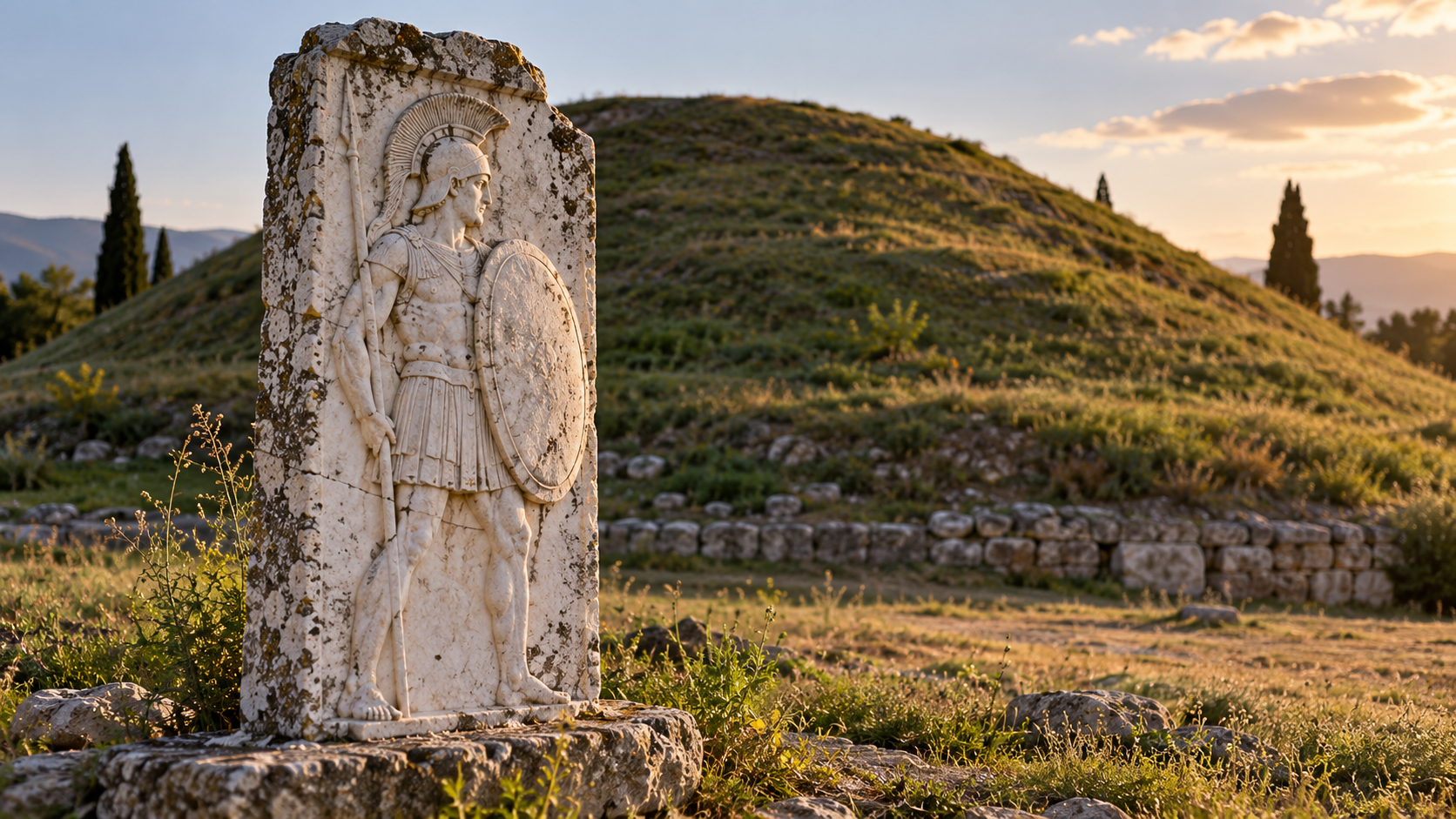
This is the heart of any visit. The burial mound, known locally as the Soros, is 9 metres high and around 50 metres across, and it covered the cremated remains of the 192 Athenians who fell. It was excavated in 1890–91 by Valerios Stais, who found a layer of ash, bones and broken offering vessels.
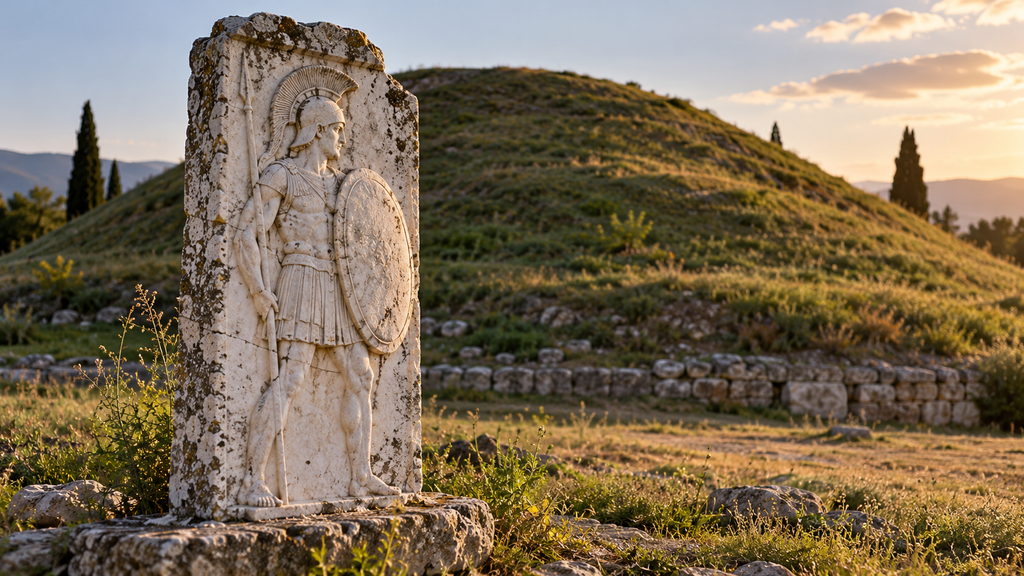
The Greeks almost never buried their war dead on the battlefield – they brought them home to Athens. Marathon was the exception, a mark of how highly the fallen were honoured. Stand at the foot of the mound in the early morning and the plain still feels like a place of remembrance. A path circles the mound, and a marble relief of a hoplite stands nearby.
The Tomb of the Plataeans and the prehistoric cemeteries
About 3 km north, beside the museum at Vrana, is a smaller mound identified by archaeologist Spyridon Marinatos in the 1960s as the grave of the Plataeans and the freed slaves who fought alongside Athens. The identification is not certain, but it is a moving counterpart to the Soros. The same site includes Middle Bronze Age tumulus graves at Vrana and the Early Bronze Age cemetery at Tsepi.
The Archaeological Museum of Marathon
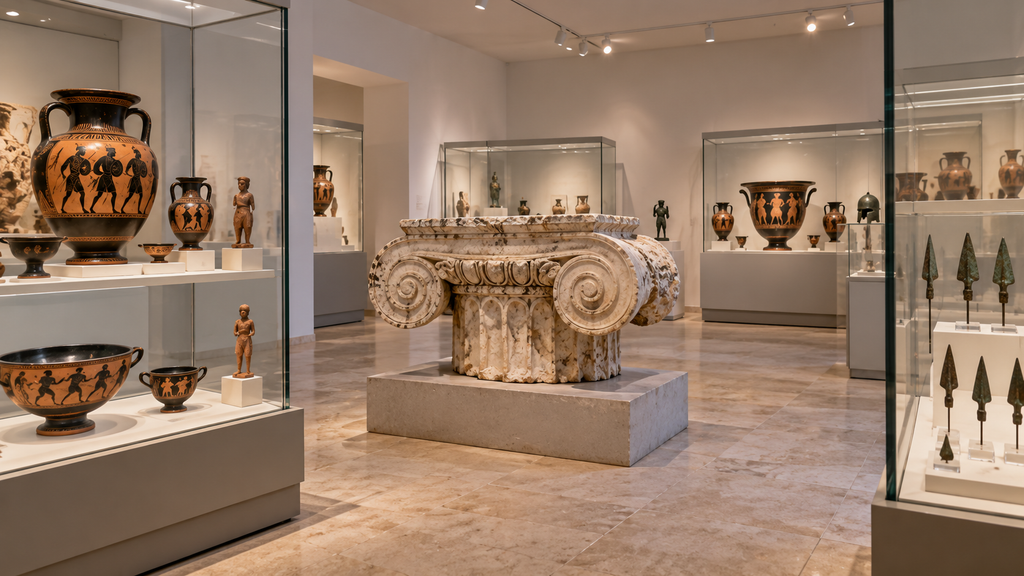
This small, well-laid-out museum covers the Marathon area from the Neolithic to the Roman period. Battle highlights include an Ionic capital from the marble victory trophy the Athenians raised after the fighting, and finds from the Soros. Do not miss the Egyptian-style statues from the sanctuary at Brexiza and the busts linked to Herodes Atticus, the wealthy Roman-era Athenian who owned an estate here.
Be aware that the museum is more about the region than the battle itself. Visit it alongside the Soros, not instead of it.
The Trophy of Marathon
The Athenians set up a marble victory column near the spot where the Persian rout began. A replica now stands in its original location at Mesosporitissa, near a small post-Byzantine church of the Virgin Mary. It is a quick stop, but it helps you picture where the fighting ended.
Marathon Run Museum and the race start
In Marathon town, a small museum tells the story of the modern marathon race, including the 1896 Olympics and runner Spyros Louis. The start line of the annual Athens Marathon, the Authentic, sits nearby. Runners follow the historic route to the Panathenaic Stadium in Athens each November. Check opening times locally, as they vary.
How to visit the Marathon battlefield: getting there, hours and tickets
Getting there from Athens
- By car (best option): about 50 minutes from central Athens. The sites are several kilometres apart, and a car makes linking them easy. Parking is free at the Soros and the museum.
- By bus: KTEL Attikis buses to Marathon leave from the Mavromateon terminal at Pedion Areos, near Victoria metro station. The bus gets you to the area, but travelling between the sites on foot is slow – expect long walks along roads with little shade.
- By guided tour: some day tours from Athens include Marathon, often paired with Cape Sounion.
Opening hours and tickets
The sites are run by Hellenic Heritage for the Greek Ministry of Culture. Opening hours are the same all year.
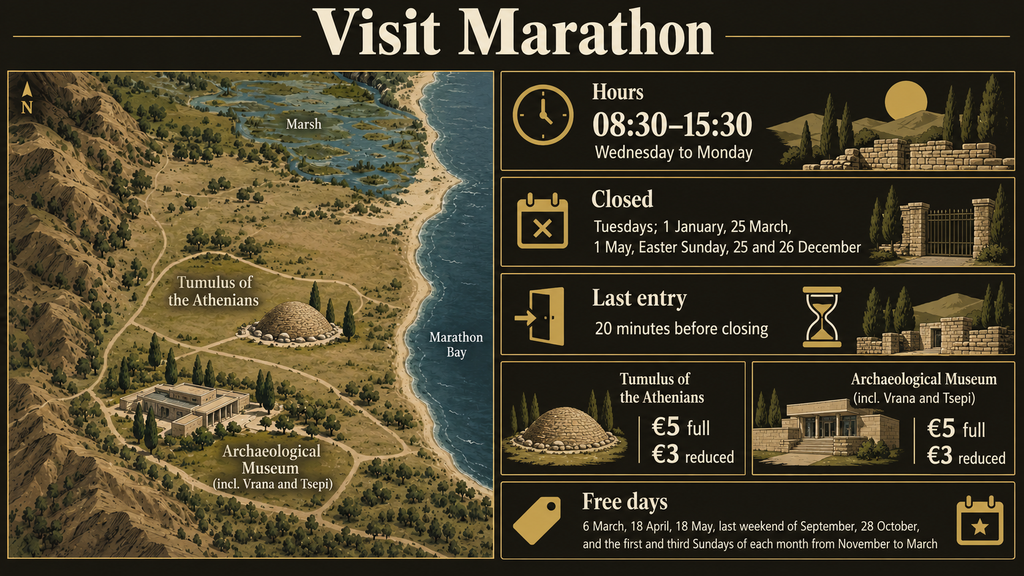
Tickets can be bought online through the Hellenic Heritage ticket site. Prices and times checked October 2026 – always confirm before you travel, as Greek site hours can change at short notice.
Suggested itinerary: a day at Marathon
The sites close mid-afternoon, so start early.
- 09:00 – Leave Athens. Drive out via Mesogeion Avenue towards Rafina, then follow signs for Marathon.
- 10:00 – Tomb of the Athenians. Walk around the Soros while it is cool and quiet. Allow 45 minutes.
- 11:00 – Archaeological Museum, Plataean tomb and Vrana. Allow 90 minutes for the museum and the outdoor graves.
- 12:45 – Trophy of Marathon. A 15-minute stop at the replica column.
- 13:15 – Lunch in Marathon town or at a seafront taverna in Nea Makri.
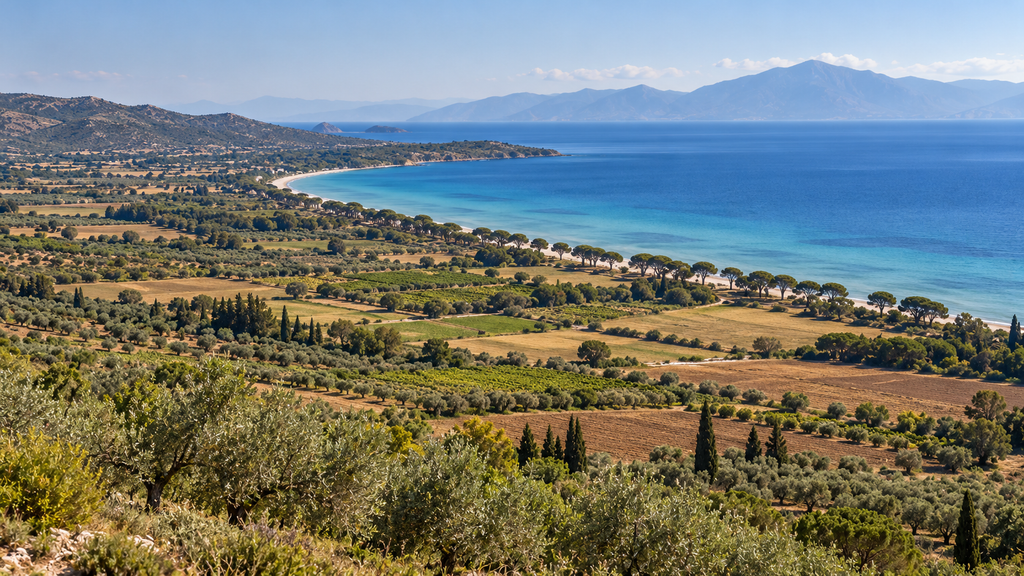
- Afternoon – Schinias. The pine-fringed beach and wetland at the northern end of the bay sit roughly where the fleeing Persians ran for their ships. It is a good place to look back across the plain and picture the battle.
Add-ons: the Sanctuary of the Egyptian Gods at Brexiza in Nea Makri (same opening hours, €5), or Rhamnous, a beautifully set temple site to the north.
Tips for visiting
- Avoid Tuesdays – every state site here is closed.
- Go in spring or autumn. The plain has little shade, and summer midday heat is fierce.
- Read before you go. Book VI of Herodotus’ Histories is the main ancient account and short enough for the journey.
- Plan around the Athens Marathon in November if you want to watch the start – or avoid that weekend if you want quiet roads.
- Bring water and a hat. Facilities between sites are limited.
Frequently asked questions
Is the Marathon battlefield worth visiting? Yes, if you go knowing what to expect. It is not a dramatic ruin like the Acropolis. Its power lies in standing at the burial mound of the men who fought here, on the same plain, 2,500 years later.
How long do you need at Marathon? Half a day covers the Soros, the museum and the Trophy. A full day lets you add Schinias, Brexiza or Rhamnous.
Can you visit Marathon without a car? Yes, by KTEL bus from Pedion Areos in Athens, but the sites are spread out. A taxi between them, or a guided tour, saves a lot of walking.
Where exactly was the Battle of Marathon fought? On the coastal plain between the hills and the Bay of Marathon. Historians still debate the exact battle lines, but the Soros is believed to stand close to where the heaviest fighting took place.
Is Marathon really 42 km from Athens? Roughly. The modern marathon distance was fixed at 42.195 km in 1921, but the idea came from the Marathon-to-Athens route.
Final thoughts
The Marathon battlefield rewards visitors who bring a little imagination. Stand by the Soros, look out towards the sea, and picture 10,000 hoplites breaking into a run. For anyone following the story of Greece against Persia, it is the natural first stop before Thermopylae and Salamis.