Agincourt (Azincourt): How to Visit the 1415 Battlefield in France
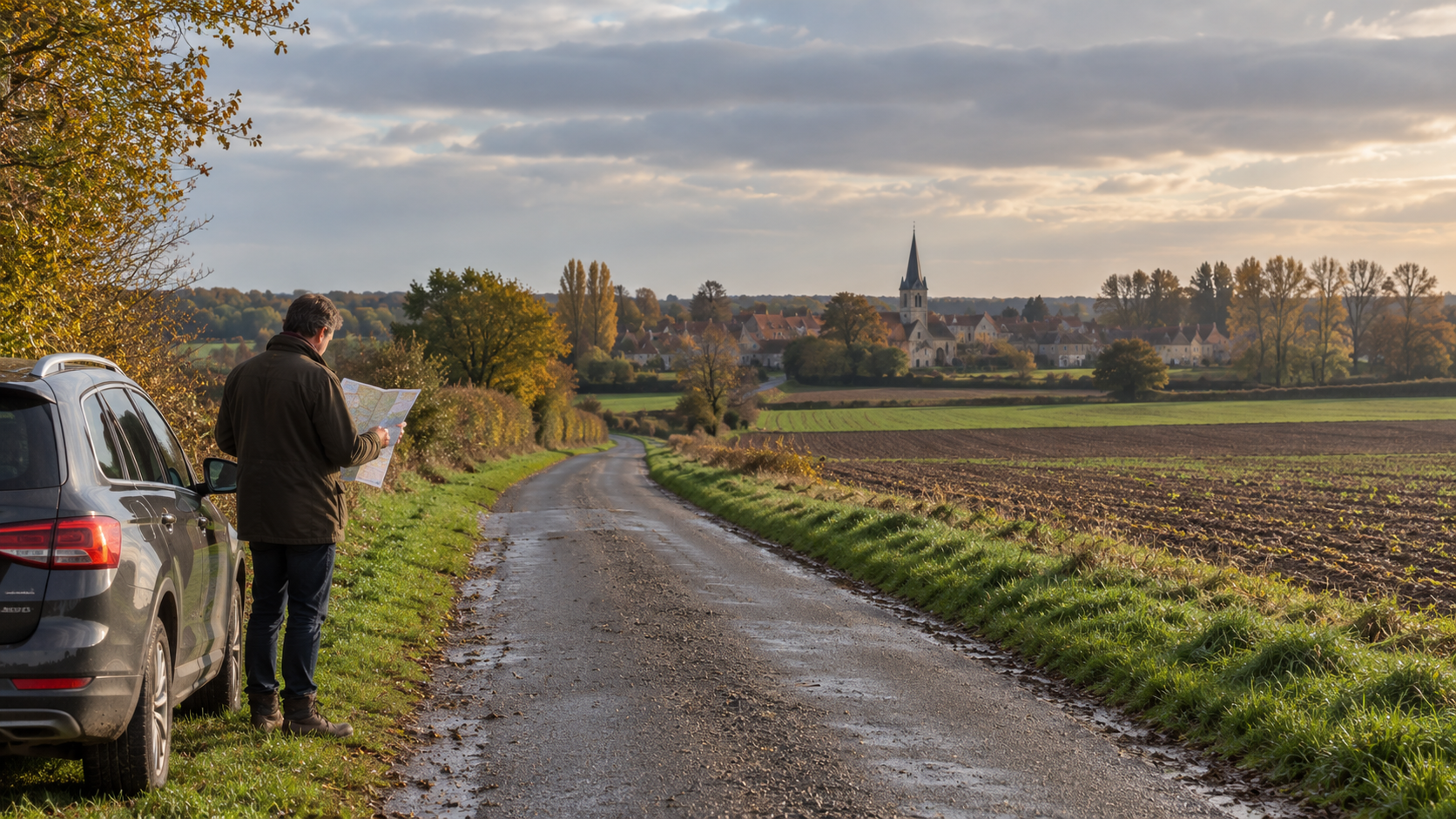
On 25 October 1415, on a muddy strip of ploughed land between two woods, a tired and outnumbered English army under Henry V defeated the flower of French chivalry. Six centuries later, the fields at Azincourt look almost exactly as they did then: open farmland, a narrow road, and the treelines that funnelled the French knights into the arrow storm.

If you want to visit Agincourt battlefield, the good news is that it’s one of the easiest medieval battlefields in Europe to reach from the UK. It sits about an hour’s drive from the Calais ferry and Eurotunnel terminals, and it rewards a half-day visit with a modern museum, a waymarked walk across the battle lines and a quietly moving memorial.
This guide covers everything you need: a short history of the battle, how to get there, what to see at the Centre Azincourt 1415, how to walk the field, where to stay and how to combine Agincourt with other battlefields in northern France.
What happened at Agincourt in 1415?
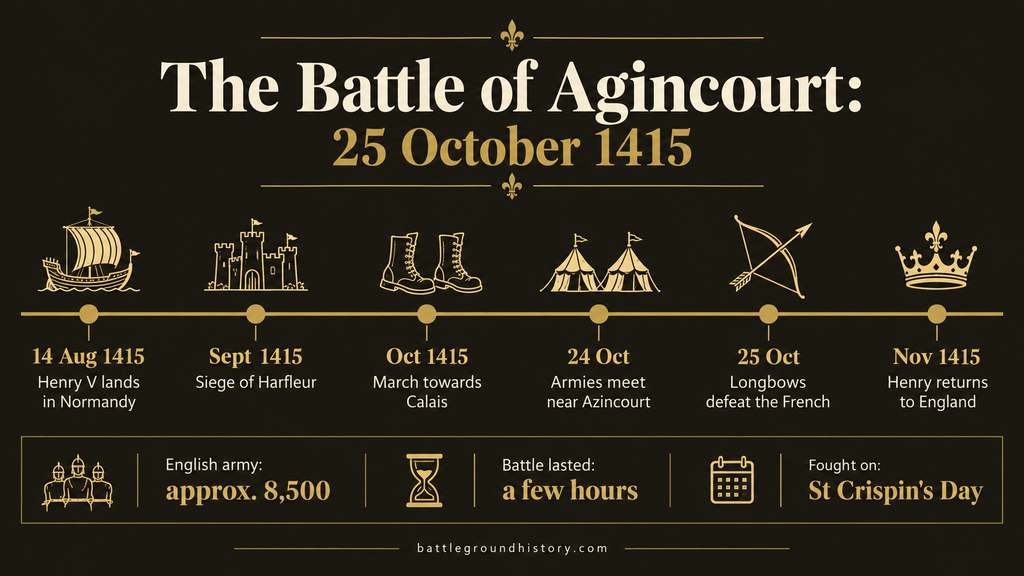
The Battle of Agincourt was fought on St Crispin’s Day, 25 October 1415, during the Hundred Years’ War. Henry V had landed in Normandy that August and taken Harfleur after a costly siege. Dysentery had ravaged his army, and he was marching north to the safety of English-held Calais when a much larger French force blocked his path.
Free Download
The WWI Battlefield Visitor Checklist
Everything to see, pack, and plan before you visit the Western Front — straight to your inbox.
No spam — just battlefield travel guides. Unsubscribe any time.
The two armies met on a narrow stretch of freshly ploughed land between the woods of Azincourt and Tramecourt. Overnight rain turned the ground into deep mud. When the heavily armoured French men-at-arms advanced, they were squeezed between the woods, slowed by the mud and hit by thousands of English and Welsh longbowmen firing from behind sharpened stakes.
The result was a catastrophe for the French nobility. Thousands died, including the Constable of France, Charles d’Albret, and many of the kingdom’s leading lords. English losses were small by comparison. Shakespeare later turned the battle into one of the most famous speeches in the English language in Henry V, which is a big part of why the name still resonates with British visitors today.
Why the two names? The English chroniclers wrote the name of the nearby castle as “Agincourt”. The modern French village is Azincourt. Road signs, the museum and maps all use Azincourt, so that’s the name to put in your sat nav.
How to get to the Agincourt battlefield
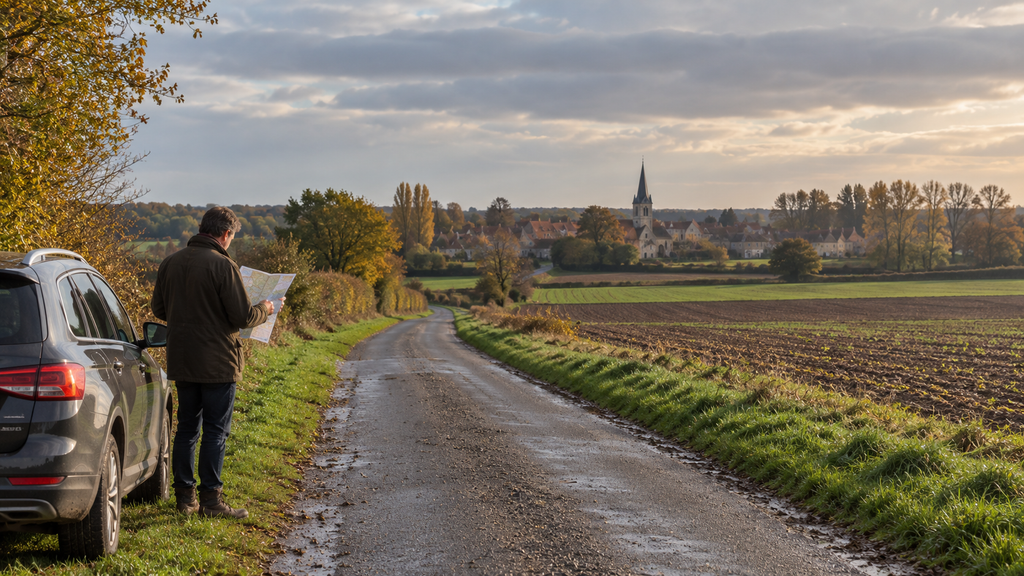
Azincourt is a small village in the Pas-de-Calais, in the rolling farmland of the Seven Valleys between Hesdin and Fruges. A car is by far the easiest way to visit: public transport to the village is very limited.
| Starting point | Approx. drive | Route notes |
|---|---|---|
| Calais (ferry / Eurotunnel) | 1 hr 15 min | A16/A26 south, then country roads via Fruges |
| Boulogne-sur-Mer | 1 hr | Via Desvres and Fruges |
| Saint-Omer | 45 min | South via Fruges |
| Montreuil-sur-Mer | 30 min | East via Hesdin |
| Arras | 1 hr | West via Saint-Pol-sur-Ternoise |
Set your sat nav for Centre Azincourt 1415, 24 rue Charles VI, 62310 Azincourt. There’s parking at the centre, and the battlefield roads start right outside.
If you don’t drive, the nearest practical rail hubs are Saint-Pol-sur-Ternoise and Hesdin, but you’ll still need a taxi for the final stretch. Many UK visitors instead join a coach-based medieval or battlefield tour that includes Agincourt alongside Crécy or the Western Front.
The Centre Azincourt 1415 museum
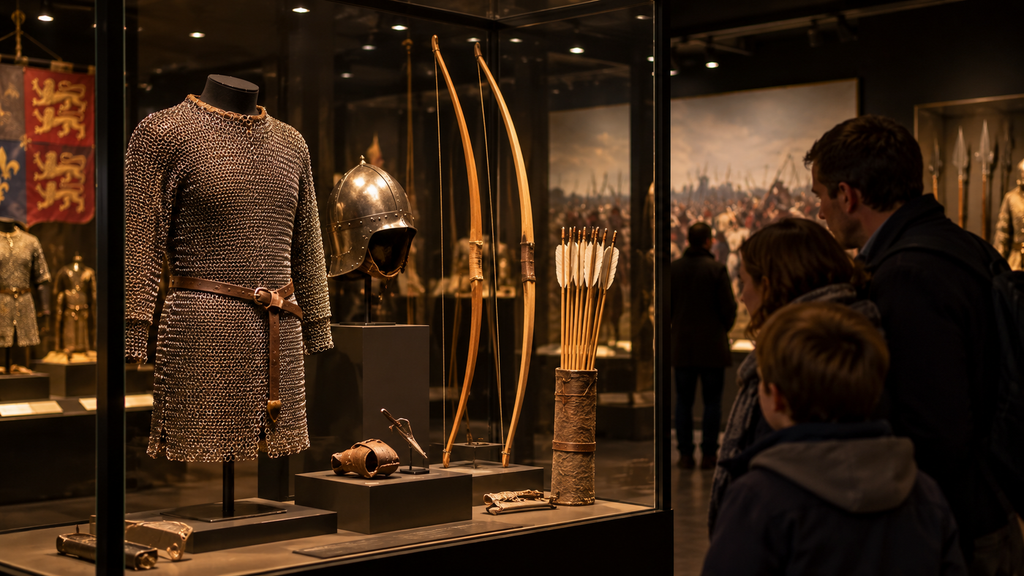
Start your visit at the Centre Azincourt 1415, the battlefield’s museum and interpretation centre in the middle of the village. It’s open year-round and tells the story of both the battle and everyday life in the early 15th century: what soldiers ate, how they dressed and what they believed. France Today
Highlights include:
- The 360° battle show, an immersive film that puts you in the middle of the fighting
- Hands-on displays where you can lift replica weapons and try on chainmail, which children love
- Context on the Hundred Years’ War, so the battle makes sense as part of a much longer conflict
- The watchtower, giving an elevated view across the battlefield before you walk it
Allow 1.5–2 hours for the museum and another hour or so for the battlefield. Information is available in English, and reviewers regularly praise the guides. The centre also runs events through the year, including candlelit evenings, medieval banquets and a summer medieval festival with reenactors, armoured combat and falconry. The next festival is scheduled for 10–11 July 2027. Festival en France
Before you go: opening days and admission prices change seasonally, and the centre has a weekly closing day. Check azincourt1415.com or call +33 (0)3 21 47 27 53 before you travel.
Walking the battlefield
The real reason to visit Agincourt battlefield is standing on the ground itself. A signed circuit leaves from the museum and loops through the fields between Azincourt, Tramecourt and Maisoncelle, with information panels at key points along the way. You can drive it in about 20 minutes, but walking or cycling it gives you a far better sense of scale.
Key stops on the circuit:
- The museum watchtower — get your bearings and spot the two woods that framed the battle.
- Maisoncelle — the village where Henry V’s army camped on the wet night before the battle.
- The English lines — where the archers drove in their stakes across the narrow neck of land.
- The gap between the woods — stand here and you’ll see how the French advance was squeezed tighter with every step.
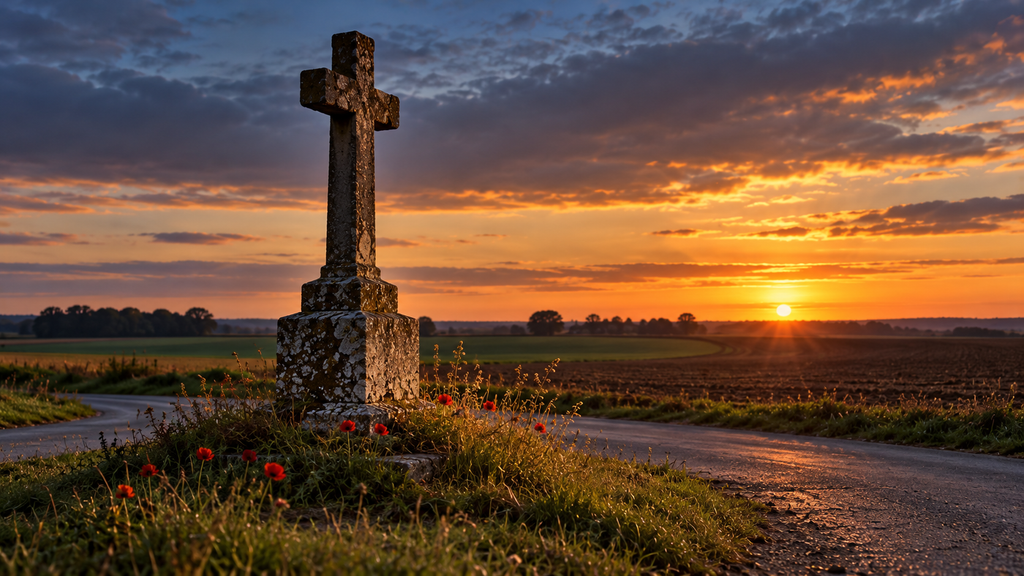
- The Calvary memorial — a simple stone cross at a crossroads near the French positions, close to where many of the dead are believed to have been buried. It’s the most reflective spot on the field.
The land is still working farmland, so stay on the roads and tracks, and expect mud after rain, just as there was in 1415.
Where to stay and what else to see nearby
Azincourt itself is tiny, so most visitors base themselves in a nearby town:
- Montreuil-sur-Mer — a walled hilltop town with ramparts, good restaurants and characterful hotels. The best all-round base. [Booking.com affiliate link]
- Hesdin — the closest town, 15 minutes away, with a market square and tourist office. [Booking.com affiliate link]
- Saint-Omer — handy for the Channel ports and a good stop on the way home. [Booking.com affiliate link]
- Rural gîtes — the Seven Valleys are full of farmhouse stays, ideal for families. [Vrbo affiliate link]
Combine Agincourt with:
- Crécy (1346) — the earlier great English longbow victory of the Hundred Years’ War, around 45 minutes away. Visiting both in one day makes a brilliant medieval double bill.
- Arras and Vimy Ridge — about an hour east, for the First World War tunnels and the Canadian Memorial. [Internal link: Arras and Vimy Ridge guide]
- The Somme — extend your trip into a full Western Front itinerary. [Internal link: The Somme Battlefield guide]
Prefer a guided trip? Several UK operators include Agincourt and Crécy in medieval battlefield tours. [GetYourGuide / Leger Holidays affiliate link]
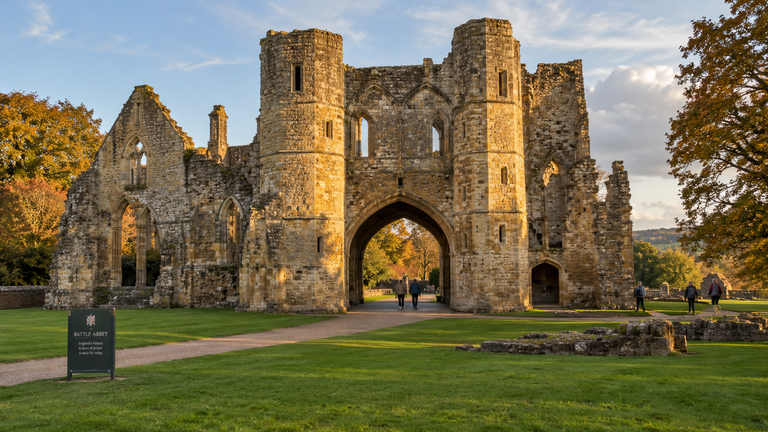
For more medieval battle sites, see our pillar guide to [Internal link: Europe’s Greatest Ancient and Medieval Battlegrounds], and our [Internal link: Battle of Hastings / Battle Abbey guide]. Planning to camp? Our sister site [Campsites and Castles cross-link] covers campsites in northern France.
Tips for visiting Agincourt
- Go in autumn if you can. Visiting near 25 October, St Crispin’s Day, brings the battle closest, and the light and mud feel right.
- Wear walking boots. The tracks are farm tracks and can be heavy going after rain.
- Read up first. Juliet Barker’s Agincourt or Anne Curry’s work on the battle will make the field far more vivid. [Amazon Associates affiliate link]
- Bring binoculars for picking out the treelines and the church spires that mark the villages.
- Pack a picnic. Food options in the village are limited outside festival days.
- Visit Crécy the same day for two of the most famous English longbow victories in one trip.
Frequently asked questions
Is Agincourt worth visiting? Yes, especially if you know the story. The landscape has barely changed since 1415, and the museum is modern, family-friendly and well presented in English.
How long do you need at Agincourt? Half a day is ideal: around two hours in the museum and an hour or so on the battlefield circuit.
Can you visit Agincourt as a day trip from the UK? Yes. It’s roughly 1 hr 15 min from Calais, so a day trip on the ferry or Eurotunnel is very doable.
Is Agincourt the same place as Azincourt? Yes. Agincourt is the traditional English spelling; Azincourt is the village’s French name and what you’ll see on signs.
Is the battlefield free to visit? The battlefield roads and the Calvary memorial are open access. The Centre Azincourt 1415 museum charges admission.