The Somme Battlefield: A Visitor’s Complete Guide
By Nikki | Battleground History
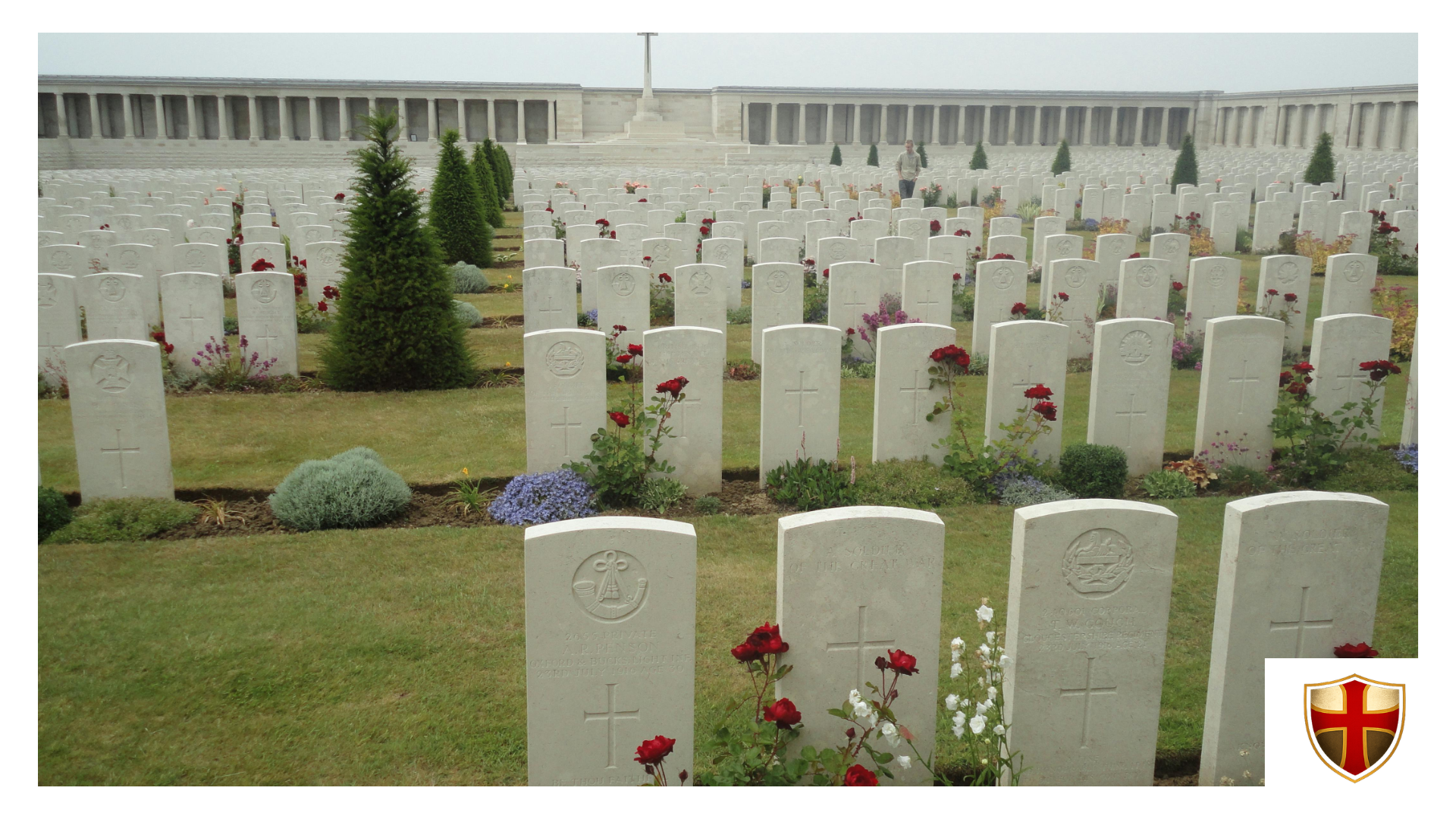
| Of all the battlefields on the Western Front, the Somme carries a particular weight for British visitors. On 1 July 1916 — the first day of the Battle of the Somme — the British Army suffered approximately 57,470 casualties, including around 19,240 killed. It remains the bloodiest single day in the history of the British Army. Walking this ground is not simply a history lesson. It is an act of remembrance. |
The Somme region of northern France is one of the most visited battlefield destinations in the world, and for good reason. The landscape still bears the marks of the conflict — the rolling chalk downland, the carefully tended Commonwealth War Graves Commission cemeteries, the preserved trenches, and the memorials that rise from the fields like quiet sentinels. For anyone with a connection to British, Australian, South African, or Canadian military history, a visit to the Somme is among the most moving experiences a traveller can have.
This complete visitor’s guide covers everything you need to plan a meaningful trip: the key sites, how to get there, where to stay, what to expect, and how to approach the experience with the respect it deserves.
Free Download
The WWI Battlefield Visitor Checklist
Everything to see, pack, and plan before you visit the Western Front — straight to your inbox.
No spam — just battlefield travel guides. Unsubscribe any time.
AT A GLANCE
| Location | Somme department, Hauts-de-France, northern France |
| Nearest town | Albert, Picardy (the main base for battlefield visitors) |
| From the UK | Approximately 2.5–3 hours via Eurotunnel or ferry to Calais, then driving south |
| Best time to visit | April–October for best weather; 1 July for commemorations |
| Time needed | Minimum 1 full day; 2–3 days recommended to do it justice |
| Entry costs | Most memorials and cemeteries are free; museums charge entry (typically €5–12) |
Understanding the Battle of the Somme
Before you go, some historical context will make the experience significantly more meaningful. The Battle of the Somme ran from 1 July to 18 November 1916, along a front that stretched roughly 25 miles (40 km) north to south through the Picardy region of France. It was a joint British and French offensive, intended to relieve pressure on the French Army at Verdun and to break through the German lines.

It achieved neither objective cleanly. The four-and-a-half month battle resulted in approximately 1.5 million casualties across all sides — British, Dominion, French, and German. The British and Dominion forces alone suffered over 400,000 casualties. Yet the Somme was also a pivotal battle in the development of modern warfare: it saw the first large-scale use of tanks, the maturation of combined arms tactics, and the beginning of the end of static trench warfare.
For visitors from the UK, the Somme is often deeply personal. Family history research frequently traces ancestors to this ground. The CWGC cemeteries contain the graves of men from every corner of the British Isles and the former Empire — many buried in the fields where they fell.
Getting There
By Car via Eurotunnel or Ferry
Driving is by far the most practical way to visit the Somme battlefields, as the key sites are spread across a wide rural area and public transport is extremely limited.
- From Folkestone: Take the Eurotunnel to Calais (approx. 35 minutes), then drive south via the A26 motorway toward Arras. Albert is approximately 1 hour 45 minutes from Calais.
- From Dover by ferry: Cross to Calais or Dunkirk (60–90 minutes), then follow the same route south toward Albert.
- From Paris: Albert is approximately 2 hours north via the A1 motorway.
- From Arras: The Somme battlefield is just 30–40 minutes south. Many visitors combine an Arras visit (Vimy Ridge, the Wellington Quarry) with a Somme trip.
By Coach Tour from the UK
A number of UK-based operators run dedicated Somme battlefield tours, which include transport, guiding, and often accommodation. This is an excellent option if you prefer expert interpretation and don’t want to drive.
Recommended operators include Leger Holidays, Equity School Travel, and specialist battlefield tour companies such as Battlefield Tours and Midas Tours. GetYourGuide and Viator also list day tours from Paris and Lille for independent travellers who prefer a shorter visit.
Where to Stay
Albert
Albert is the main town in the Somme battlefield area and the natural base for visitors. It has a modest range of hotels, B&Bs, and restaurants. The town itself has a small battlefield museum and the distinctive Basilica of Notre-Dame de Brebières, whose gilded Madonna and Child statue was famously leaning at a precarious angle during the war after being hit by shellfire.
Amiens
The regional capital of Picardy, Amiens is 30 kilometres south of Albert and offers a wider choice of accommodation, restaurants, and the superb Historial de la Grande Guerre museum at nearby Péronne. Amiens cathedral is one of the finest Gothic buildings in France and well worth a morning of your time.
Rural Gîtes and Farmhouses
For a more immersive experience, several rural gîtes and chambres d’hôtes operate in the Somme countryside, some within walking distance of key memorial sites. Booking.com and Airbnb both list options in the Thiepval, Pozières, and Longueval areas.
The Key Sites to Visit
The Somme battlefield area is large. You cannot see everything in a single day, and trying to rush it does the ground a disservice. Below are the essential sites, organised to help you plan a logical route.

1. Thiepval Memorial
| The largest British war memorial in the world, and the emotional centre of any Somme visit. |
Designed by Sir Edwin Lutyens and inaugurated in 1932, the Thiepval Memorial to the Missing of the Somme bears the names of 72,195 British and South African soldiers who were killed on the Somme between July 1915 and February 1918 and have no known grave. The sheer scale of the structure — 45 metres high, built from red brick and Portland stone — is matched only by the weight of what those names represent.
The memorial stands on the site of the Thiepval Spur, one of the most heavily fortified German positions on the Western Front. Visiting the excellent Thiepval Visitor Centre before walking the memorial itself adds essential context. Allow at least 90 minutes here.
Opening hours: Visitor centre open daily April–October, 10:00–18:00; reduced hours November–March. Memorial accessible at all times.
Entry: Free
Don’t miss: The small Anglo-French cemetery beside the memorial, which contains equal numbers of identified British and French burials — a deliberate symbol of Allied unity.
2. Lochnagar Crater
On the morning of 1 July 1916, British miners detonated a series of enormous mines beneath the German front line. The largest, detonated at Lochnagar near the village of La Boisselle, created a crater 91 metres wide and 21 metres deep. It remains the largest surviving mine crater on the Western Front.
The crater is privately owned and maintained by Richard Dunning, who purchased it in 1978 specifically to preserve it from development. Entry is free. Walking around the rim of the crater and looking down into it is one of the most viscerally powerful experiences on the entire Western Front.
Visiting: Open at all times. Respectful behaviour expected; the crater is treated as a grave site for men still buried within it.
3. Delville Wood (Devil’s Wood) — South African National Memorial
Delville Wood was the scene of some of the fiercest fighting of the entire Somme campaign. From 14 July to 3 September 1916, the South African Brigade fought to hold the wood against repeated German counter-attacks. Of the 3,153 South African soldiers who entered Delville Wood, only 750 survived unwounded.
The memorial and museum here are moving and informative. The museum is particularly well designed and explains the South African contribution to the First World War in moving detail. A single oak tree survived the battle — its descendant now grows at the memorial entrance.
Opening hours: Daily 10:00–17:30. Museum closed Mondays.
Entry: Free
4. Newfoundland Memorial Park, Beaumont-Hamel
This is the only preserved section of the original Western Front trenches on the Somme. The ground here has never been ploughed or developed — the shell craters, communication trenches, and front lines are intact exactly as they were left in 1918. Walking the preserved trench system, guided by the excellent Canadian volunteer interpreters, gives an immediate and unmatched sense of what the landscape looked like during the battle.
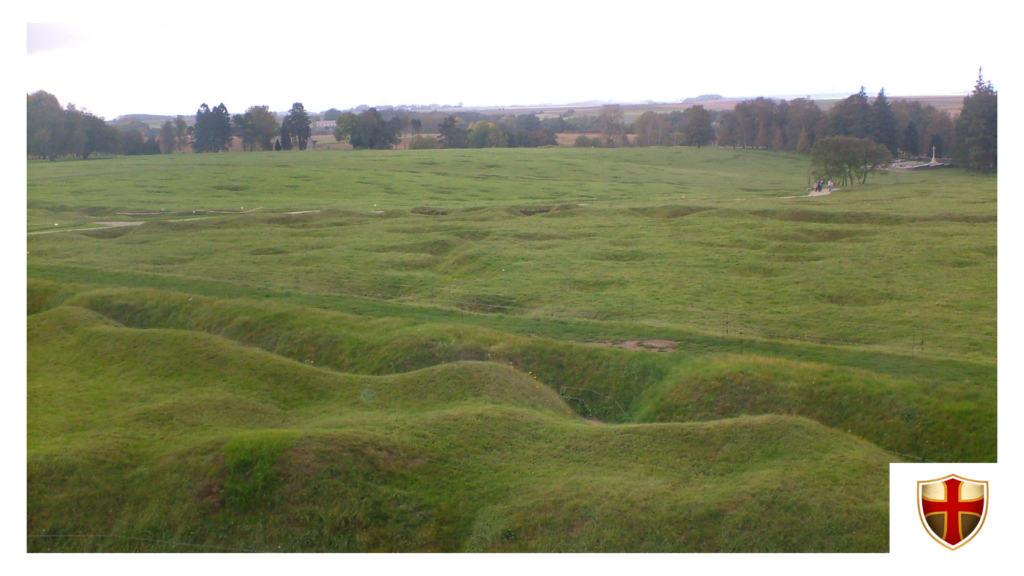
On 1 July 1916, the Newfoundland Regiment left these trenches and advanced toward the German lines. Within 30 minutes, the regiment had suffered 68% casualties. The memorial was established by the Dominion of Newfoundland and is maintained by Veterans Affairs Canada.
Opening hours: Daily, year-round. Guided tours available April–November.
Entry: Free
5. Pozières and the Australian Memorials
Pozières was the site of some of the most intense fighting involving Australian Imperial Force troops on the Western Front. Between 23 July and 3 September 1916, the AIF suffered approximately 23,000 casualties in the Pozières area alone — more than in the entire eight months of the Gallipoli campaign.
The village of Pozières contains several Australian memorials, including the Pozières Memorial to the Missing and the site of the Gibraltar blockhouse. The windmill site at the top of the ridge, now marked by a memorial stone, was the highest point on the Somme and the objective of weeks of brutal fighting. The Tank Corps also has its first memorial here, marking where tanks were first used in the battle.
6. Tyne Cot-equivalent: Serre Road and Sheffield Memorial Park
The Serre Road cemeteries represent one of the most concentrated areas of CWGC burials on the Somme. Sheffield Memorial Park, adjacent to Serre, commemorates the Sheffield City Battalion (12th York and Lancaster Regiment) who went over the top on 1 July 1916 and were virtually annihilated within minutes. The park preserves a section of the original trenches and is one of the quieter, more contemplative spots on the battlefield.
7. Historial de la Grande Guerre, Péronne
If you have time for only one museum during your visit, make it the Historial de la Grande Guerre in Péronne. Set in a restored medieval castle, it presents the First World War from the French, British, and German perspectives simultaneously — a deliberately comparative approach that provides essential context for understanding the conflict as a whole rather than through a single national lens.
The collection includes uniforms, personal effects, documents, and artworks. The museum’s layout, which places the three nations’ displays facing each other across the central space, is quietly radical and enormously effective.
Opening hours: Daily 9:30–18:00 (October–April 10:00–17:00). Closed January.
Entry: Adults €9.50, children free
Planning Your Route
The key sites are spread across an area roughly 20 miles north to south and 10 miles east to west. A logical itinerary for a two-day visit might look like this:

Day One: The Main Ridge
- Morning: Thiepval Memorial and Visitor Centre (allow 2 hours)
- https://commons.wikimedia.org/wiki/File:Drone_photo_of_the_%22Trou_de_mine%22.jpgLate morning: Lochnagar Crater at La Boisselle (30–45 minutes)
- Lunch: Albert town centre
- Afternoon: Delville Wood South African Memorial and Museum (1.5 hours)
- Late afternoon: High Wood and Longueval (30 minutes to walk and reflect)
- Evening: Return to Albert or Amiens
Day Two: The Northern Somme
- Morning: Newfoundland Memorial Park, Beaumont-Hamel (allow 2 hours with guided tour)
- Late morning: Serre Road cemeteries and Sheffield Memorial Park (1 hour)
- Lunch: Village of Serre or picnic at one of the cemeteries
- Afternoon: Pozières Australian memorials and windmill site (1 hour)
- Late afternoon: Drive the ridge road slowly, stopping at any cemeteries that call to you
- Evening: Dinner in Amiens, with time to visit the cathedral
Practical Information
Entry Costs
Almost all memorials, cemeteries, and battlefield sites are free to enter. The main costs are museum entry fees (typically €5–12 per person) and accommodation. Budget for parking at some sites (usually €2–3 per day where charged).
What to Bring
- Comfortable walking shoes — many sites involve walking across uneven ground
- Weather-appropriate clothing — the Somme is exposed chalk downland and can be cold and windy even in summer
- A battlefield guidebook — the Battleground Europe series (Pen & Sword) publishes individual guides for almost every section of the Somme
- A CWGC app or access to the CWGC website to search for specific graves
- Cash — some smaller sites and car parks do not accept cards
- A camera, but approach photography with sensitivity and respect
Accessibility
Many of the major sites, including Thiepval, Delville Wood, and the Historial de la Grande Guerre, have good disabled access. The preserved trench areas at Newfoundland Memorial Park involve uneven ground and are not fully accessible to wheelchair users, though the park itself can be visited from the perimeter path.
Visiting Respectfully
| The Somme is not a tourist attraction in the conventional sense. It is a place of burial, mourning, and remembrance. Approaching it with the solemnity and respect it deserves is not just a courtesy — it is the foundation of a meaningful visit. |
Some guidance for visiting battlefield sites and cemeteries:
- Keep noise to a minimum in cemeteries and at memorial sites
- Do not climb on memorials, grave markers, or earthworks
- Do not remove anything from the ground — unexploded ordnance is still found regularly across the Somme region and should never be touched
- Photography is generally acceptable, but be thoughtful about what you photograph and how
- If you are accompanying children, prepare them in advance for what they will see and discuss why these places are important
- Many visitors leave a small poppy or personal tribute at a gravestone — this is welcomed
Tracing an Ancestor on the Somme
One of the most powerful reasons to visit the Somme is to find the grave or memorial panel of a specific individual. The Commonwealth War Graves Commission maintains a free online database (cwgc.org) that allows you to search by name and find the exact location of any identified burial or commemorated missing soldier.
Once you have a name and location, the CWGC provides the precise cemetery and row reference, making it straightforward to find a specific grave. Many visitors find this the most affecting part of the entire trip — standing at a single stone that was, until that moment, just a name in a family story.
Seasonal Highlights
1 July — Somme Commemoration Day
Each year on 1 July, a series of commemorations takes place at sites across the Somme, including the Dawn Service at Thiepval and the New Zealand and South African memorial services. These events are open to the public and are deeply moving experiences. Book accommodation well in advance if visiting for this date.
Remembrance Sunday
In November, services are held at the major memorials across the Somme. The Thiepval Last Post ceremony, which takes place every evening at dusk, is held year-round and is particularly worth attending during the Remembrance period.
Final Thoughts
The Somme is a place that stays with you. The scale of the losses, the youth of the men buried here, the quiet order of the cemeteries, the vast names on the Thiepval Memorial — it is a landscape that demands to be experienced slowly and with open eyes.
Go prepared, go respectfully, and give yourself time to stop when a place moves you. That is what this ground deserves.
The Complete Guide to Visiting World War I Battlefields on the Western Front
| Further reading: Before your visit, consider reading ‘Somme’ by Lyn Macdonald, ‘Birdsong’ by Sebastian Faulks (fiction, but deeply grounded in the reality of the Western Front), or the superb ‘Tommy’ by Richard Holmes for a comprehensive account of the British soldier’s experience. |