The Best D-Day Guided Tours from the UK
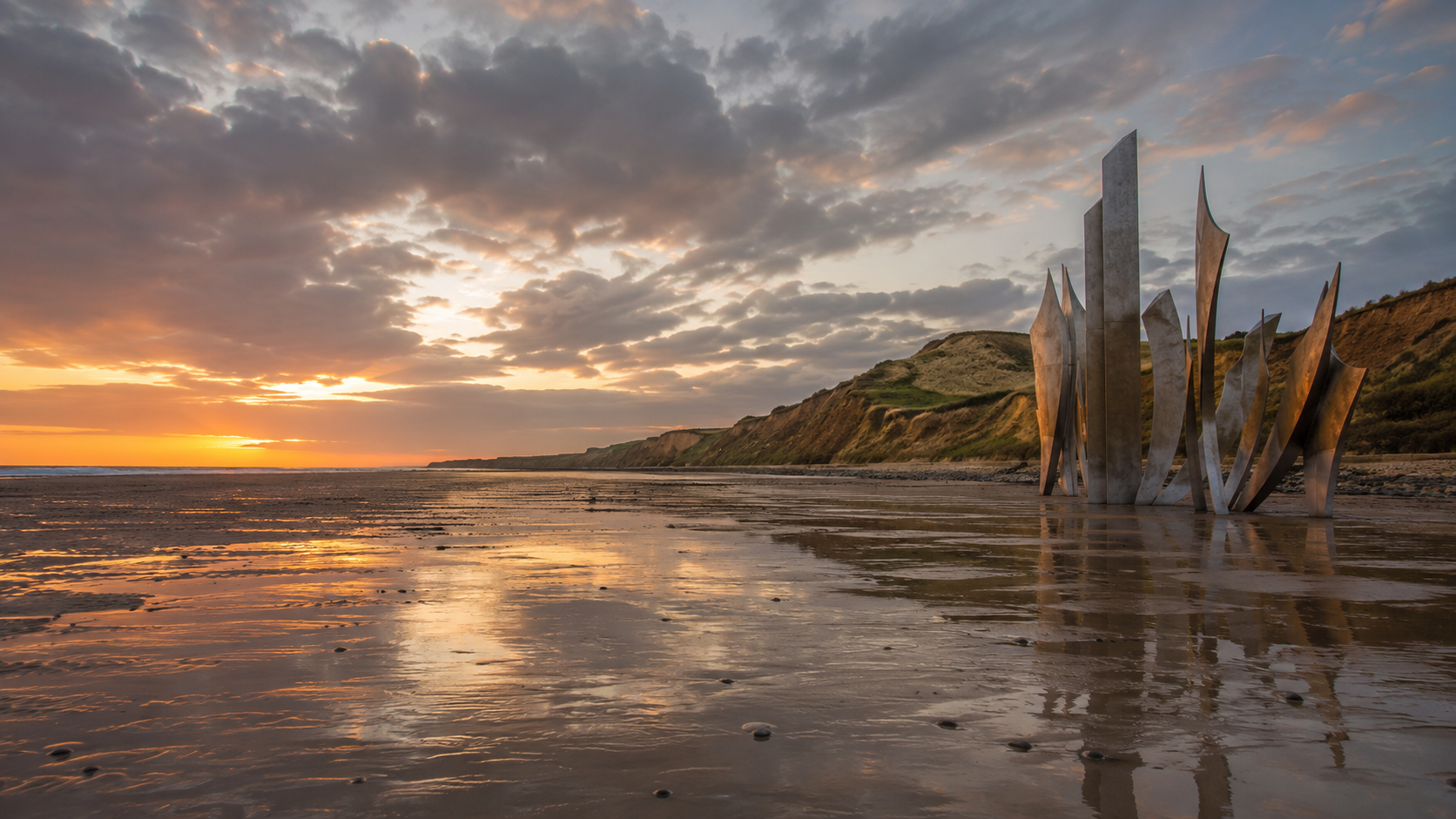
Standing on Omaha Beach at low tide, with the bluffs rising behind you and the vast, flat sand stretching towards the sea, is one of those travel moments that stays with you for life. But Normandy’s D-Day sites are spread across a sixty-mile stretch of coastline, and the story they tell is complex. This is one destination where a good guide transforms the experience — turning a windswept beach into the opening chapter of the liberation of Europe.

The good news for UK travellers is that we’re spoilt for choice. Normandy is close enough for a long weekend, and British operators have been running battlefield tours there for decades. This guide compares the best D-Day tours from the UK, from fully escorted coach tours with specialist historians to small-group day trips you can bolt onto your own Normandy holiday.
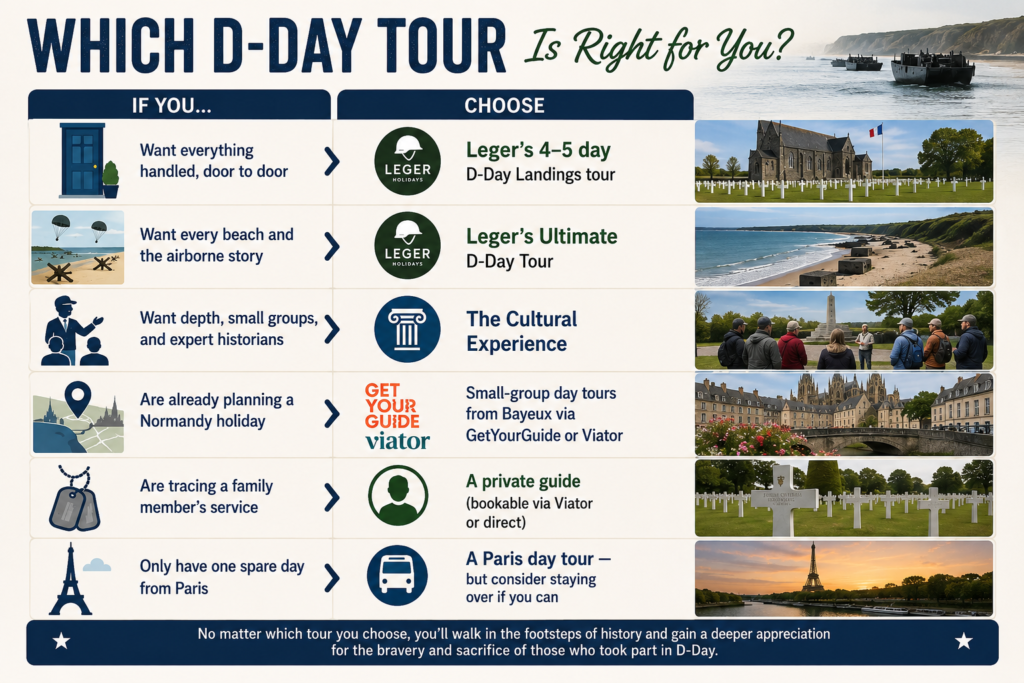
How to Choose the Right D-Day Tour
Before comparing operators, it helps to know which style of tour suits you. Broadly, you have three options:
Fully escorted tours from the UK. Coach travel from a UK joining point, hotels, most meals, and a specialist battlefield guide throughout. The easiest option, ideal if you’d rather not drive in France, and the best value for solo travellers who want company and expertise.
Free Download
The WWI Battlefield Visitor Checklist
Everything to see, pack, and plan before you visit the Western Front — straight to your inbox.
No spam — just battlefield travel guides. Unsubscribe any time.
Specialist historian-led tours. Smaller groups, deeper history, often led by published authors or former military officers. More expensive, but if you’ve read widely about Operation Overlord and want detail rather than highlights, this is your category.
Independent travel plus local guided tours. Make your own way to Normandy (ferry, Eurotunnel, or train), then join expert-led small-group day tours from Bayeux or Caen. The most flexible option and often the cheapest overall — this is how I’d recommend visiting if you also want time for Bayeux, Honfleur, or the wider region.

Fully Escorted D-Day Tours from the UK
Leger Holidays — D-Day Landings in Normandy
Leger is the UK’s biggest name in battlefield touring, with more than fifty escorted battlefield itineraries and a team of specialist guides led by military historian Paul Reed. Their core D-Day Landings in Normandy tour runs over four or five days from local UK joining points, based in Caen for three nights.
The itinerary is superbly balanced between the British/Canadian and American stories: Pegasus Bridge and Ranville War Cemetery, Sword, Juno and Gold beaches, the British Normandy Memorial, Arromanches and the Mulberry Harbour, then the Normandy American Cemetery, the Overlord Museum, Omaha Beach, Sainte-Mère-Église and Utah Beach. Battlefield tours in Leger’s current programme start from around £429 for a four-day itinerary, making this one of the most affordable ways to see the beaches with an expert.
One thing to note for 2026–27 bookings: the Pegasus Memorial Museum closes for refurbishment from September 2026 until 2028, so itineraries departing after that date will adjust — check the current itinerary before booking.
Best for: First-time visitors who want everything organised, solo travellers, anyone who prefers not to drive abroad.
Leger Holidays — The Ultimate D-Day Tour
If the standard tour feels like a highlights reel, Leger’s Ultimate D-Day Tour goes deeper: all five invasion beaches, both Airborne sectors, the Merville Battery, Pointe du Hoc where the US Rangers scaled the cliffs, the German cemetery at La Cambe, and lesser-visited sites like the La Fière bridge, crucial to the 82nd Airborne’s fight. It’s the tour to choose if you want the full sweep of 6th June 1944 rather than the famous names alone.
Best for: Returning visitors and serious enthusiasts who want the complete picture.
The Cultural Experience — Historian-Led Normandy Tours
The Cultural Experience. led Normandy Tours, is a specialist British military history tour operator whose trips are led by expert historians — frequently published authors and academics. Group sizes are smaller than the big coach operators, the pace allows for real discussion, and the itineraries assume you already care about the detail. Expect to pay considerably more than a coach tour, but the depth of interpretation is in a different league.
Best for: Well-read enthusiasts, veterans’ families researching a specific unit’s story, and anyone who wants seminar-quality history in the field.
Small-Group Day Tours (If You’re Making Your Own Way to Normandy)
Travelling independently doesn’t mean going unguided. Bayeux is the ideal base — it’s fifteen minutes from the coast, survived the war almost untouched, and is where most of the best local guiding companies start their tours.
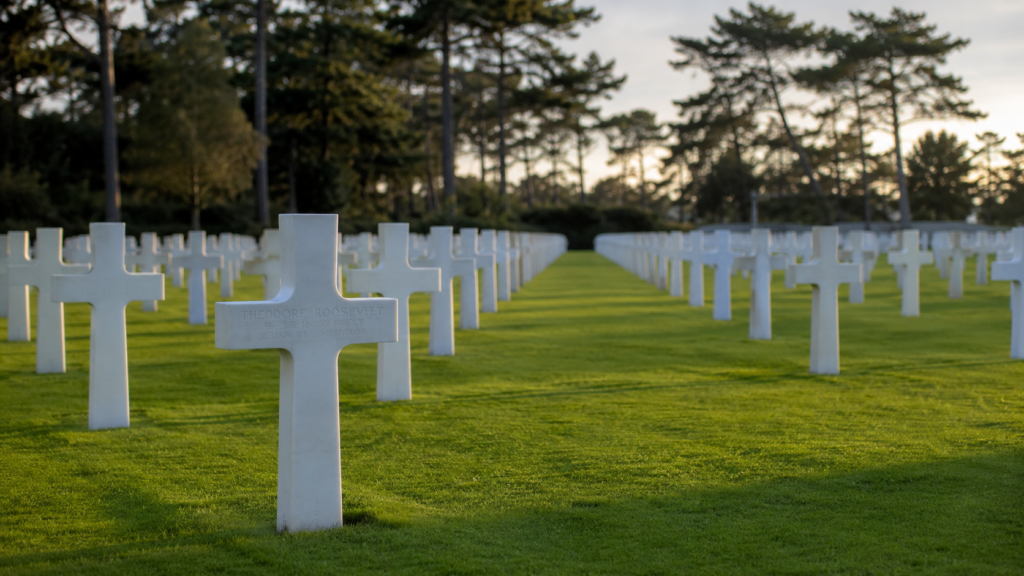
Full-day American sector tours from Bayeux typically cover the Normandy American Cemetery, Omaha Beach, Pointe du Hoc, Utah Beach and Sainte-Mère-Église. British and Canadian sector tours take in Pegasus Bridge, Sword, Juno and Gold beaches, and Arromanches. Half-day options exist for both, but the full day is worth it — the distances between sites are deceptive.
Book these through GetYourGuide or Viator, where you can compare guides, read recent reviews, and cancel free up to 24 hours before most tours. Prices for a full-day small-group tour generally run from around £90–£150 per person; private tours for families or groups cost more but let you tailor the day — invaluable if you’re tracing a relative’s route.
Day tours from Paris also exist (roughly 14 hours door to door), and they’re a reasonable fallback if Normandy doesn’t fit your itinerary — but it’s a long day for a place that deserves two.
Practical Tips Before You Book
- Book early for anniversary season. Departures around 6th June sell out months ahead, and Normandy accommodation prices spike. If you want the commemorative atmosphere, book by January; if you want quiet reflection, go in May or September instead.
- Check which sectors the tour covers. Many day tours are American sector or British/Canadian sector, not both. If your family connection is with a specific landing beach, confirm it’s on the itinerary before booking.
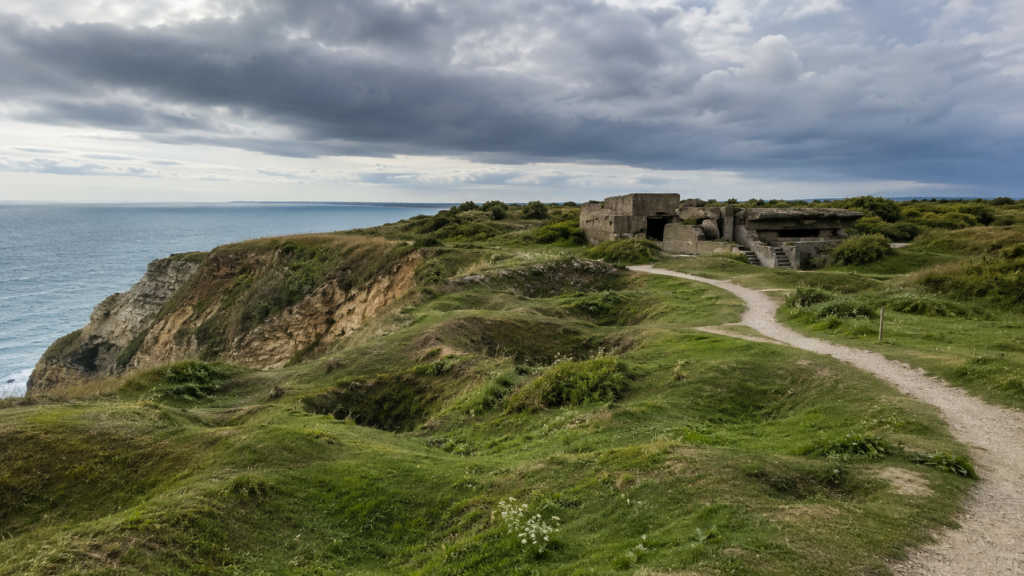
- Expect walking on uneven ground. Pointe du Hoc in particular involves walking around shell craters and bunkers. Most operators note accessibility on each itinerary.
- Take layers, whatever the season. The Normandy coast is windy year-round, and much of the day is spent outdoors.
- Leave time for Bayeux. The Bayeux War Cemetery, the excellent Musée Mémorial, and the Bayeux Tapestry (a battlefield story of a rather earlier invasion) make it far more than a base town.
Frequently Asked Questions
How many days do you need for the D-Day beaches? Two full days is the sweet spot — one for the American sector, one for the British and Canadian sector. A single well-planned day with a guide covers the highlights, but you’ll want to come back.
Can you visit the D-Day beaches without a car? Yes — this is exactly what guided tours from Bayeux solve. Public transport between the sites is limited, so a small-group tour is the practical car-free option.
Are D-Day tours suitable for children? Most operators welcome children, and sites like Arromanches and the Airborne Museum at Sainte-Mère-Église engage younger visitors well. The cemeteries and Omaha Beach need more careful framing — see our guide to visiting battlefields with family for age-appropriate suggestions.
What’s the best time of year to visit Normandy’s D-Day sites? May, early June and September offer the best balance of weather, opening hours and crowds. The days around 6th June are extraordinary but extremely busy.
Planning your own trip instead? Start with our Complete Guide to Visiting the D-Day Beaches in Normandy and our self-guided D-Day itinerary on a budget.