Normandy on a Budget: Self-Guided D-Day Itinerary
Normandy doesn’t require a £200-a-day guided coach tour to visit properly. With your own car (or the right combination of trains, buses, and taxis), a good map, and three days, you can follow the D-Day story from the American paratrooper drop zones at Sainte-Mère-Église to the British and Canadian landing beaches near Bayeux — at a fraction of the cost, and on your own schedule.
This is a practical, budget-first self-guided D-Day itinerary: what to see, how to get there without an operator, where to sleep for less, and where it’s worth spending a little more.
Why Go Self-Guided
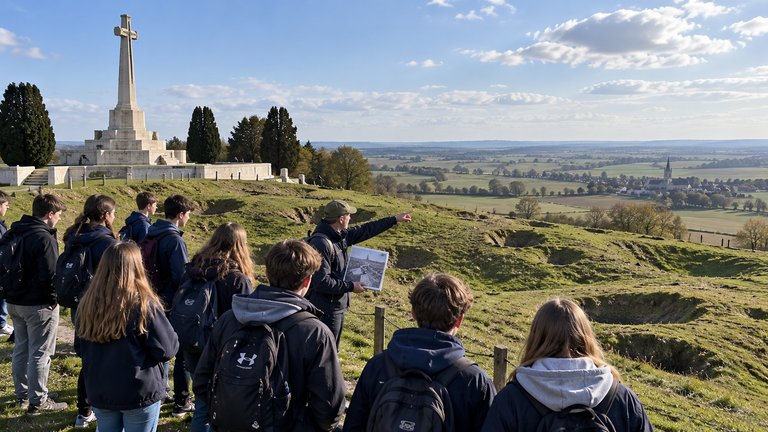
Group tours in Normandy are excellent if time is tight and you want deep expert commentary at every stop. But they’re expensive — often £80–£150 per person for a single day — and they move you through sites on someone else’s clock. Self-guided travel costs a fraction of that, lets you linger at the sites that matter to you (an hour at the American Cemetery, ten minutes at a roadside marker), and works well across the whole D-Day landscape, since most of the key sites sit within a 45-minute drive of each other along the coast between Sainte-Mère-Église and Ouistreham.
The trade-off is preparation. A self-guided trip rewards a little homework — knowing what each beach code name means, roughly what happened where, and which museums are worth the entry fee versus which are skippable.
Free Download
The WWI Battlefield Visitor Checklist
Everything to see, pack, and plan before you visit the Western Front — straight to your inbox.
No spam — just battlefield travel guides. Unsubscribe any time.
Getting There and Getting Around Without a Tour Operator
By car (recommended): Renting a car in Caen or Bayeux is the single best budget move for this trip. A small hire car for three days typically costs less than one day of a group coach tour, and it lets you cover Utah Beach, Omaha Beach, Pointe du Hoc, Gold, Juno, and Sword in a single loop.
By train and local bus: Trains run from Paris Saint-Lazare to Bayeux and Caen in around two hours. From Bayeux, the Bus Verts network (now Nomad Car) connects to Arromanches and some beach towns, though services thin out and don’t reach every site — this option needs more planning and patience than the drive.
By bike: Cyclists based in Bayeux or Arromanches can reach Gold, Juno, and parts of Omaha comfortably in a day; the American sector further west is a longer ride.
The Three-Day Self-Guided Route
Day One: Utah Beach and the Airborne Story
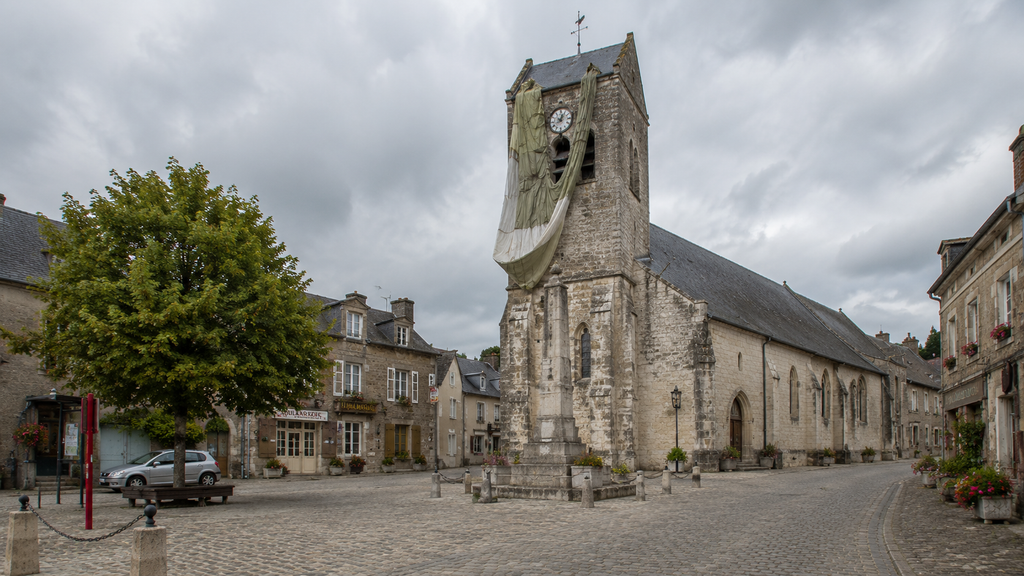
Base yourself in or near Sainte-Mère-Église, the first French town liberated on D-Day and instantly recognisable from the parachute still hanging from the church tower.
- Sainte-Mère-Église — the church square, the Airborne Museum, and a free wander through the town itself
- Utah Beach — quieter and less visited than Omaha, with a small museum and a wide, walkable stretch of sand
- La Fière Bridge — the site of one of the fiercest airborne engagements of the invasion, free to visit and rarely crowded
Day Two: Omaha Beach, Pointe du Hoc, and the American Cemetery
This is the most visited day of any D-Day trip, and worth the time it takes.
- Pointe du Hoc — the cratered clifftop where US Army Rangers scaled sheer rock under fire; free entry, dramatic, and one of the few sites where the 1944 landscape is still largely untouched
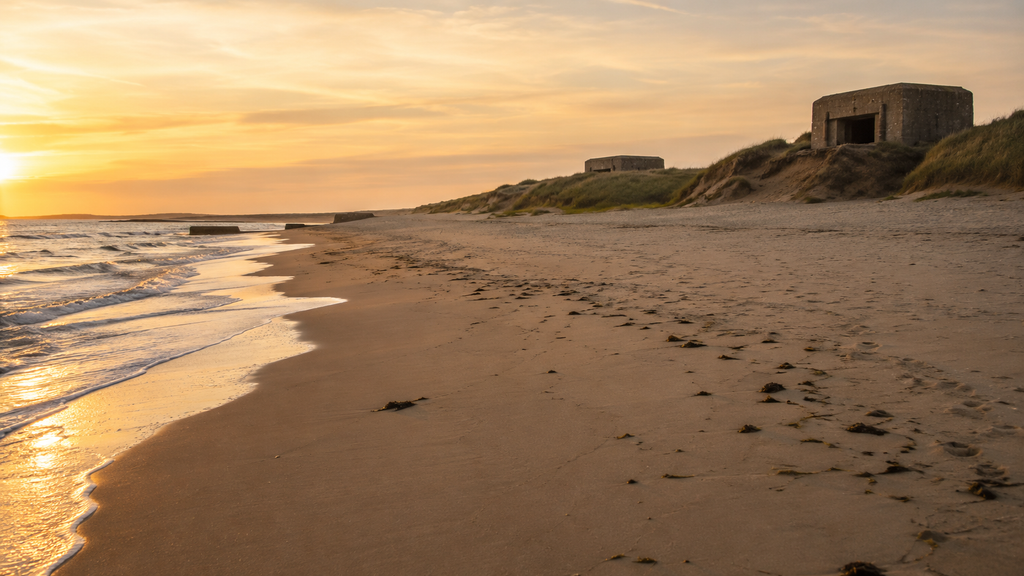
- Omaha Beach — walk the sand at low tide to understand the scale of open ground the landing troops crossed
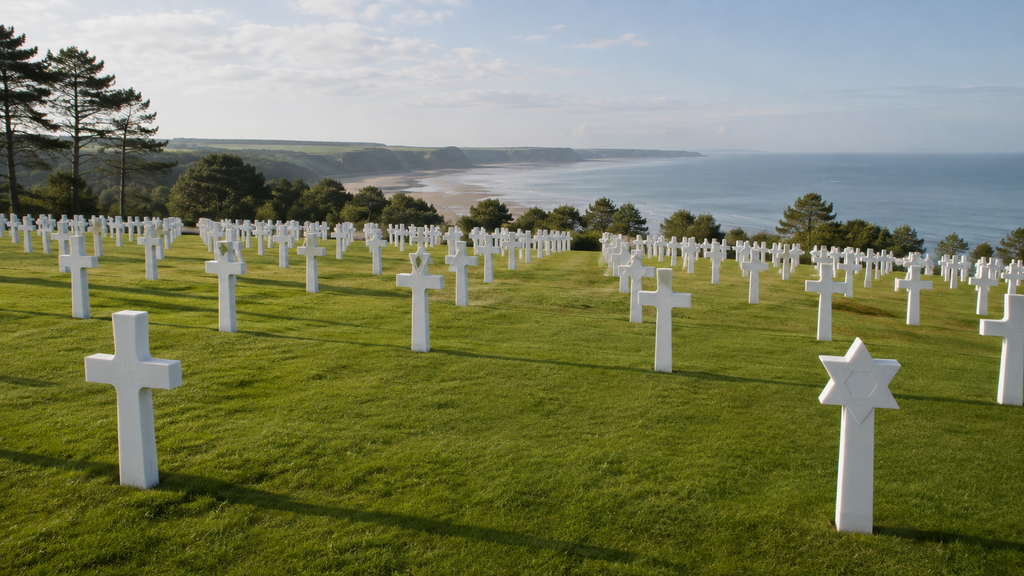
- Normandy American Cemetery, Colleville-sur-Mer — 9,000-plus graves overlooking the beach; free entry, and worth at least an hour
The American Cemetery at Colleville-sur-Mer: A Visitor’s Guide
Day Three: Gold, Juno, Sword, and Arromanches
The British and Canadian sectors see fewer visitors than Omaha but hold some of the most tangible remains of the invasion.
- Arromanches — remnants of the Mulberry harbour are still visible in the water at low tide; the beachfront town has a free viewpoint above the museum
- Juno Beach Centre — the main Canadian-run museum and memorial, with a modest entry fee
- Pegasus Bridge, near Sword Beach — the original bridge (now displayed beside a replacement) captured by British glider troops in the opening minutes of the invasion
Utah Beach, Sword Beach, Gold Beach, and Juno Beach: The Full Guide
Where to Stay for Less
Skip the hotels directly on the D-Day tourist circuit in Bayeux and Arromanches, where prices climb every June. Small towns like Isigny-sur-Mer, Trévières, and Formigny sit within a short drive of every major site and offer chambres d’hôtes (French B&Bs) and gîtes at noticeably lower rates. Booking outside the D-Day anniversary window (early June) also brings prices down significantly.
Budget Breakdown: What This Trip Actually Costs
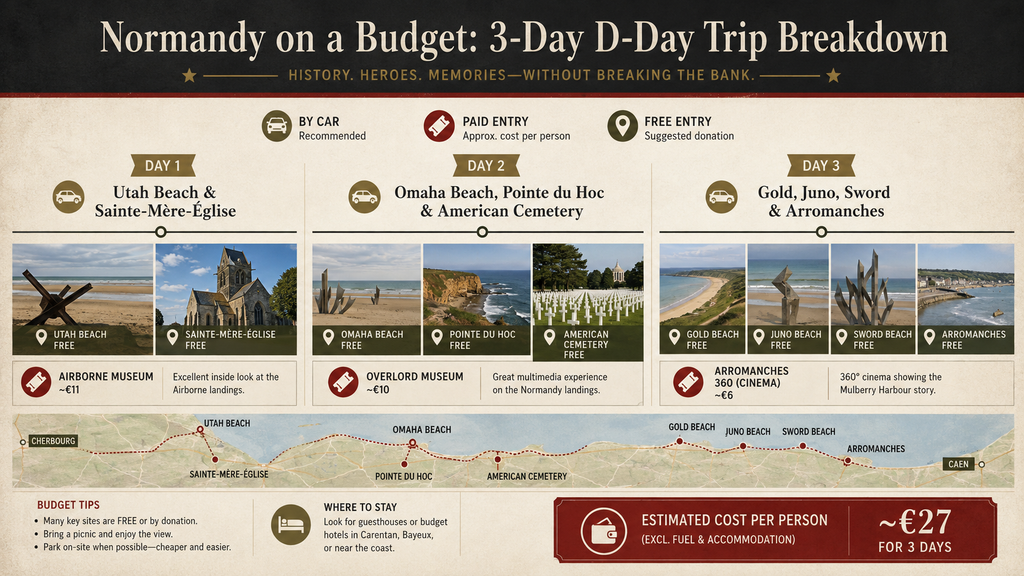
A three-day, two-person self-guided trip — car hire, fuel, modest accommodation, museum entries, and food — runs considerably below the cost of the equivalent two days on a private guided tour. The heaviest single spend is usually the car hire; almost everything else, including several of the most moving sites (Pointe du Hoc, Omaha Beach, the American Cemetery, Utah Beach), is free to visit.
Practical Tips for Visiting Respectfully and Efficiently
- Visit the American Cemetery and Pointe du Hoc early in the day, before coach tour groups arrive
- Bring cash — some smaller museums and rural cafés don’t accept cards
- Sites are outdoors and exposed to Channel weather; bring a layer even in summer
- Move slowly at the cemeteries and monuments — these are still active memorial sites, not just photo stops
- Download offline maps before you go; signal is patchy along parts of the coast road
Final Thoughts
A self-guided D-Day itinerary through Normandy doesn’t cut corners on the history — if anything, it lets you spend more time at the sites that matter most to you, at a cost that keeps this trip realistic for independent travellers rather than only tour groups. Three days, a hire car, and a little planning is enough to properly understand what happened along this stretch of coast in June 1944.