Utah Beach, Sword Beach, Gold Beach, and Juno Beach: The Full Guide
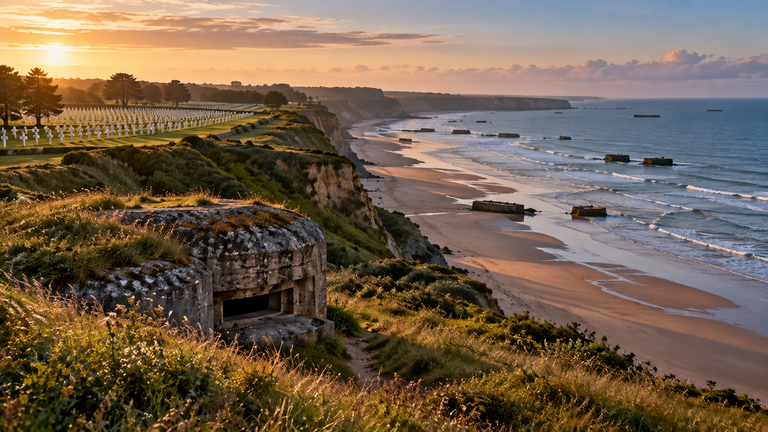
Omaha Beach gets the films, the photographs, and most of the visitors. But D-Day was fought across five beaches spanning fifty miles of Normandy coastline, and the other four — Utah, Sword, Gold, and Juno — each tell a story you simply won’t find at Omaha. American paratroopers dropping into flooded marshland behind Utah. British commandos landing at Sword with bagpipes playing. The astonishing artificial harbour still visible in the sea off Gold. And at Juno, the Canadians pushing further inland on D-Day than any other Allied force.
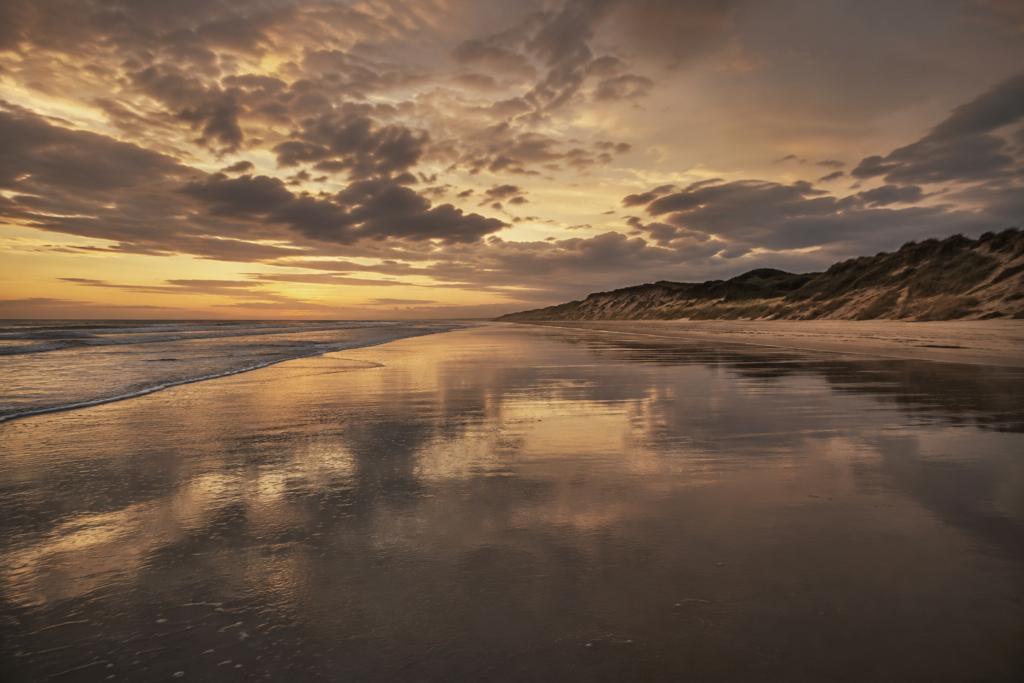
This guide covers all four beaches from west to east: what happened at each, what to see today, how long to allow, and how to string them together into one unforgettable trip.
A Quick Orientation: The Five D-Day Beaches
On 6 June 1944, Allied forces landed on five codenamed beaches along the Normandy coast. From west to east:
Utah (American) — the westernmost beach, on the Cotentin Peninsula. Omaha (American) — the bloodiest of the five. Gold (British) — centre of the invasion front, home to the Mulberry harbour. Juno (Canadian) — where Canada suffered heavily but advanced furthest. Sword (British) — the eastern flank, closest to Caen.
Free Download
The WWI Battlefield Visitor Checklist
Everything to see, pack, and plan before you visit the Western Front — straight to your inbox.
No spam — just battlefield travel guides. Unsubscribe any time.
Driving the full length from Utah to Sword takes around ninety minutes without stops — but you’ll want the stops. Most visitors base themselves in Bayeux, which sits conveniently behind Gold Beach, roughly in the middle of the invasion area.
Omaha Beach: What to See, Where to Stay, and How to Honour the Fallen
Utah Beach: The Western Flank
What Happened Here
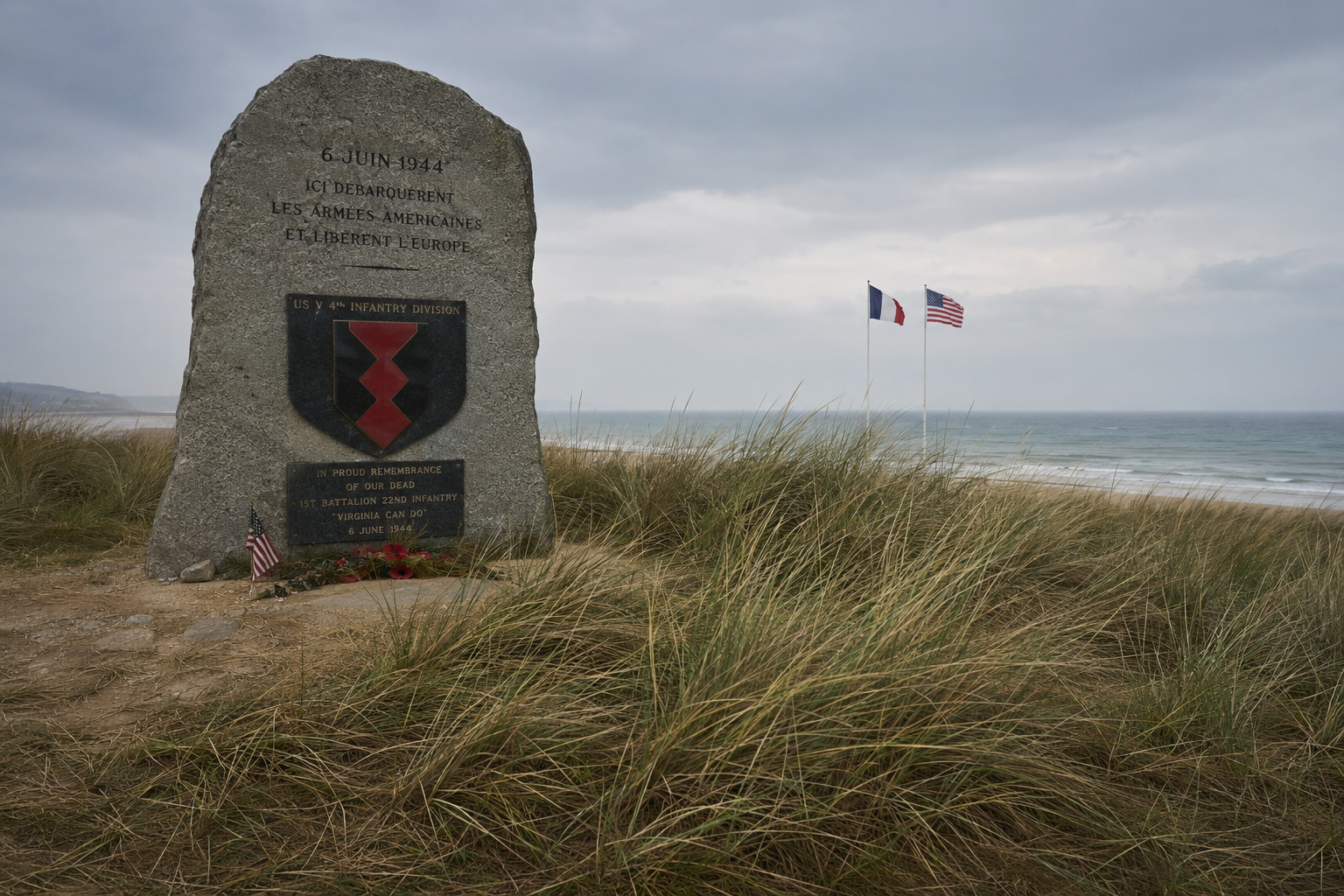
Utah was added to the invasion plan late, to secure a foothold on the Cotentin Peninsula and open the road to the deep-water port of Cherbourg. In one of D-Day’s great strokes of fortune, strong currents pushed the first landing craft nearly two kilometres south of their intended position — onto a stretch of coast that happened to be far more lightly defended. Brigadier General Theodore Roosevelt Jr., the eldest son of the former president and the only general to land with the first wave, famously assessed the situation and declared they would start the war from right there.
Utah became the least costly of the five beaches in terms of casualties on the day itself. But the fighting behind it — in the flooded fields and hedgerows where the 82nd and 101st Airborne had dropped in darkness hours earlier — was chaotic and brutal.
What to See Today
The Utah Beach Landing Museum is one of Normandy’s best. Built around a preserved German strongpoint, its collection includes an original B-26 Marauder bomber — one of very few remaining anywhere in the world. Allow at least two hours.

Sainte-Mère-Église, ten minutes inland, is inseparable from the Utah story. This was the town where paratrooper John Steele’s canopy snagged on the church steeple, leaving him hanging for hours as the battle raged below — an effigy still hangs there today. The Airborne Museum in the town square is superb, particularly for families.
The Leclerc Monument and milestone 00 at the beach itself marks the starting point of the Voie de la Liberté — the “Liberty Road” that traces the Allied advance all the way to Bastogne.
Practical notes: Utah is the most remote of the four beaches, around 50 minutes’ drive from Bayeux. Combine it with Sainte-Mère-Église and, if time allows, the German battery at Crisbecq or Azeville. Half a day minimum; a full day if you include the airborne drop zones.
Gold Beach: The Engineering Marvel
What Happened Here
Gold was the British centre-punch of the invasion. The 50th (Northumbrian) Division landed here with two objectives: capture the town of Bayeux and link up with the Americans at Omaha and the Canadians at Juno. By the end of D-Day, British troops had pushed further inland from Gold than from almost anywhere else, and Bayeux fell the next morning — the first city in France to be liberated.
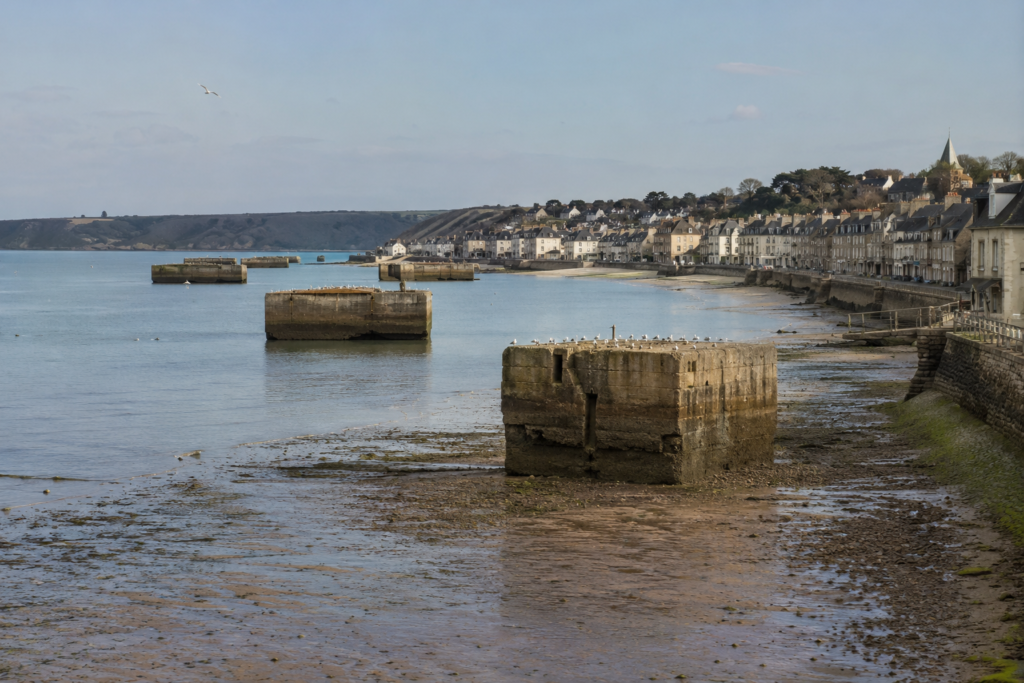
But Gold’s greatest legacy is what came after the landings. Off the village of Arromanches, the Allies built one of the most audacious engineering projects of the war: Mulberry Harbour B, an entire artificial port towed across the Channel in sections and assembled under fire.
What to See Today
Arromanches is the essential stop. At low tide, the massive concrete caissons of the Mulberry harbour still sit in the bay — an extraordinary sight, and one of the very few places on the invasion coast where the physical infrastructure of D-Day survives at scale. The Musée du Débarquement on the seafront explains how the harbour worked, and the Arromanches 360 circular cinema on the clifftop above shows archive footage in the round.
The Longues-sur-Mer battery, between Gold and Omaha, is the only German coastal battery in Normandy that still has its original guns in place. It’s free to visit, hauntingly atmospheric, and appears in The Longest Day.
Bayeux itself deserves your evening. It survived the war almost untouched, its cathedral is magnificent, and — a thousand years of military history in one small town — it’s also home to the Bayeux Tapestry, chronicling that other cross-Channel invasion of 1066, in the opposite direction.
Practical notes: Arromanches is 15 minutes from Bayeux. Check the tide times before you go — the Mulberry remains are far more impressive at low tide. Allow half a day for Arromanches and Longues-sur-Mer together.
Juno Beach: Canada’s D-Day
What Happened Here
Juno was assigned to the 3rd Canadian Infantry Division, and it was a brutal assignment. Offshore reefs forced a later landing time than the other beaches, which meant the rising tide had covered many of the German beach obstacles — and the mines attached to them. Casualty rates in the first wave at Juno were among the worst of the day outside Omaha. The seaside towns of Courseulles, Bernières, and Saint-Aubin had been fortified street by street, and the Canadians had to fight through them house by house.
And yet, by nightfall, Canadian troops had advanced further inland than any other Allied force on D-Day. For a nation of only eleven million people, Juno became — and remains — a defining moment of national identity.
What to See Today
The Juno Beach Centre at Courseulles-sur-Mer is Canada’s memorial museum in Normandy, and it’s excellent — covering not just D-Day but Canada’s entire war effort, with a strong human focus. Guided tours led by young Canadian staff take you into the German bunkers preserved in the dunes outside.
Canada House at Bernières-sur-Mer, a distinctive Norman villa right on the seafront, is one of the most photographed buildings of D-Day — it appears in the background of famous landing footage and was among the first houses in France liberated on 6 June.
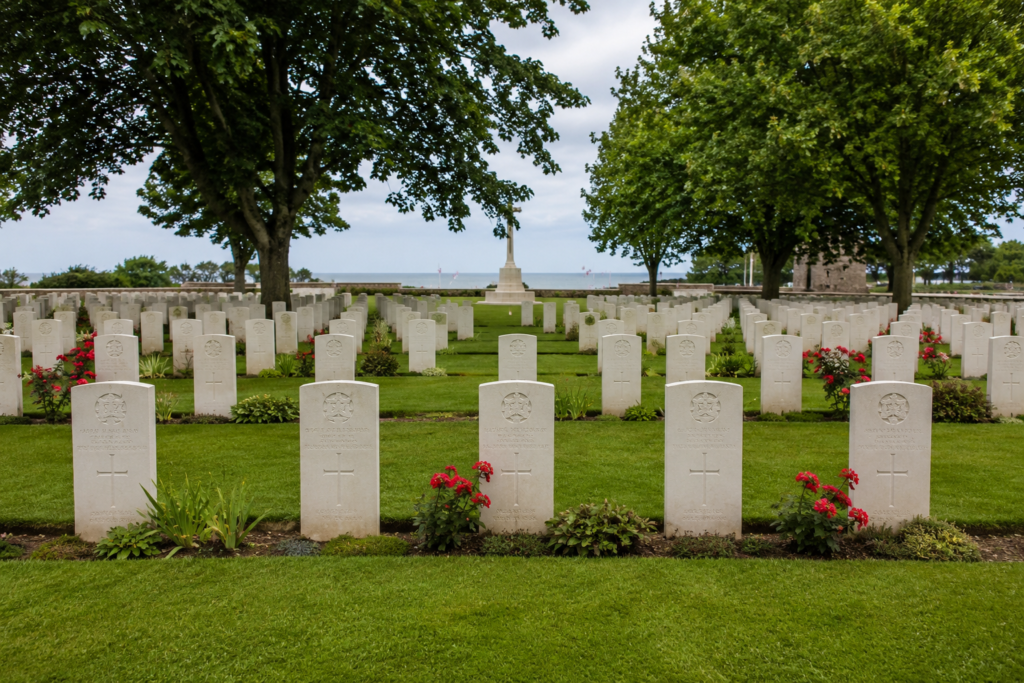
The Bény-sur-Mer Canadian War Cemetery, a few kilometres inland, is the resting place of more than 2,000 Canadians, most killed on D-Day and in the early days of the Normandy campaign. It is quieter than the American cemetery at Colleville and deeply moving for it.
Practical notes: Juno’s sites sit close together along the coast road, about 25 minutes from Bayeux. Half a day is enough for the Centre, Canada House, and the cemetery — but this is a beach that rewards slow walking.
Sword Beach: The Eastern Flank
What Happened Here
Sword was the easternmost beach and, in some ways, the most ambitious assignment of the day: the British 3rd Division was to land and take Caen, Normandy’s capital city, before nightfall. That objective proved wildly optimistic — Caen would not fully fall for another six weeks — but Sword produced some of D-Day’s most storied moments.
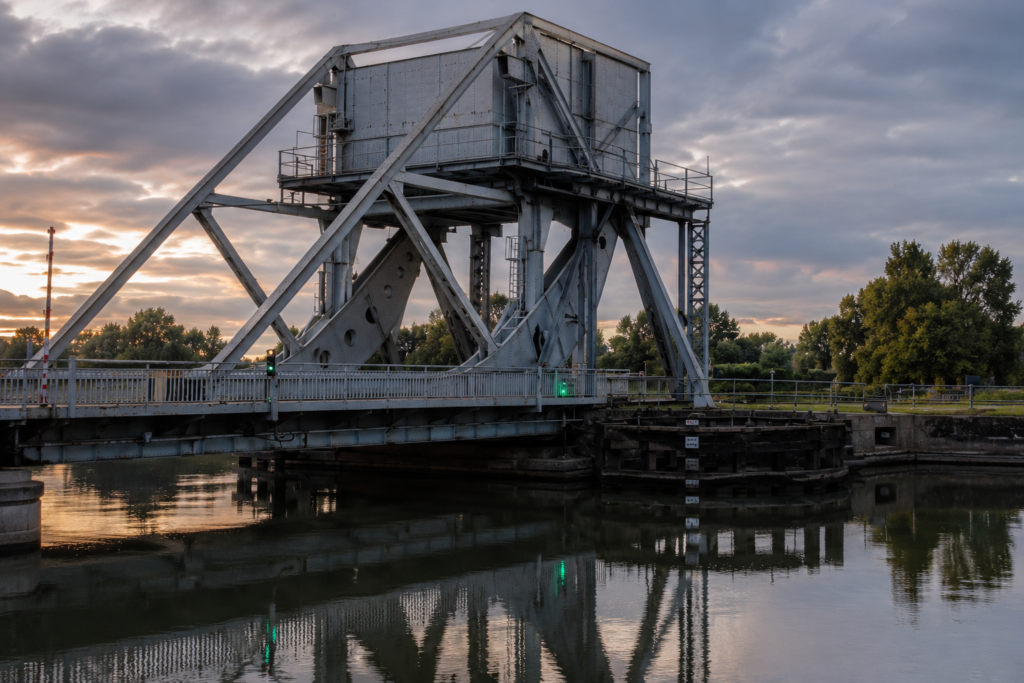
Hours before the seaborne landings, glider troops of the 6th Airborne seized the bridges over the Caen Canal and River Orne in a nighttime coup de main — the action at what is now called Pegasus Bridge. On the beach itself, Lord Lovat’s commandos landed with his personal piper, Bill Millin, playing the bagpipes as men fell around him — the Germans reportedly didn’t shoot him because they thought he’d gone mad. The commandos then fought through to relieve the airborne troops at the bridge, arriving famously close to their planned schedule.
What to See Today
Pegasus Bridge at Bénouville is one of the great D-Day sites. The original bridge — replaced in 1994 — now stands in the grounds of the Memorial Pegasus museum, alongside a full-size replica Horsa glider. Across the road, the Café Gondrée claims the title of the first house in France to be liberated, and it’s still run by the same family. Have a coffee; it’s tradition.
Ouistreham, at the eastern end of Sword, has the Grand Bunker Museum — a preserved 17-metre German fire-control tower restored floor by floor to its 1944 state, with panoramic views from the top.
The Kieffer Monument at Ouistreham honours the 177 Free French commandos who landed at Sword — the only French ground troops to take part in the D-Day landings, on their own soil.
Practical notes: Sword is around 40 minutes from Bayeux, or an easy stop if you’re arriving or departing via the Ouistreham (Caen) ferry from Portsmouth. Half a day covers Pegasus Bridge and Ouistreham comfortably.
The Complete Guide to Visiting the D-Day Beaches in Normandy
Planning Your Visit: How to Do All Four
How long do you need? Two full days is the realistic minimum to visit all four beaches properly. A comfortable itinerary looks like this:
Day one (west): Utah Beach Museum → Sainte-Mère-Église → Pointe du Hoc and Omaha en route back → Bayeux for the evening.
Day two (east): Longues-sur-Mer battery → Arromanches at low tide → Juno Beach Centre and Bény-sur-Mer cemetery → Pegasus Bridge → Ouistreham.
Where to stay: Bayeux is the ideal base — central, beautiful, walkable, and full of good restaurants and small hotels. Arromanches and Courseulles suit those who want to wake up on the invasion coast itself.
Guided or independent? Both work well here. Independent visiting is easy with a car, and this guide plus a good map will serve you well. But a knowledgeable guide transforms these landscapes — much of what happened here is invisible without someone to point at an innocuous field and explain what it cost. Full-day guided tours covering the British and Canadian beaches run regularly from Bayeux and Caen.
Getting there from the UK: The Portsmouth–Ouistreham ferry lands you directly on Sword Beach — there’s something fitting about arriving by sea. Portsmouth–Cherbourg puts you 40 minutes from Utah. Both routes make a west-to-east or east-to-west sweep of the beaches a natural road trip.
When to go: May, June, and September offer the best balance of weather and crowds. Around the 6 June anniversary the whole coast comes alive with commemorations, veterans’ events, and re-enactor camps — extraordinary to witness, but book accommodation many months ahead.
Visiting Respectfully
These are places of commemoration as well as tourism. The beaches themselves are public and free — locals walk dogs and children build sandcastles where men fought and died, and most veterans said that was exactly the point. In the cemeteries and at the memorials, the usual courtesies apply: quiet voices, no climbing on monuments, and thoughtfulness about photography.
Visiting WWI Battlefields with Children: What They Can and Can’t See
Final Thoughts
Omaha will always draw the crowds, and rightly so. But it’s on the other four beaches that the full scale and character of D-Day comes into focus — American, British, Canadian, and French forces landing across fifty miles of coast in a single morning. Stand on the harbour wall at Arromanches at low tide, or on Pegasus Bridge at dusk, and the largest amphibious invasion in history stops being a statistic and becomes a place.