Operation Market Garden: Visiting Arnhem and Eindhoven
In September 1944, more than 34,000 Allied airborne troops dropped into the occupied Netherlands in the largest airborne operation the world had ever seen. The plan — Operation Market Garden — was audacious: seize a corridor of bridges from the Belgian border to the Rhine at Arnhem, and open a route into Germany that could end the war by Christmas.
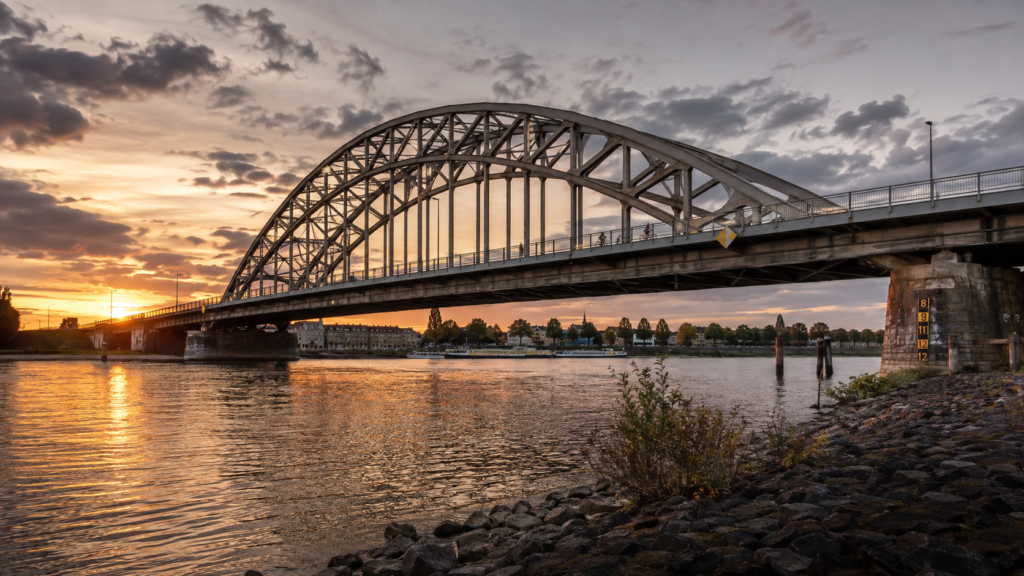
It didn’t work. The British 1st Airborne Division held the north end of Arnhem’s road bridge for four days against overwhelming odds before being cut off and largely destroyed. The phrase “a bridge too far” — reportedly coined by Lieutenant-General Frederick Browning — entered the language, and the 1977 film of the same name fixed the battle in popular memory.
Today, the Market Garden corridor is one of the most rewarding WWII journeys you can make in Europe. Unlike Normandy, the sites are compact, superbly interpreted, and woven into living Dutch towns that still commemorate their liberators every September with genuine warmth. This guide covers everything you need to plan a visit to the Operation Market Garden battlefields, focusing on the two anchor towns of the corridor: Eindhoven in the south and Arnhem in the north.
Operation Market Garden in Brief
Before you visit, it helps to understand the shape of the battle, because the geography is the story.
Free Download
The WWI Battlefield Visitor Checklist
Everything to see, pack, and plan before you visit the Western Front — straight to your inbox.
No spam — just battlefield travel guides. Unsubscribe any time.
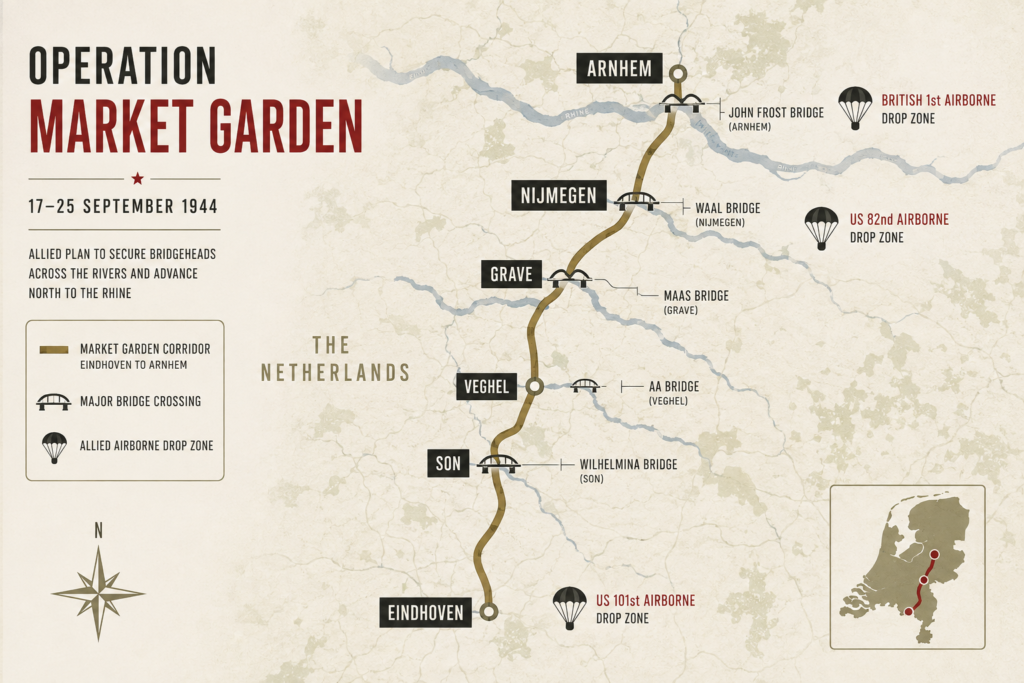
Market Garden had two halves. “Market” was the airborne assault: the US 101st Airborne dropped around Eindhoven, the US 82nd Airborne around Nijmegen, and the British 1st Airborne (with the Polish 1st Independent Parachute Brigade) at Arnhem. “Garden” was the ground attack: British XXX Corps would race up a single road — later nicknamed “Hell’s Highway” — linking each captured bridge until they relieved the paratroopers at Arnhem.
The southern bridges fell. Eindhoven was liberated on 18 September; the 82nd’s river crossing at Nijmegen on 20 September remains one of the most celebrated assaults of the war. But at Arnhem, the British landed too far from the bridge, ran into two SS panzer divisions refitting nearby, and were gradually compressed into a shrinking perimeter at Oosterbeek. Of roughly 10,000 men who landed north of the Rhine, fewer than 2,500 escaped south when the evacuation was ordered on the night of 25–26 September.
Driving the corridor today from Eindhoven to Arnhem takes about an hour. In September 1944, XXX Corps never completed it.
Visiting Arnhem: The Bridge Too Far
Arnhem is the emotional heart of any Market Garden visit, and you should give it a full day at minimum — ideally two, so you can cover both the town and Oosterbeek properly.
John Frost Bridge (John Frostbrug)
The road bridge over the Nederrijn was rebuilt after the war to the same design and renamed for Lieutenant-Colonel John Frost, whose 2nd Battalion held its northern approach from 17 to 21 September. Stand on the northern ramp and you’re standing where roughly 740 men fought off repeated armoured assaults. The surrounding buildings are post-war — the district was flattened — but information panels around the bridgehead explain the perimeter, and the Airborne at the Bridge exhibition (free, run by the Airborne Museum) sits right beside the northern ramp with a superb view over the crossing. It tells the story through three individuals: a British lieutenant, a German SS officer, and a Dutch resistance fighter.
Airborne Museum at Hartenstein, Oosterbeek
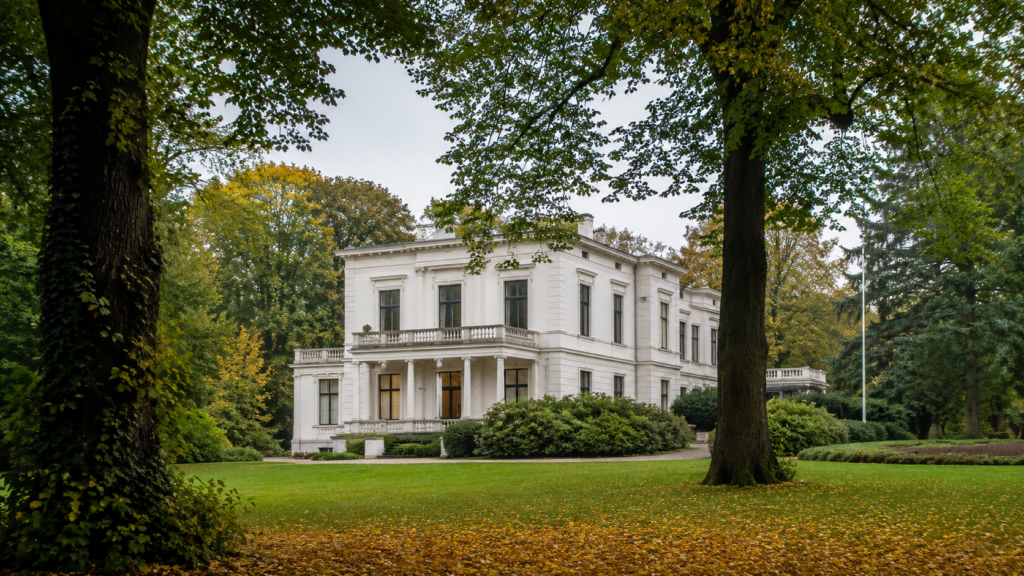
Ten minutes west of Arnhem, the village of Oosterbeek was the site of the shrinking British perimeter — and the Hartenstein Hotel at its centre was Major-General Roy Urquhart’s divisional headquarters. It’s now the Airborne Museum Hartenstein, and it is one of the finest battlefield museums in Europe. The Airborne Experience in the basement walks you through a reconstructed battle-damaged streetscape, and the collection is rich in personal objects and testimony from British, Polish, German, and Dutch civilians alike. Allow two to three hours.
Arnhem Oosterbeek War Cemetery
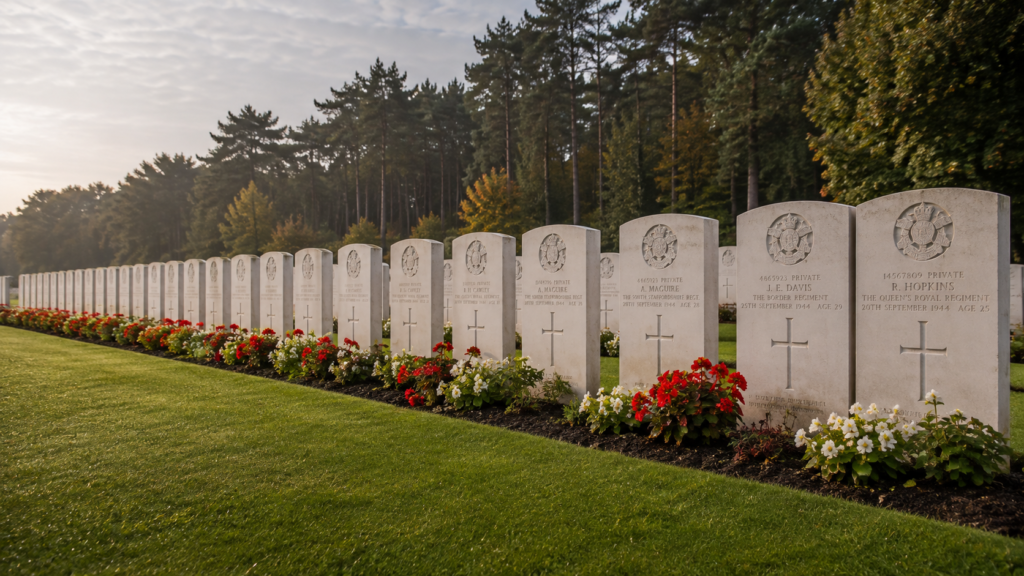
A short walk from the museum, nearly 1,700 Commonwealth and Polish servicemen lie in the Airborne Cemetery, most of them killed in those nine days in September. Every year during the commemorations, local schoolchildren lay flowers on every grave — a tradition running since 1945. It is impossible to visit without being moved.
Ginkel Heath (Ginkelse Heide)
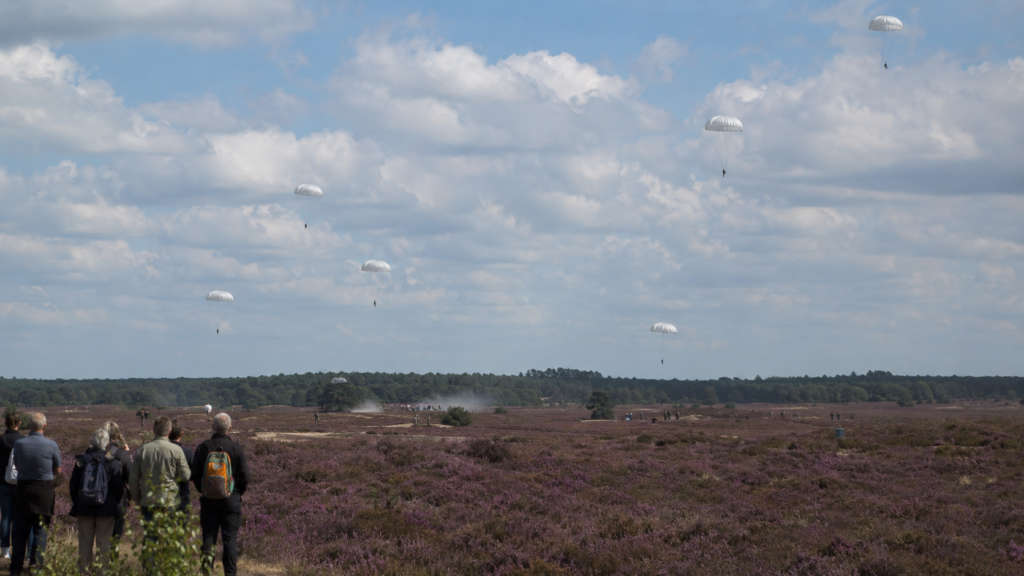
The open heathland at Ede, west of Oosterbeek, was Drop Zone Y, where the 4th Parachute Brigade landed on the second day under fire. A memorial stands at the edge of the heath, and if you time your visit for the September commemorations you can watch hundreds of parachutists — including serving airborne forces — jump onto the original drop zone. It’s one of the great annual spectacles of battlefield tourism.
Visiting Eindhoven: Where the Corridor Began
Eindhoven anchors the southern end of the corridor and pairs its liberation history with a lively, modern city — it makes a natural first night for a south-to-north itinerary.
Wings of Liberation Museum, Best
Just north-west of Eindhoven near Son, the Wings of Liberation Museum (Bevrijdende Vleugels) sits close to where the 101st Airborne landed on 17 September. Its large collection of vehicles, aircraft, and dioramas covers the 101st’s fight for the Son bridge — blown by the Germans as the paratroopers approached, costing the operation crucial hours.
Eindhoven’s Liberation Route and the September 18 Commemoration
Eindhoven marks its liberation every 18 September with a torchlight procession attended by tens of thousands. Around the city, Liberation Route Europe listening points and markers trace the 101st’s fight through the streets. The Eindhoven Museum and the memorial at the DAF factory area add context, and the city makes an easy base for exploring “Hell’s Highway” north through Son, Sint-Oedenrode, and Veghel — each with its own memorials to the 101st.
Don’t Skip Nijmegen
Strictly speaking Nijmegen deserves its own article, but no Market Garden trip should miss it: it sits directly on the corridor between Eindhoven and Arnhem. The Waal Crossing Memorial honours the 82nd Airborne’s daylight river assault in canvas boats, and the Freedom Museum at Groesbeek — on the 82nd’s drop zones — covers the operation and the wider liberation of the Netherlands superbly.
Suggested Itineraries
One day (Arnhem focus): John Frost Bridge and Airborne at the Bridge in the morning; Airborne Museum Hartenstein and the Oosterbeek war cemetery in the afternoon; finish at Ginkel Heath.
Two days (the full corridor): Day one — Eindhoven, the Wings of Liberation Museum, and Hell’s Highway sites at Son and Veghel. Day two — Nijmegen’s Waal Crossing Memorial and Freedom Museum in the morning, then Arnhem and Oosterbeek in the afternoon.
Three days (in depth): Add the Polish drop zones at Driel, the Westerbouwing viewpoint over the Rhine, the Old Church at Oosterbeek (the perimeter’s southern anchor), and the evacuation crossing point at the riverbank.
Practical Information
Getting There
The corridor is genuinely easy from the UK. Eindhoven Airport has direct budget flights from several British airports, and Amsterdam Schiphol is around 65 minutes from Arnhem by direct train. If you’re driving from the Channel ports, Arnhem is roughly three hours from Calais — and you can combine the trip with Ypres or the Somme for a two-war itinerary. Dutch trains link Eindhoven, Nijmegen (Arnhem 15 minutes further) frequently, so a car-free trip is entirely possible, though a car makes Hell’s Highway and Ginkel Heath much easier.
When to Visit
Mid-September is the obvious answer: the anniversary commemorations, the Ginkel Heath parachute drops, the Eindhoven torchlight procession, and the Airborne March at Oosterbeek (the world’s largest one-day walking event) all fall within about a week. Book accommodation months ahead. Outside September, spring and early summer offer quiet sites and good walking weather; the museums are open year-round.
Where to Stay
Oosterbeek is the perfect base for the Arnhem sites — a leafy village where the battle’s key locations are walkable. Arnhem itself has more choice and better rail connections, and Eindhoven suits the start of a corridor itinerary. (Affiliate placement: Booking.com links for Oosterbeek, Arnhem, and Eindhoven hotels here.)
Tours
Several operators run dedicated Market Garden tours, from single-day Arnhem walking tours to multi-day corridor itineraries that follow XXX Corps’ route from the Belgian border. A guided tour is worth serious consideration here — the battle’s geography is subtle, and a good guide transforms an unremarkable Dutch street corner into the front line it once was. (Affiliate placement: GetYourGuide/Viator Arnhem and Market Garden tour links here.)
Visiting Respectfully
The Netherlands remembers its liberators with an intensity that surprises many first-time visitors — but these are also working towns, active churches, and tended graves. Keep voices low in the cemeteries, ask before photographing commemorative events, and remember that Dutch civilians suffered terribly here too: the failed operation was followed by the Hunger Winter of 1944–45, in which some 20,000 Dutch people died. The Airborne Museum tells that side of the story well; give it your attention.
Before You Go: Reading and Watching
Cornelius Ryan’s A Bridge Too Far remains the classic single-volume account, and the 1977 film — much of it shot on location in the Netherlands — is still the best visual primer. Antony Beevor’s Arnhem: The Battle for the Bridges, 1944 offers a more recent scholarly treatment. (Affiliate placement: Amazon Associates links here.)