The Complete Guide to Visiting World War I Battlefields on the Western Front
A pillar resource for independent travellers and guided tour visitors | Updated May 2026
More than a century has passed since the guns fell silent on the Western Front, yet the fields, ridges, and cemeteries of Belgium and northern France remain among the most visited and most emotionally powerful destinations in the world. Each year, hundreds of thousands of travellers — from family history researchers tracing a great-great-grandfather’s regiment to veterans’ descendants making a pilgrimage long promised — make the journey to stand where history happened.
This guide is your starting point for planning that journey. Whether you have a weekend or a fortnight, whether you prefer to travel independently or join an expert-led tour, the Western Front offers a depth of experience that few destinations in Europe can match. We cover the essential sites, the most important battlefields, the best travel logistics, and everything you need to know to visit with knowledge, preparation, and respect.
| The Western Front stretched approximately 700 kilometres from the English Channel coast to the Swiss border. Today, its former battlegrounds span two countries — Belgium and France — and contain thousands of cemeteries, memorials, museums, and preserved trenches. A lifetime of visits would not exhaust it. |
What Was the Western Front?
When World War I began in August 1914, the German advance through Belgium and northern France was halted by Allied forces along a line that would remain largely fixed for the next four years. From the autumn of 1914 until the Armistice on 11 November 1918, two vast armies faced each other across a network of trenches, shell craters, and fortified positions that became known as the Western Front.
Free Download
The WWI Battlefield Visitor Checklist
Everything to see, pack, and plan before you visit the Western Front — straight to your inbox.
No spam — just battlefield travel guides. Unsubscribe any time.
The battles fought here — the Somme, Passchendaele, Verdun, Arras, Ypres — shaped the modern world. Their names are etched into the national memory of Britain, France, Canada, Australia, New Zealand, South Africa, and the United States. The sheer scale of the losses — over three million killed on both sides on the Western Front alone — makes this one of the most consequential theatres of conflict in human history.
For the traveller, the Western Front is not a single site but an entire landscape of memory, distributed across hundreds of kilometres of countryside. Understanding its geography is the first step to planning a meaningful visit.
Ypres (Ieper): The Heart of the Salient
For British and Commonwealth visitors, the Belgian city of Ypres — known to generations of British soldiers simply as ‘Wipers’ — is the emotional centre of the Western Front. The city was defended throughout the entire war, and the surrounding Salient — a bulge in the Allied line that left troops exposed to fire from three sides — became the scene of some of the most intense fighting of the conflict.
Today, Ypres is a thriving city with an extraordinarily moving heritage landscape. The Menin Gate Memorial, completed in 1927, bears the names of 54,896 British and Commonwealth soldiers who died in the Salient and have no known grave. Every evening at 8pm, the Last Post ceremony has been sounded beneath its arches — a tradition interrupted only by the German occupation of World War II and resumed the day after liberation.
Tyne Cot Cemetery, located a short drive from the city centre, is the largest Commonwealth war cemetery in the world. Nearly 12,000 men are buried here, and a further 34,000 names are inscribed on the memorial panels at its rear — soldiers with no known grave from the Passchendaele campaign.
The In Flanders Fields Museum, housed in the magnificent Cloth Hall on the main square, is consistently ranked among the best war museums in Europe. It deserves a full half-day at minimum.
| → Read our full guide: Visiting Ypres (Ieper): The Menin Gate, Tyne Cot, and the Salient — including how to get there, where to stay, and how to attend the Last Post ceremony. |
The Somme: Britain’s Most Haunting Battlefield
No battlefield carries a heavier weight in British national memory than the Somme. On 1 July 1916 — the first day of the Battle of the Somme — the British Army suffered approximately 57,470 casualties, of whom nearly 20,000 were killed. It remains the bloodiest single day in the history of the British armed forces.
The Somme battlefield region, centred on the town of Albert in the Picardy region of northern France, is extraordinarily well preserved and presented. The landscape of gently rolling chalk downland is punctuated at almost every turn by cemeteries, memorials, and sites of significance. Many of the original communication trenches and shell craters remain visible in the fields.
The Thiepval Memorial, designed by Edwin Lutyens and inaugurated in 1932, is the largest British war memorial in the world. It bears the names of 72,195 officers and men of the British and South African forces who died on the Somme between 1915 and 1918 and have no known grave. Standing beneath it is an experience that does not leave you quickly.
Nearby, the Ulster Tower commemorates the men of the 36th (Ulster) Division, and Beaumont-Hamel Newfoundland Memorial Park preserves the actual battlefield terrain — trenches, craters, and all — as it appeared in 1916.
| → Read our full guide: The Somme Battlefield — A Visitor’s Complete Guide, including the best memorials to visit, self-guided driving routes, and where to stay in Albert. |
Verdun: France’s Sacred Ground
If the Somme is Britain’s defining battle, Verdun is France’s. The Battle of Verdun, fought from February to December 1916, was the longest battle of the entire war and one of the most costly in history. French and German forces together suffered well over 700,000 casualties in a struggle that the German high command specifically designed to ‘bleed France white.’
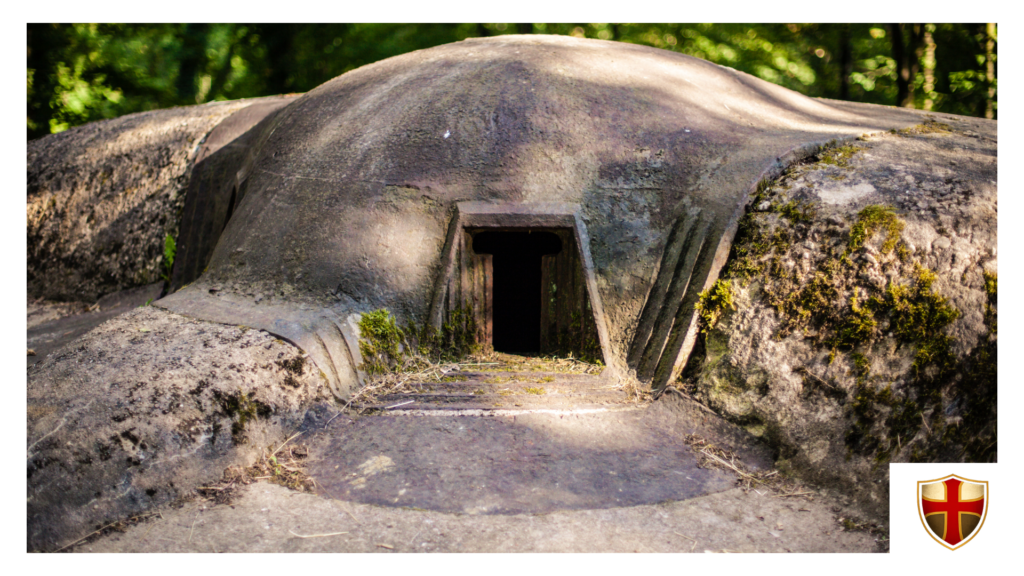
The Verdun battlefield, located in the Meuse département of Lorraine, has a different character to the Somme or the Ypres Salient. The Zone Rouge — a vast area of land deemed permanently uninhabitable due to unexploded ordnance, human remains, and chemical contamination — still exists around Verdun today, a silent testament to the intensity of the fighting. Much of the battlefield is forest, which grew back over the craters and trenches after the war.
The Ossuaire de Douaumont is Verdun’s most powerful site: a vast monument containing the unidentified remains of at least 130,000 French and German soldiers. The Mémorial de Verdun museum, recently modernised, is one of the finest battlefield museums in Europe.
Verdun is less visited by British travellers than Ypres or the Somme, which makes it feel more contemplative and less crowded — a different but equally profound experience.
| → Read our full guide: Verdun Battlefield — How to Visit France’s Most Haunting WWI Site, including the Ossuaire de Douaumont, Fort Vaux, Fort Douaumont, and how to get there from Paris. |
Passchendaele: The Third Battle of Ypres
Passchendaele — officially the Third Battle of Ypres — was fought from July to November 1917 across the waterlogged Flemish fields east of Ypres. The name has become synonymous with the worst conditions imaginable: incessant rain, artillery-churned mud so deep that wounded men drowned in shell craters, and casualties that mounted for a territorial gain measured in hundreds of metres.
The villages, ridges, and farms that witnessed the fighting are all accessible from Ypres, and many of the cemeteries in this area contain some of the most moving individual stories of the entire war. Polygon Wood, Zonnebeke, and the ridge at Passchendaele itself are all worth visiting.
Tyne Cot Cemetery — covered in the Ypres section above — stands at the furthest point of the Allied advance during the battle, and its location tells its own story about the cost of that advance.
| → Read our full guide: Passchendaele (Third Battle of Ypres) — What to See and Where to Stay, including the key battlefield sites, best cemeteries, and guided tour options. |
Arras and Vimy Ridge: The Canadian Memorial
The town of Arras in northern France sits at the centre of a battlefield landscape with a unique character. Beneath the town lies an extraordinary network of tunnels — chalk quarries expanded by New Zealand tunnellers and used to shelter 24,000 troops before the Battle of Arras in April 1917. Known as the Boves, these tunnels can be visited today through guided tours and offer a genuinely remarkable underground experience.
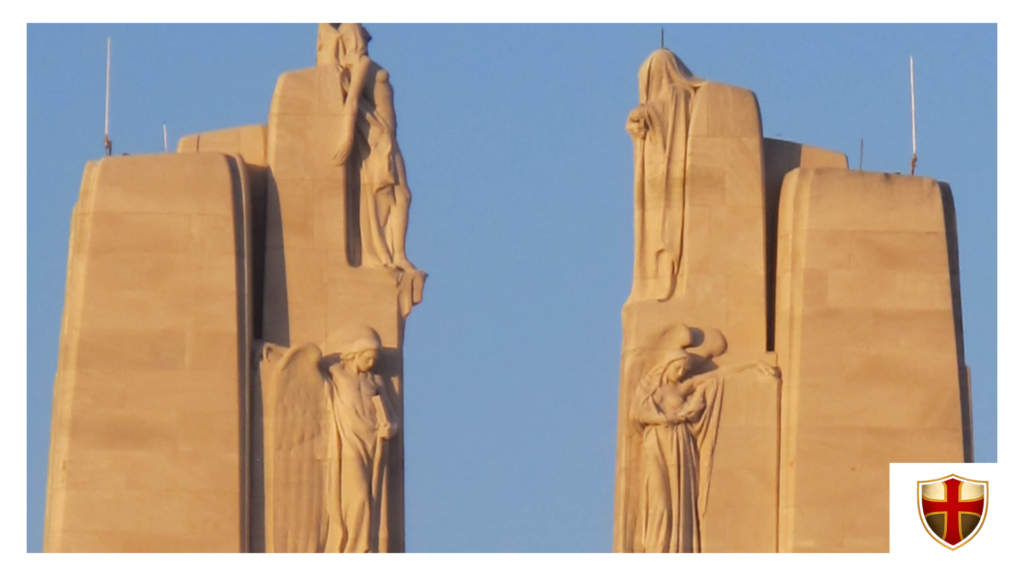
A few kilometres north of Arras lies Vimy Ridge, one of the most significant sites in Canadian history. The Canadian Corps captured the ridge on 9–12 April 1917, a feat that had eluded British and French forces for years and came at a cost of 10,602 Canadian casualties. The Canadian National Vimy Memorial, unveiled in 1936, stands atop the ridge and is widely considered one of the most beautiful war memorials in the world.
The preserved trenches and tunnels at Vimy Ridge — maintained by Veterans Affairs Canada and staffed by Canadian university students as guides — are among the best interpreted battlefield sites anywhere on the Western Front.
| → Read our full guide: Arras and Vimy Ridge — The Canadian Memorial and Underground Tunnels, including how to book the Boves tunnel tour and the best way to combine Arras and Vimy in a day trip. |
WWI Cemeteries and Memorials: Understanding the CWGC
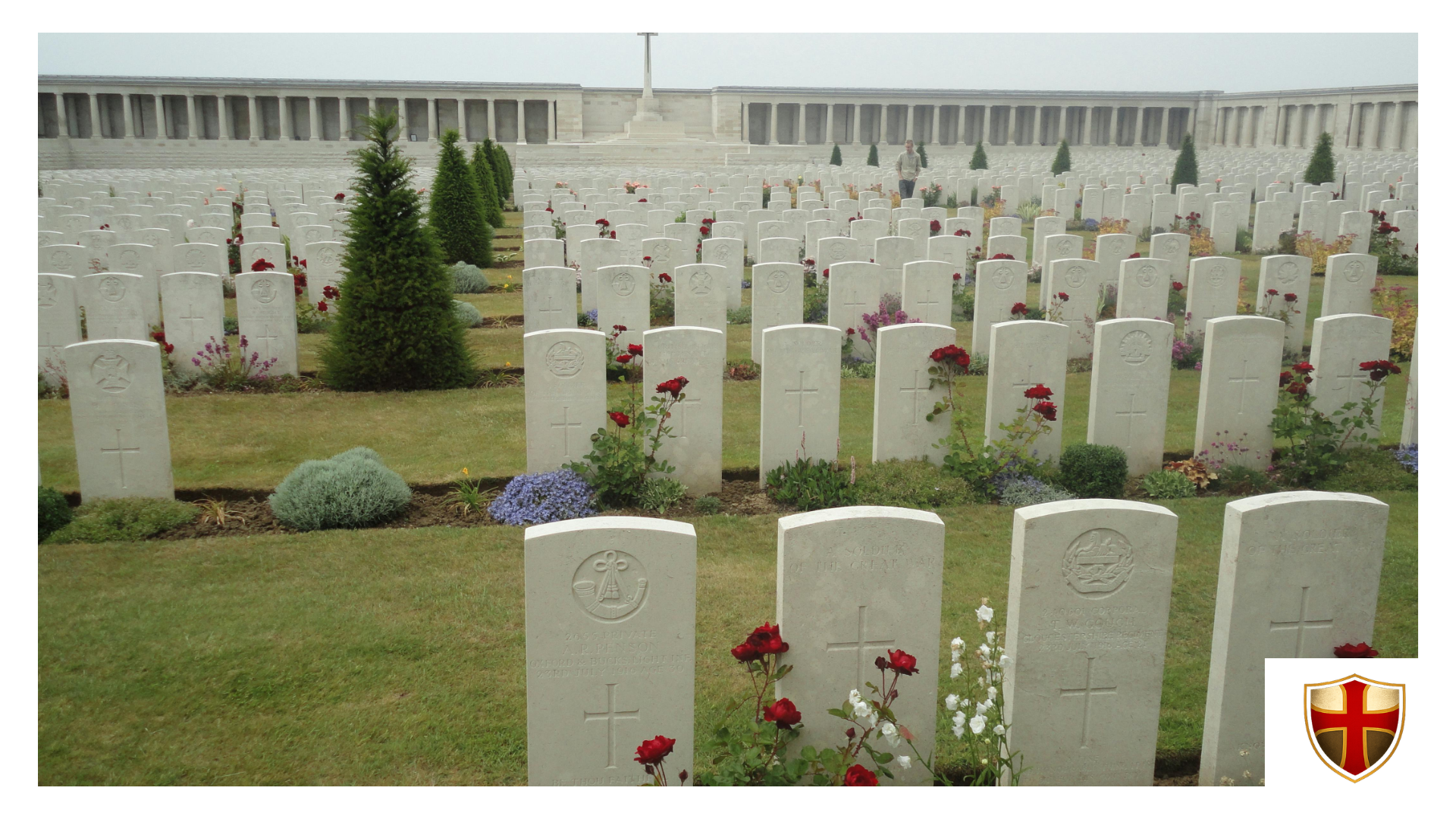
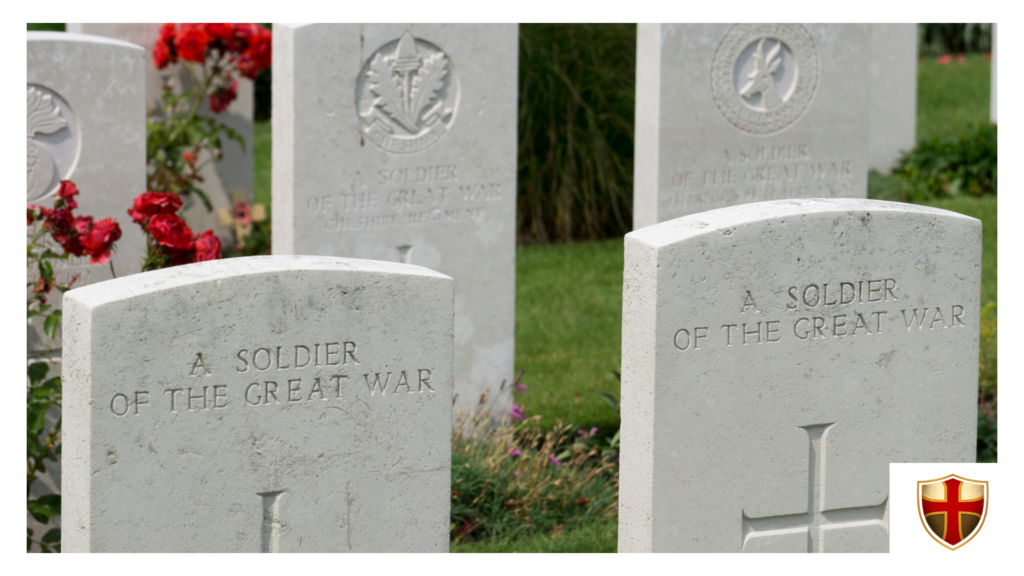
One of the most distinctive features of the Western Front landscape is the density of war cemeteries. The Commonwealth War Graves Commission (CWGC), established in 1917, maintains over 900 cemeteries in Belgium and France alone, containing the graves of approximately 600,000 Commonwealth soldiers. Every grave is marked with the same simple white headstone, regardless of rank — a democratic principle that was radical at the time and remains quietly powerful today.

The CWGC’s free online Casualty Database allows visitors to search for individual graves by name, regiment, or location — an invaluable tool for family history research and for planning a visit with personal significance. The Commission’s website also provides GPS coordinates for every cemetery, making independent navigation straightforward.
Beyond Commonwealth sites, French national cemeteries (with their distinctive dark crosses), German war cemeteries (marked by flat basalt lava stones and oaks rather than upright headstones), and American Battle Monuments Commission sites all form part of the landscape. Understanding the differences between them adds considerably to the visit.
| → Read our full guide: WWI Cemeteries and Memorials — A Guide to CWGC Sites in Belgium and France, including how to use the casualty database, etiquette for cemetery visits, and the most significant memorial sites by region. |
Guided Tours vs Independent Travel: Which Is Right for You?
The Western Front is well-suited to both guided and independent travel, and the right choice depends on your priorities, budget, and how much context you want.
Guided Tours
A good battlefield guide transforms the experience. The Western Front has no shortage of excellent specialist tour operators — from day trips by coach from Ypres or Arras to multi-day immersive experiences covering multiple theatres. The best guides bring the landscape to life with first-hand knowledge of regimental histories, local stories, and an ability to stand in a field and describe exactly what happened there. For first-time visitors, or those with a specific family connection to trace, a guided experience is genuinely worth the investment.
GetYourGuide and Viator both offer a wide range of rated battlefield tours departing from Ypres, Arras, Lille, and Paris. Specialist UK operators including Leger Holidays and The Cultural Experience offer longer multi-day packages.
Independent Travel
Independent travellers with their own vehicle have arguably the richest experience on the Western Front. The battlefield landscape is a network of country lanes between cemeteries, memorials, and small museums — not something a coach tour can fully explore. Driving at your own pace, stopping wherever moves you, and spending a quiet hour in a rural cemetery is an experience that cannot be replicated on a group tour.
A self-guided Western Front road trip typically requires three to five days to cover the main Ypres, Arras, and Somme areas meaningfully. A week allows for Verdun and deeper exploration.
| → Read our full guides: The Best WWI Battlefield Tours from the UK | How to Plan an Independent Western Front Road Trip |
Visiting WWI Battlefields with Family
The Western Front is a profoundly valuable destination for families — but it requires thoughtful preparation, particularly for younger children. The subject matter is not inherently unsuitable for children, but the emotional weight of the sites, the scale of the casualties, and the sometimes graphic museum content means that age-appropriate planning matters.
Primary school-age children (8–11) can engage meaningfully with the human stories — the ages of the soldiers, the letters home, the animals used in the war — without being overwhelmed by statistics. Secondary-age children are generally ready for the full context and often find the visit deeply resonant, particularly if it connects to school curriculum topics.
Sites specifically well-suited to family visits include Vimy Ridge (superb interpretation, tunnels to explore), the In Flanders Fields Museum (interactive and thoughtful), and Beaumont-Hamel Newfoundland Memorial Park (a preserved landscape children can walk through).
| → Read our full guide: Visiting WWI Battlefields with Family — What Children Can and Can’t See, including age-by-age recommendations, museum content warnings, and tips for making the most of the visit. |
Where to Stay on the Western Front
Ypres (Ieper) is the natural base for visiting the Belgian sector of the Western Front. The city has an excellent range of hotels, B&Bs, and restaurants within walking distance of the Menin Gate, and the main battlefield sites — Tyne Cot, Polygon Wood, Langemark — are all within a 20-minute drive. Staying in Ypres and attending the Last Post ceremony on your first evening is the classic and deeply recommended introduction.
For the Somme, the town of Albert is the practical base, though accommodation options are more limited. Many visitors also base themselves in Amiens (a larger city with a magnificent cathedral and better hotel choice) and drive to the battlefield.
For Arras and Vimy, Arras itself has a beautiful Grand Place and excellent accommodation — it makes a fine base for two to three nights.
| → Read our full guide: Best Places to Stay Near Ypres for Battlefield Visitors — including our top picks for hotels, B&Bs, and gîtes in the Belgian Salient. |
The Last Post Ceremony at the Menin Gate
If you visit only one thing on the Western Front, it should be the Last Post ceremony at the Menin Gate in Ypres. Every evening at 8pm — every single evening, without exception, since 1928 — buglers of the Last Post Association sound the Last Post beneath the great archway of the Menin Gate Memorial.
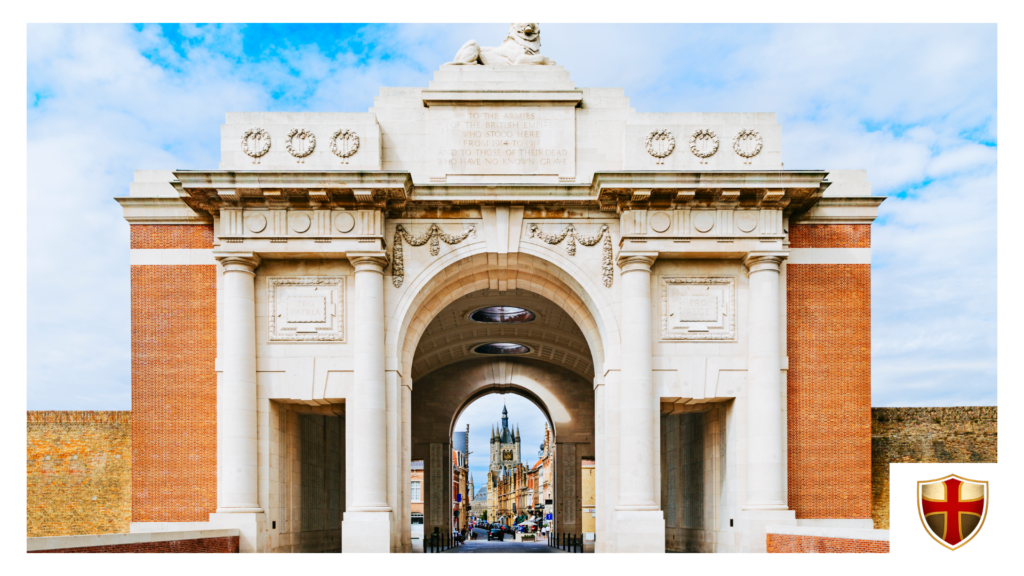
The ceremony is free to attend and lasts approximately fifteen minutes. Traffic is stopped on the road through the Gate, and the crowd — which on summer evenings can number several hundred — gathers in silence. If a school group, regiment, or visiting dignitary has been invited to lay a wreath, the ceremony is extended accordingly.
There is nothing quite like it anywhere in the world. The combination of the setting, the ritual, the names on the walls above you, and the sound of the bugle in the evening air creates an experience that travellers consistently describe as one of the most moving of their lives.
| → Read our full guide: Last Post Ceremony at the Menin Gate — What to Expect, including arrival tips, parking, wreath-laying invitations, and what the ceremony means. |
Essential Practical Information
Getting There from the UK
Ypres is approximately three hours from the Channel Tunnel terminal at Folkestone by car, making it one of the most accessible major battlefield destinations for UK visitors. Eurotunnel Le Shuttle provides the quickest crossing; P&O and DFDS ferry services from Dover to Calais are an alternative. Ypres is not well served by public transport from the UK, so a hire car or tour coach is strongly recommended.
For the Somme, the driving time from Calais is approximately 90 minutes. Verdun is a longer drive — around four hours from Calais — and is more naturally combined with a longer French road trip.
When to Go
The Western Front is a year-round destination, but the main tourist season runs from April to October. July and August are the busiest months, particularly at major sites like the Menin Gate and Tyne Cot. Visiting in spring (April–May) or autumn (September–October) gives a quieter, often more reflective experience.
Key dates for planning around: Remembrance Sunday (second Sunday in November) brings large commemorative events at many sites; D-Day anniversaries (6 June) and Armistice Day (11 November) also draw large crowds to major memorials.
Etiquette and Respect
The Western Front battlefield sites are simultaneously tourist attractions and places of active mourning and commemoration. Cemeteries are maintained to an extraordinary standard and treated with great respect by local communities. Visitors are expected to behave accordingly: speak quietly, do not climb on headstones or memorials, do not remove any objects from the ground (unexploded ordnance remains a genuine hazard), and be conscious that many visitors are there for deeply personal reasons.
Where to Start: Planning Your Western Front Visit
The Western Front is not a destination you visit once and consider done. It rewards return visits, deeper study, and the gradual accumulation of knowledge about the men, units, and engagements that shaped it. Many visitors return year after year, drawn by a connection — personal, historical, or simply human — that proves difficult to leave behind.
If you are planning your first visit, we recommend starting in Ypres: three nights based in the city, attending the Last Post ceremony on your first evening, visiting Tyne Cot and the Salient sites on your second day, and taking the In Flanders Fields Museum on your third morning before driving to Vimy Ridge on your way home.
For those ready to go deeper, use this pillar guide as a gateway: each section links through to a more detailed post covering that specific destination, site, or planning consideration. Our goal is for Battleground History to be the most useful independent resource for Western Front travel — and we add to it constantly.
All Guides in This Series
- Visiting Ypres (Ieper): The Menin Gate, Tyne Cot, and the Salient
- The Somme Battlefield: A Visitor’s Complete Guide
- Verdun Battlefield: How to Visit France’s Most Haunting WWI Site
- Passchendaele (Third Battle of Ypres): What to See and Where to Stay
- The Best WWI Battlefield Tours from the UK
- How to Plan an Independent Western Front Road Trip
- Arras and Vimy Ridge: The Canadian Memorial and Underground Tunnels
- Best Places to Stay Near Ypres for Battlefield Visitors
- WWIlCemeteries and Memorials: A Guide to CWGC Sites in Belgium and France
- Last Post Ceremony at the Menin Gate: What to Expect
- Visiting WWI Battlefields with Family: What Children Can and Can’t See