Unveiling India’s Heritage: Must-Visit Historic Sites In India
India is a land where history is a living, breathing entity woven into the fabric of everyday life. From ancient temples that echo with chants to majestic forts that stand as silent sentinels of the past, historic sites in India are a testament to the country’s rich and diverse heritage. Exploring these sites is like stepping into a time machine, offering glimpses of eras that shaped the world’s largest democracy. Let’s embark on a journey through some of India’s most glorious historical sites that you must visit.
Taj Mahal: The Epitome of Love
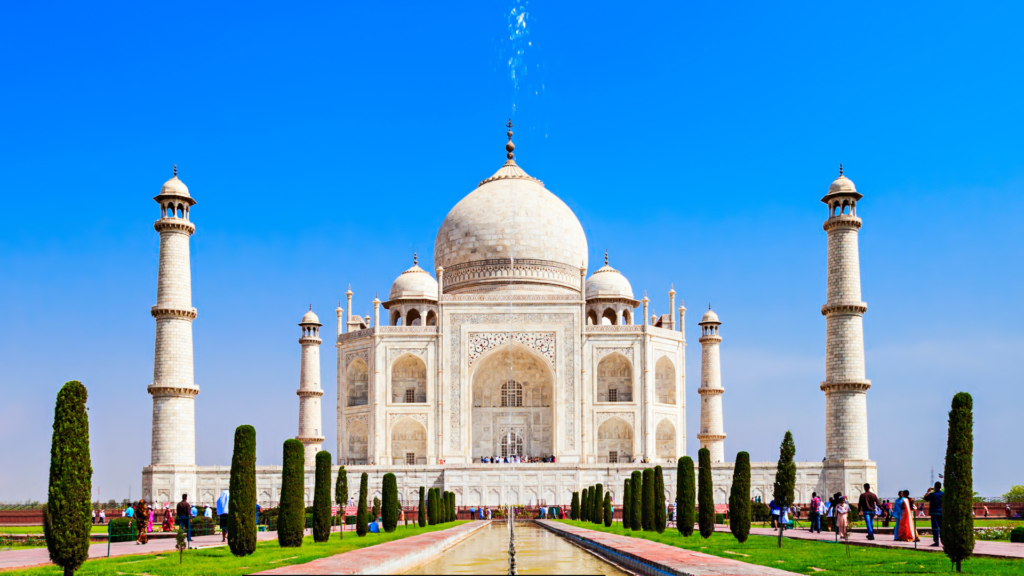
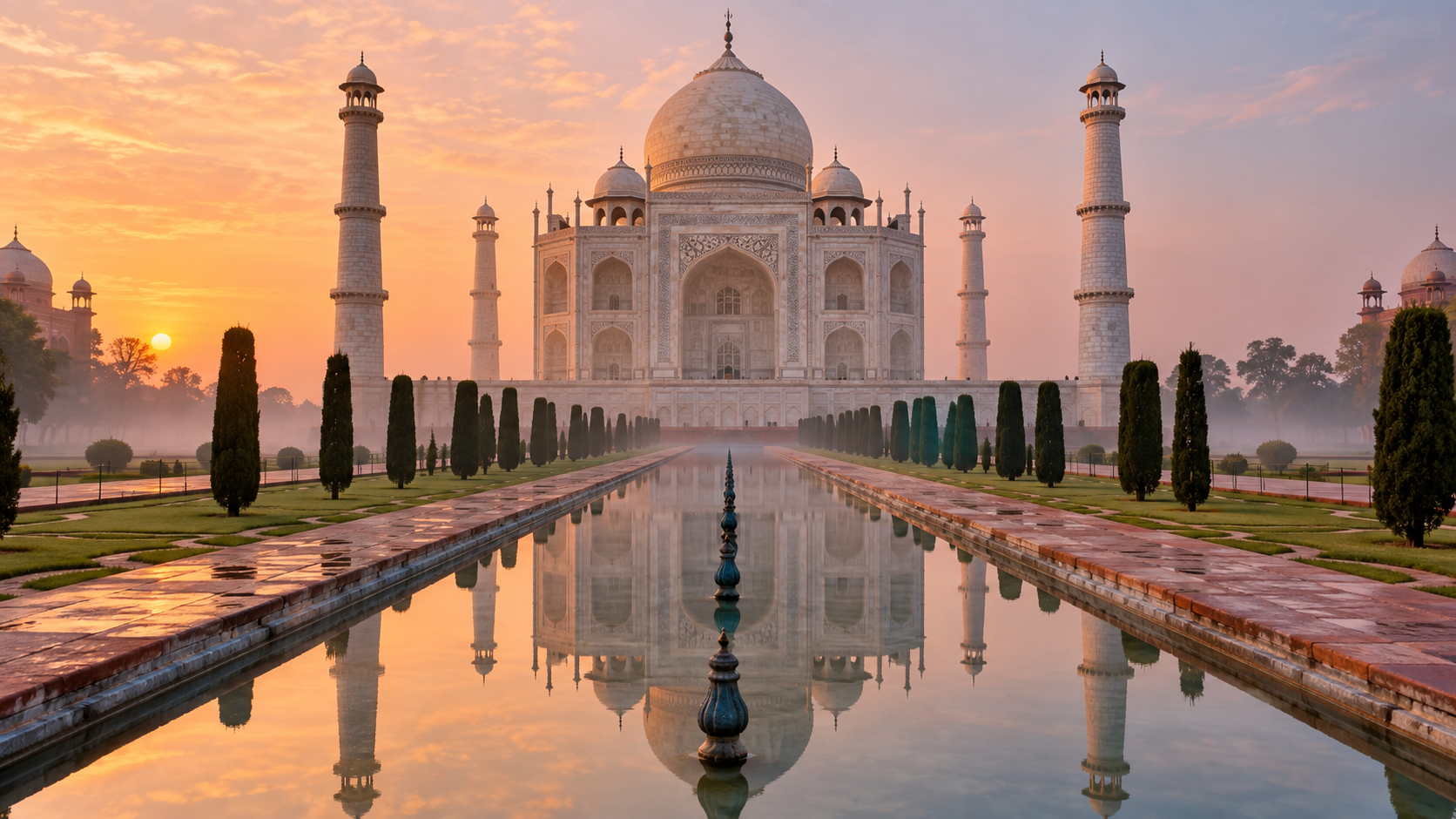
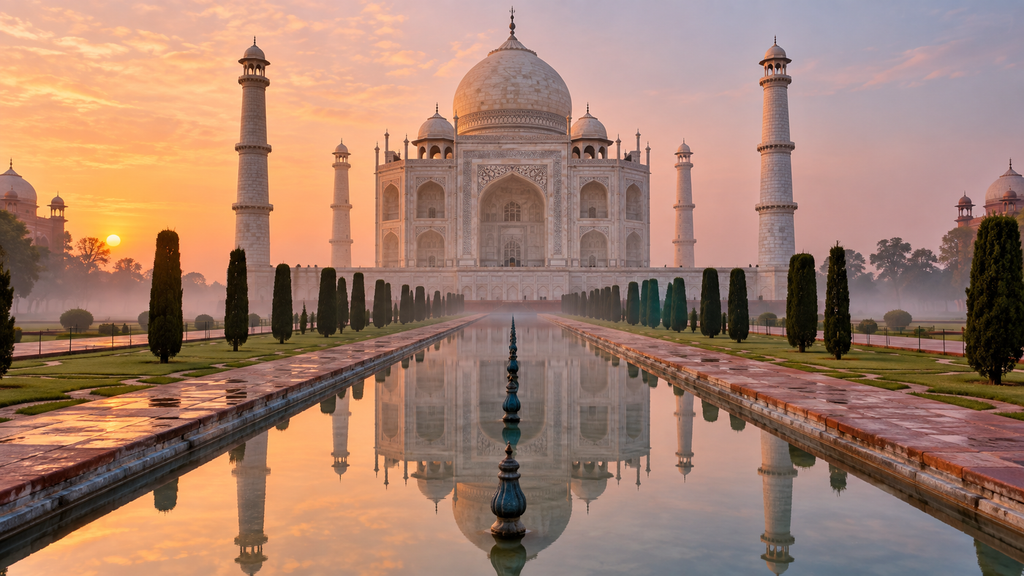
No list of historic sites in India would be complete without the mention of the Taj Mahal. The Taj Mahal is the iconic symbol of eternal love. Located in Agra, this white marble mausoleum was built by Mughal Emperor Shah Jahan in memory of his beloved wife, Mumtaz Mahal. Completed in 1653, the Taj Mahal is a masterpiece of Mughal architecture, with its intricate carvings, inlay work, and perfectly symmetrical design. Whether you visit at sunrise or at sunset, the Taj Mahal is a sight to behold.
Hampi: The Forgotten Empire
Travel to the southern state of Karnataka, and you will find Hampi, a UNESCO World Heritage site. Hampi was once the capital of the Vijayanagara Empire. The ruins of Hampi are spread across a landscape dotted with massive boulders, ancient temples, and royal complexes. The Virupaksha Temple and the Vittala Temple, known for their musical pillars and stone chariots, are must-see attractions. Walking through Hampi feels like a bygone era of prosperity and grandeur.
Jaipur’s Amber Fort: The Majestic Fortress
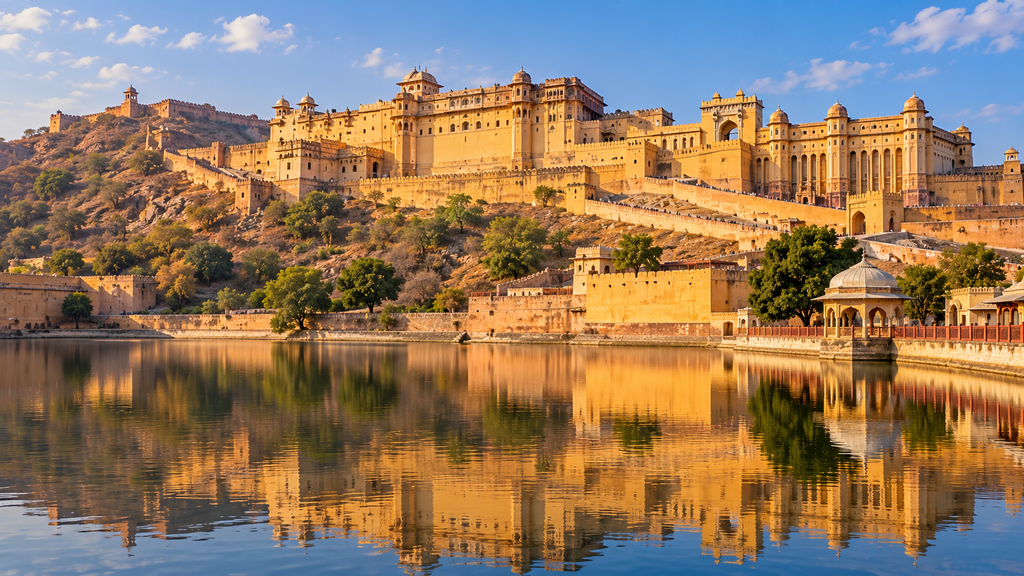
Perched high on a hill, overlooking the Maota Lake, Amber Fort in Jaipur is a blend of Rajput and Mughal architecture. Built in the 16th century by Raja Man Singh I, the fort is known for its artistic style, which includes large ramparts, series of gates, and cobbled paths. The Sheesh Mahal (Mirror Palace) inside the fort is particularly famous for its mirror work, where even a small light reflects throughout the room, creating a dazzling effect. A visit to Amber Fort is not just a journey through history but also an experience of the royal lifestyle of the Rajputs.
Free Download
The WWI Battlefield Visitor Checklist
Everything to see, pack, and plan before you visit the Western Front — straight to your inbox.
No spam — just battlefield travel guides. Unsubscribe any time.
Khajuraho: The Erotic Temples
The temples of Khajuraho, located in Madhya Pradesh, are famous for their stunning architecture and erotic sculptures. Built between 950 and 1050 AD by the Chandela dynasty, these temples blend spirituality and sensuality. The intricate carvings depict various aspects of life, from everyday activities to celestial beings and mythical creatures. The Kandariya Mahadeva Temple, dedicated to Lord Shiva, is the largest and most ornate of the temples and is an excellent example of medieval Indian architecture.
Ellora and Ajanta Caves: The Rock-Cut Marvels
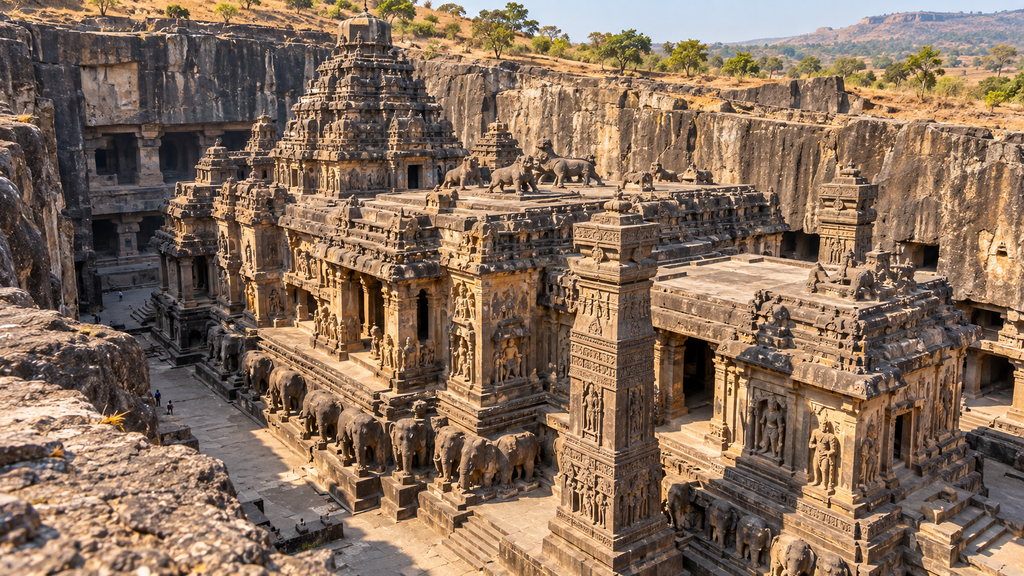
The rock-cut caves of Ellora and Ajanta in Maharashtra are among the most significant ancient sites in India. The Ajanta Caves, dating back to the 2nd century BCE, are known for their exquisite Buddhist frescoes and sculptures. Conversely, Ellora is a complex of 34 caves carved into the Charanandri hills and features Buddhist, Hindu, and Jain temples. The Kailasa Temple at Ellora, carved entirely out of a single rock, is one of the most remarkable cave temples in the world. These caves are a testament to the artistic and architectural prowess of ancient India.
Varanasi: The Spiritual Heart of India
Varanasi, one of the oldest continuously inhabited cities in the world, is a place where history and spirituality converge. Situated on the banks of the Ganges River, Varanasi is a sacred city for Hindus, who believe that dying here leads to moksha or liberation from the cycle of life and death. The ghats of Varanasi, especially the Dashashwamedh Ghat, are alive with rituals and ceremonies, particularly the evening Ganga Aarti, which is a mesmerizing experience. The city’s narrow lanes are lined with temples, each with its own story and significance.
Mysore Palace: A Regal Extravaganza
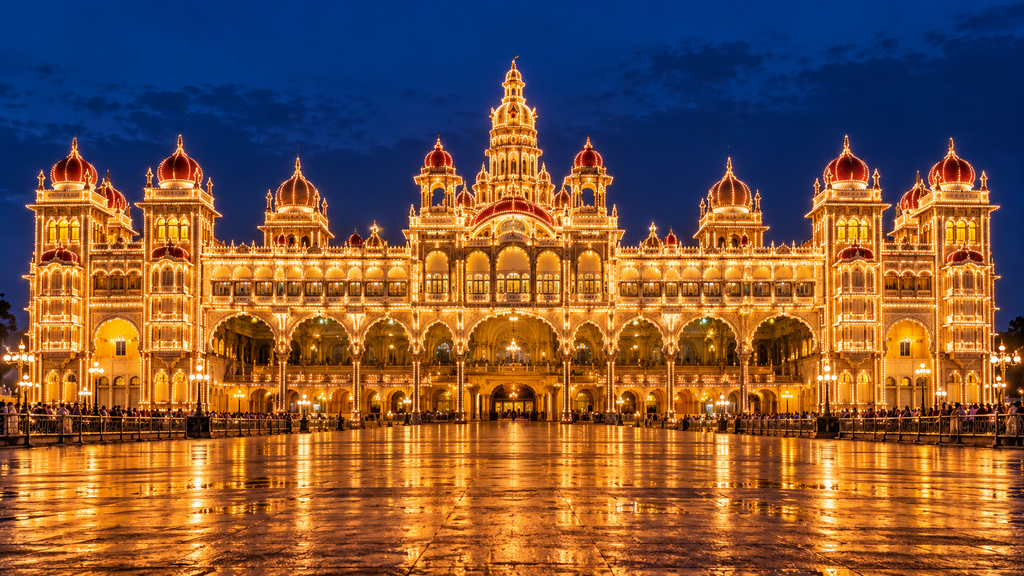
The Mysore Palace, also known as the Amba Vilas Palace, is a symbol of the grandeur and opulence of the Wodeyar dynasty. Located in the city of Mysore in Karnataka, this palace is a stunning example of Indo-Saracenic architecture, a blend of Hindu, Muslim, Rajput, and Gothic styles. The palace is famous for its annual Dasara celebrations, when it is illuminated with thousands of lights, creating a spectacular sight. Inside the palace is a treasure trove of intricate carvings, stained glass windows, and royal artifacts.
Qutub Minar: The Towering Wonder
Standing tall at 73 meters, the Qutub Minar in Delhi is the tallest brick minaret in the world. Commissioned by Qutb-ud-din Aibak in 1193, the minar symbolizes the victory of the Muslim invaders over the Hindu kingdoms. The structure is adorned with intricate carvings and verses from the Quran. Nearby, the Iron Pillar, which has stood rust-free for over 1,600 years, adds to the historic intrigue of the complex. A visit to Qutub Minar is like peeling back layers of history, revealing the confluence of different cultures and eras.
India’s Glorious Past
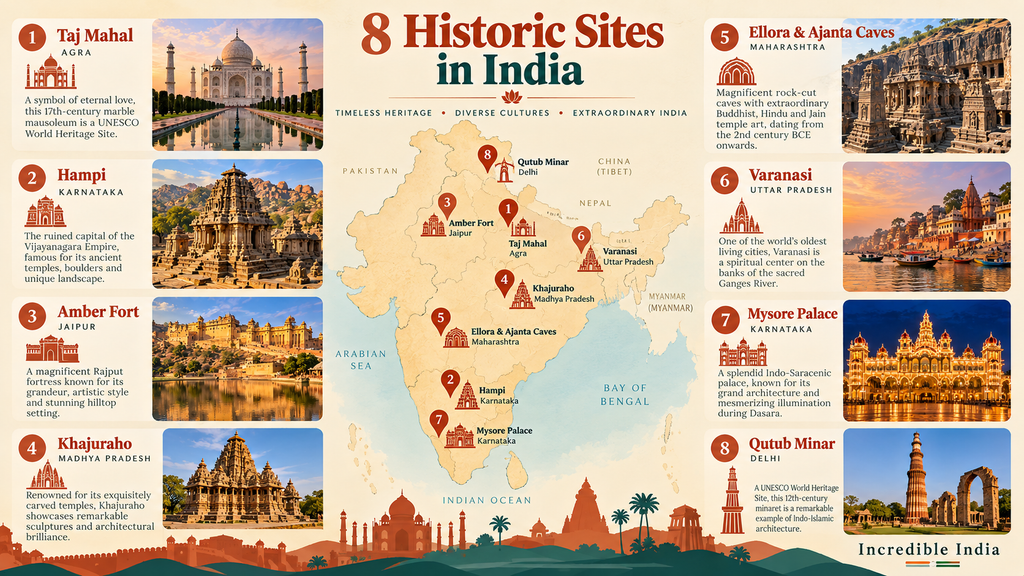
The historic sites in India are more than just monuments. The stories are etched in stone, wood, and marble, waiting to be discovered by those who seek to understand this ancient land. Each site offers a unique window into the past, showcasing the architectural brilliance, cultural richness, and spiritual depth that define India. These sites are a must-visit, promising an unforgettable journey through India’s glorious past.
You might also like: