The Best WWl Battlefield Tours from the UK
Whether you want expert guidance at the Menin Gate or the freedom to drive the Somme at your own pace, there’s a tour that will take you there. Here’s how to choose the right one.
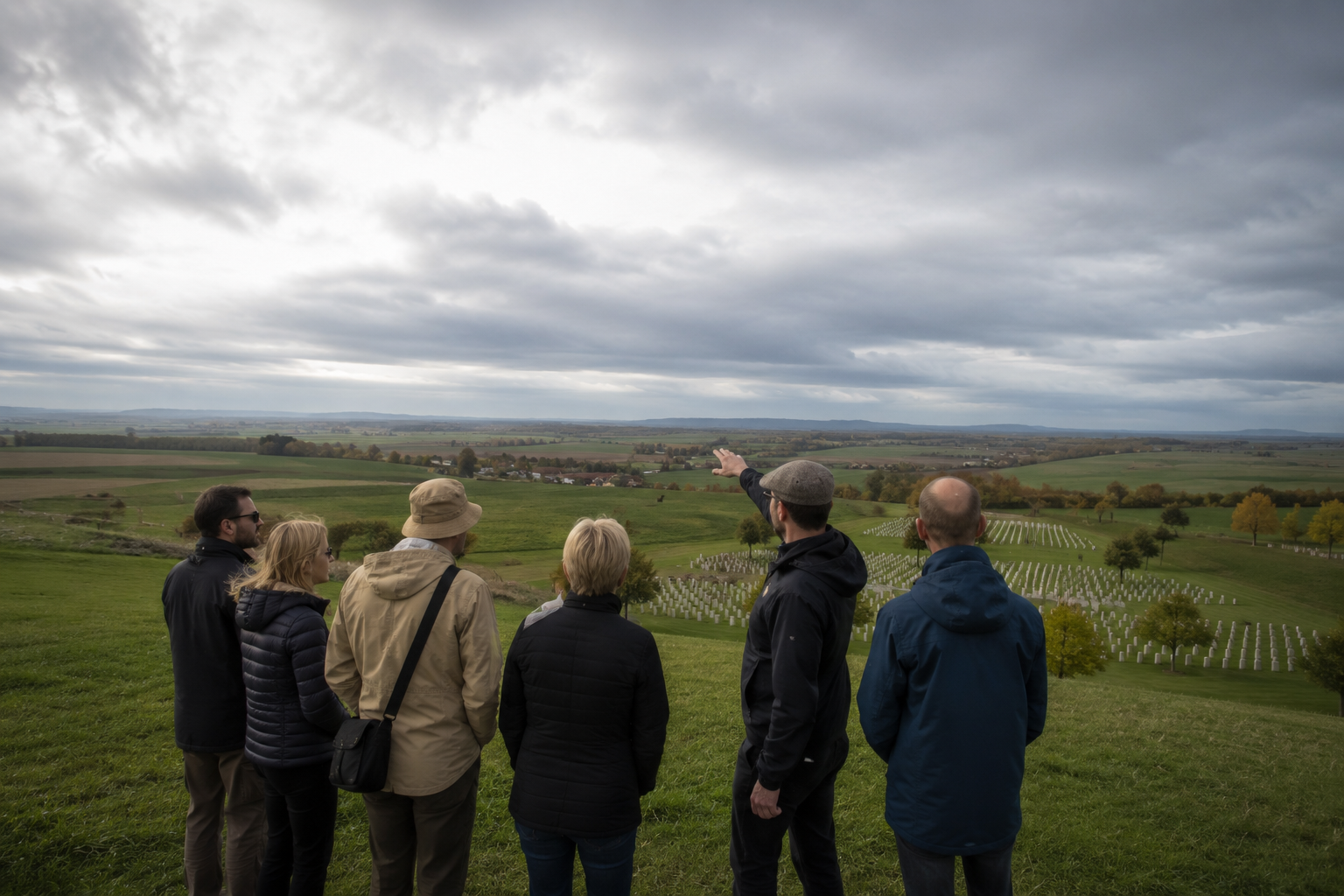
The Western Front is one of the most visited and deeply felt destinations in military history travel. For British, Australian, Canadian, and South African visitors in particular, the battlefields of Belgium and northern France are not simply historical sites — they are places where family stories meet history, where names on war memorials become real.
Choosing how to experience the Western Front is a genuinely important decision. A bad tour — rushed, shallow, poorly guided — can reduce one of history’s most significant landscapes to a checkbox. A great tour can change the way you understand the First World War entirely.
This guide covers the best WWI battlefield tours from the UK: guided coach packages, small-group specialist tours, day trips from the Channel ports, and tips for planning an independent self-drive itinerary if you prefer to go at your own pace.
Free Download
The WWI Battlefield Visitor Checklist
Everything to see, pack, and plan before you visit the Western Front — straight to your inbox.
No spam — just battlefield travel guides. Unsubscribe any time.
What Kind of Tour Is Right for You?
Before booking, it’s worth thinking about what you actually want from the experience. WWI battlefield tourism covers a wide spectrum — from large coach tours that tick off the major sites in three days to intimate specialist tours with a military historian who knows the ground intimately.
Ask yourself:
- Do you want a guided expert, or the freedom to explore at your own pace?
- Is this a commemorative visit — tracing family connections or attending a ceremony — or a broader historical exploration?
- How much time do you have? Day trips from Calais or Folkestone work well for a focused visit; multi-day packages are better for a comprehensive experience.
- What’s your budget? Prices range from around £80 for a day tour to £800+ for a premium multi-day package including accommodation.
- Do you want to travel as part of a group, or privately with friends and family?
The options below are organised by type so you can match them to what you’re looking for.
Specialist Multi-Day Tours
These are the gold standard for serious WWI history travellers. Small group sizes, expert guides with deep specialist knowledge, and itineraries that go well beyond the main memorials. If you want to understand what happened — not just where — this is the category to look at.

Leger Holidays — Battlefield Tours
Leger is one of the UK’s most established battlefield tour operators and a strong first stop for multi-day Western Front packages. Their WWIl programmes typically run three to five days and combine the Ypres Salient, the Somme, Vimy Ridge, and Arras in a single itinerary, with expert blue-badge guides throughout. Leger operates coach departures from multiple UK cities, making logistics straightforward for most visitors.
Best for: UK travellers wanting a fully-escorted, all-inclusive experience with door-to-door coach travel. Particularly well-suited to those making a first visit to the Western Front or attending a commemorative event.
Holts Battlefield Tours
Holts have been running battlefield tours since the 1970s and are widely regarded as one of the most knowledgeable operators in the UK market. Their WWI programmes are led by specialist military historians — not simply licensed guides — and include detailed briefings, trench-side explanations, and access to lesser-visited sites that most coach tours skip entirely. Holts also organise themed tours around specific campaigns, regiments, and anniversaries.
Best for: History enthusiasts who want depth over breadth. Holts tours suit those who have already visited the main sites and want to go deeper — or who want their first visit shaped by genuine expertise.
Remembrance Travel
Remembrance Travel specialise in commemorative visits, including dedicated tours for the Last Post Ceremony at the Menin Gate, Armistice Day services, and centenary events. Their itineraries are designed with the emotional as well as historical dimension of battlefield travel in mind — pacing is thoughtful, and there is room for personal reflection that faster-paced tours don’t always allow.
Best for: Those making a commemorative or family remembrance visit, or attending a specific ceremony. The November Remembrance tours book up early — plan months in advance for Armistice weekend.
Day Tours from Calais, Lille, and the Channel Ports
If you’re crossing the Channel by ferry or Eurostar, day tours from Calais or Lille give excellent access to the Ypres Salient and the Somme without requiring a multi-day commitment. Ypres is about 75 minutes from Calais by car; the Somme battlefield is similarly accessible.
GetYourGuide — Ypres and Western Front Day Tours
GetYourGuide lists a range of day tours from Bruges, Ghent, and Brussels covering the Ypres Salient, Tyne Cot Cemetery, and the Menin Gate. These typically run in small minibus groups (8–16 people) with English-speaking guides, and include transport from the departure city. Quality varies by operator, so check recent reviews carefully — the top-rated tours on the platform are genuinely excellent.
Best for: Flexible travellers already in Belgium who want a guided day without committing to a multi-day package.
Viator — Somme Battlefield Day Tours from Paris and Lille
Viator’s Somme offerings include full-day tours from Paris covering Thiepval Memorial, Lochnagar Crater, and the Newfoundland Memorial at Beaumont-Hamel. Departures from Lille offer a shorter transfer and allow more time on the ground. These are a practical choice for visitors combining WWI battlefield travel with a broader France itinerary.
Best for: Those combining the Somme with a Paris or northern France trip, or travelling independently without a car.
Self-Guided: Planning Your Own Western Front Road Trip
For many visitors, driving the Western Front independently is the most rewarding approach. You set the pace, you choose the stops, and you can spend three hours at Tyne Cot if that’s what the day calls for. The infrastructure for self-guided battlefield tourism in Belgium and northern France is excellent — signage is clear, car parks are well-managed, and most major sites are free to enter.
A practical self-guided itinerary might look like:
- Day 1 — Cross via Eurostar or ferry; drive to Ypres (Ieper). Check into accommodation in town. Evening: attend the Last Post Ceremony at the Menin Gate (free, nightly at 8pm).
- Day 2 — Ypres Salient: Tyne Cot Cemetery, Passchendaele battlefield, Hill 62 (Sanctuary Wood), In Flanders Fields Museum.
- Day 3 — Drive south to the Somme. Thiepval Memorial, Lochnagar Crater, Beaumont-Hamel Newfoundland Memorial, Delville Wood.
- Day 4 — Vimy Ridge (Canadian National Memorial), Arras, Notre Dame de Lorette French memorial. Drive home.
Recommended reading: Pick up a copy of Tonie and Valmai Holt’s ‘Battlefield Guide to the Somme’ or their Ypres equivalent before you go — these are the standard reference guides and are invaluable on the ground. The Commonwealth War Graves Commission website (cwgc.org) allows you to trace individual burials and plan visits to specific cemeteries.
Tours for Families and School Groups
The Western Front is a powerful setting for educational travel, but the experience needs to be carefully calibrated for younger visitors. The best family tours lead with stories of individual soldiers rather than statistics, and give children something tangible — a name, a regiment, a specific act of bravery — to anchor their understanding.
Leger and Holts both offer dedicated educational group tours for schools, with curriculum-linked resources and guides experienced in working with younger visitors. The In Flanders Fields Museum in Ypres is outstanding for families — its interactive approach is genuinely engaging for children aged ten and above. Tyne Cot Cemetery, with its wall of the missing and the sheer scale of the headstones, is quietly overwhelming in a way that requires little explanation.
Practical note: Battlefield sites are not graphic or disturbing in the way that, for example, concentration camp memorials can be. Most WWIl sites are grassy, quiet landscapes with memorials and cemeteries — respectful rather than confronting. Age 10+ is a reasonable guideline for most sites; the Menin Gate ceremony is suitable for all ages.
What to Look for When Booking Any WWI Tour
Not all tours are equal. These are the questions worth asking before you book:
- Who is the guide, and what are their credentials? Look for military historians, licensed battlefield guides, or tour leaders with published expertise — not just qualified tourist guides.
- How large is the group? Smaller groups allow more time at each site and better engagement with the guide. Above 20 people, the experience becomes increasingly impersonal.
- Does the itinerary include lesser-known sites? The best tours go beyond the ‘big four’ (Menin Gate, Tyne Cot, Thiepval, Vimy) to include sites that illuminate specific battles or units.
- Is accommodation included, and what is the quality? For multi-day tours, staying in Ypres itself — rather than a business hotel in Lille — adds significantly to the immersive quality of the visit.
- Are there options for personal research? Some operators offer a pre-tour ancestry tracing service to help visitors identify family graves or memorial inscriptions.
The Must-See Sites on Any Western Front Tour
Wherever you go and however you travel, these sites deserve time:
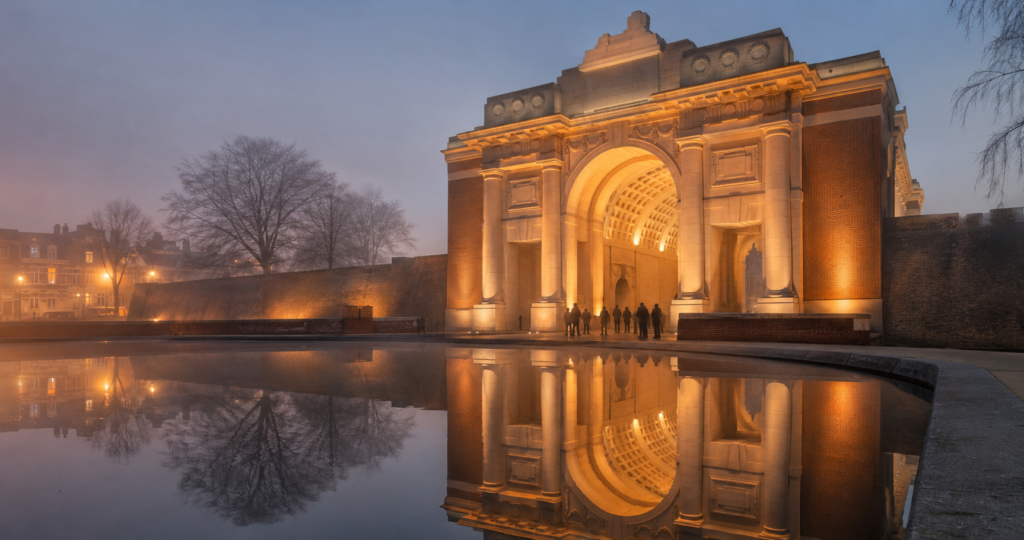
The Menin Gate, Ypres
The great memorial arch inscribed with 54,896 names of British and Commonwealth soldiers with no known grave. The Last Post ceremony has been held here every evening (except during occupation) since 1928.
Tyne Cot Cemetery, Passchendaele
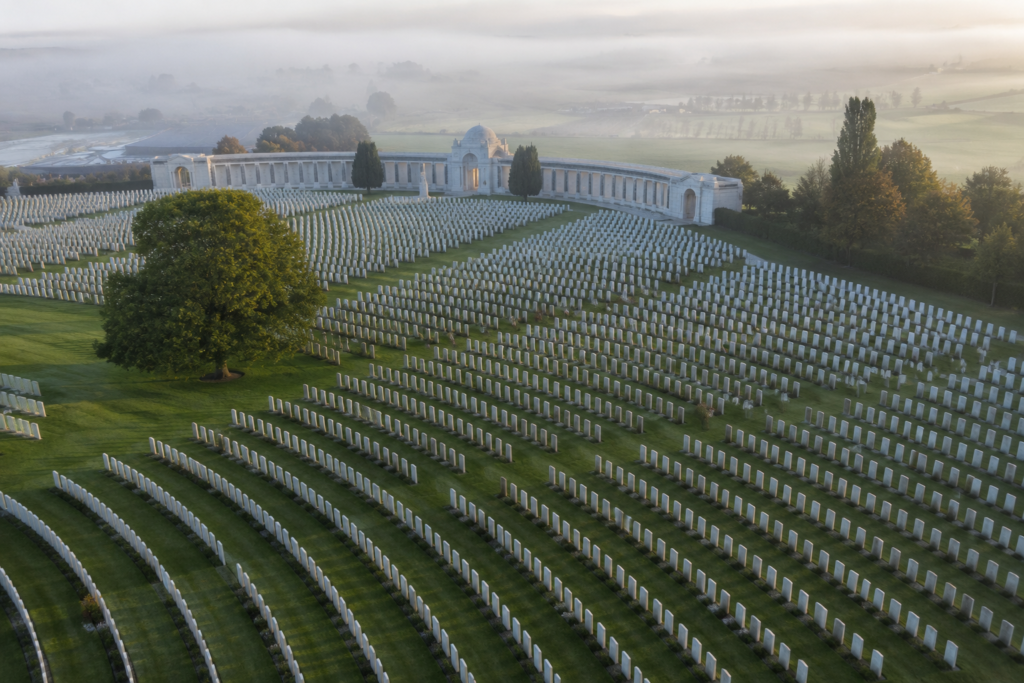
The largest Commonwealth war cemetery in the world, with nearly 12,000 graves and a further 34,957 names on the memorial panels. Quietly devastating.
Thiepval Memorial, Somme
Lutyens’s massive memorial to 72,000 missing soldiers of the Somme — the largest British war memorial in the world. The scale of it makes the casualty figures legible in a way that statistics alone cannot.
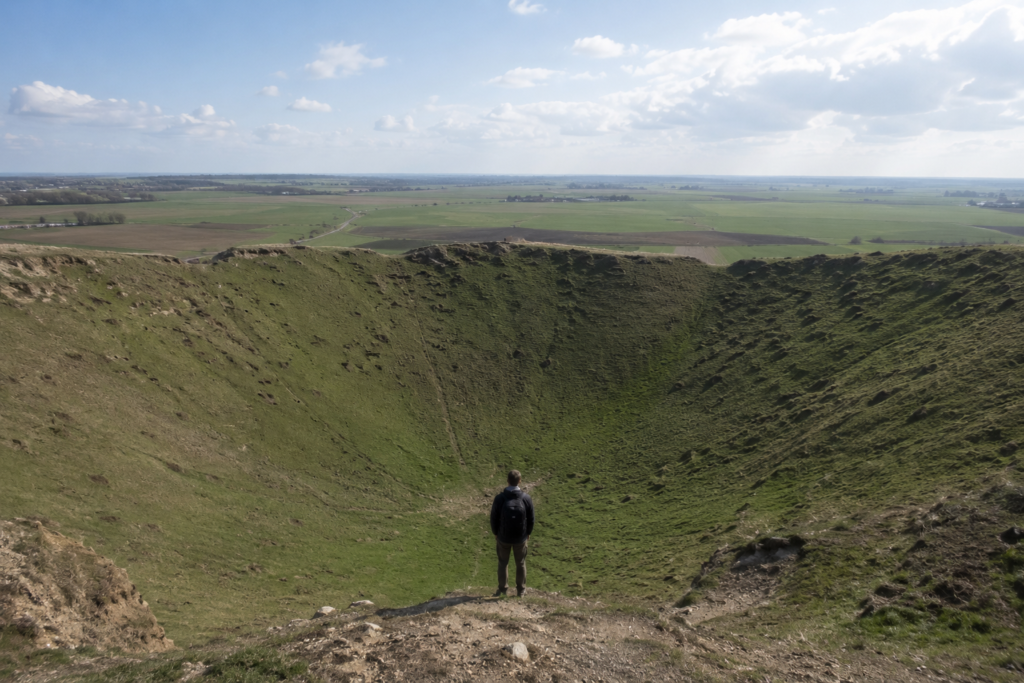
Lochnagar Crater, La Boisselle
The enormous mine crater blown by the British at 7.28am on 1 July 1916 — the first day of the Battle of the Somme. Standing at its rim, 91 metres wide and 21 metres deep, remains one of the most arresting experiences on the Western Front.
Vimy Ridge, Pas-de-Calais
The Canadian National Vimy Memorial and the preserved trench system below it. Guided tours of the tunnels are excellent. The battle here in April 1917 is considered a defining moment in Canadian national identity.
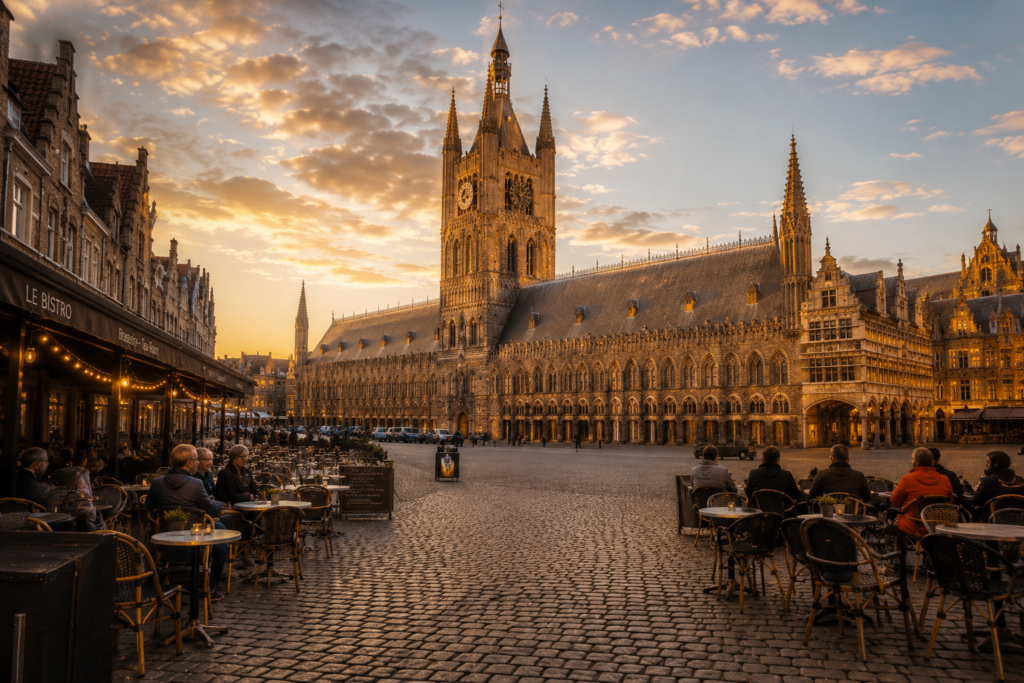
In Flanders Fields Museum, Ypres
The best museum on the Western Front, housed in the medieval Cloth Hall. Interactive, intellectually serious, and deeply moving. Allow at least two hours.
Practical Information
Getting there from the UK
The most convenient access is via Eurostar to Brussels or Lille, then train or hire car to Ypres or the Somme. Alternatively, the P&O Ferries or DFDS Calais crossing gives direct car access; Ypres is around 75 minutes from Calais, and the Somme is closer still.
When to go
The Western Front is moving at any time of year, but spring and early autumn offer the most comfortable conditions. November — particularly around Remembrance Sunday and Armistice Day (11 November) — is the most popular time for commemorative visits and can be emotionally profound, though accommodation books up well in advance. The summer months are busy but manageable.
What to wear
Comfortable walking shoes are essential — even the major sites involve walking on uneven ground. The weather in Belgium and northern France is changeable; a waterproof layer is advisable year-round. Some ceremonies (the Last Post, CWGC services) have an unwritten expectation of smart-casual dress as a mark of respect.
Accommodation in Ypres
Staying in Ypres itself is strongly recommended over outlying towns. The town is beautiful, the memorials are walkable, and the atmosphere — particularly in the evening before or after the Last Post — is unlike anywhere else on the Western Front. Hotels book up quickly around November; plan ahead.
Final Thoughts
The Western Front rewards both the first-time visitor and the returning one. There is always more to understand, more ground to cover, more names to find. Whether you book with a specialist operator or drive it yourself, the key is to go slowly — this is not a landscape to rush through.
If you’re planning a first visit, a specialist tour with Leger or Holts will give you the context and structure to make the most of the landscape. If you’ve been before, consider an independent road trip — the freedom to linger at a particular cemetery or follow a specific regiment’s route is something no group tour can fully replicate.
The Last Post sounds at the Menin Gate every evening at 8pm. If you do nothing else on the Western Front, be there for that.