

Exploring the Battles and Historic Sites of Eastern Canada
Eastern Canada, with its picturesque landscapes and vibrant cities, is also steeped in a rich tapestry of history. From the clash of European empires to the struggle for Indigenous rights, this region has witnessed some of the most pivotal battles and events in North American history. The historic sites of Eastern Canada offer a fascinating glimpse into the past.
The Siege of Québec (1759): The Battle That Shaped a Nation

One of the most significant battles in North American history took place on the Plains of Abraham in Québec City. The Siege of Québec saw British forces led by General James Wolfe clash with the French army under the command of General Louis-Joseph de Montcalm.
The battle, fought on September 13, 1759, was brief but decisive. Wolfe’s forces scaled the cliffs west of Québec City under the cover of darkness, catching the French by surprise. The British victory marked the beginning of the end for French colonial rule in North America. This paved the way for British dominance in the region.
Today, the Plains of Abraham is a sprawling urban park that offers visitors a chance to walk in the footsteps of soldiers who fought more than 260 years ago. The Musée des Plaines d’Abraham provides an immersive experience. Exhibits provide details on the battle and its impact on the course of Canadian history.
Free Download
The WWI Battlefield Visitor Checklist
Everything to see, pack, and plan before you visit the Western Front — straight to your inbox.
No spam — just battlefield travel guides. Unsubscribe any time.
Louisbourg: A Fortress on the Edge of the World
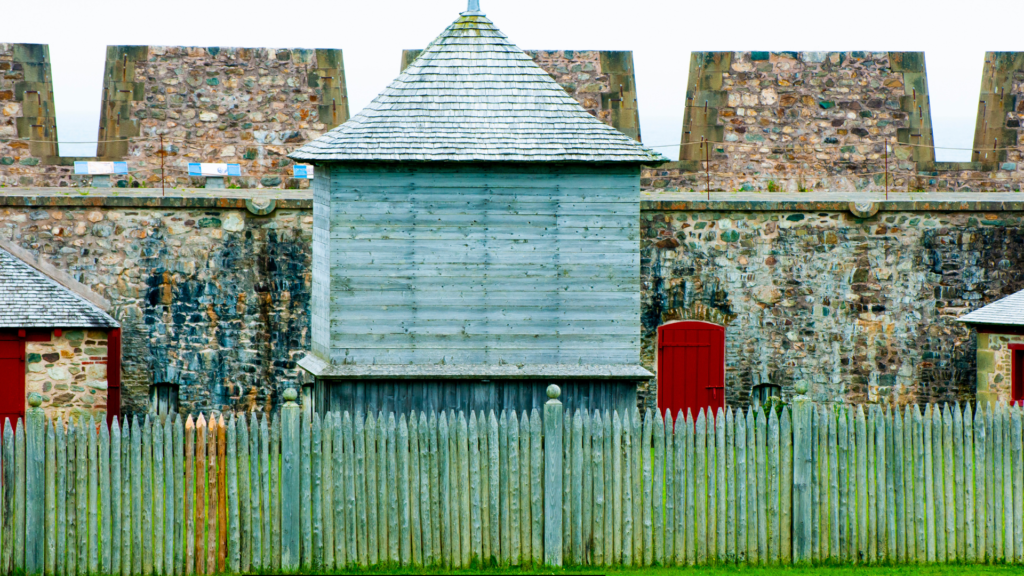
On the rugged coast of Cape Breton Island, Nova Scotia, stands the Fortress of Louisbourg. This is one of the most ambitious military projects in North America. Originally constructed by the French in the early 18th century to protect their interests in the New World, Louisbourg became a flashpoint during the conflicts between Britain and France.
The fortress was the site of two major sieges during the 18th century. Both in 1745 and 1758 and ended in British victories. The fall of Louisbourg in 1758 was a critical blow to French power in North America. This lead directly to the British conquest of Québec and the eventual ceding of Canada to Britain.
Today, Louisbourg is a National Historic Site and one of the largest reconstructed 18th-century French fortified towns in the world. Visitors can explore the meticulously restored buildings, interact with costumed interpreters, and gain a deep understanding of life in a fortified town on the edge of the Atlantic.
The Battle of Lundy’s Lane (1814): Canada’s Bloodiest Conflict

The War of 1812, often overshadowed by other conflicts, was a defining moment in Canadian history. One of its most brutal encounters took place near Niagara Falls at Lundy’s Lane. On the night of July 25, 1814, American and British-Canadian forces clashed in what would become one of the bloodiest battles ever fought on Canadian soil.
The battle was chaotic, fought in darkness and confusion, with both sides suffering heavy casualties. By the end of the night, neither side had gained a decisive advantage, but the American forces withdrew the next day, effectively ending their campaign to invade Upper Canada.
Today, the Lundy’s Lane Battlefield is a peaceful place, with a monument commemorating the soldiers who fought there. The nearby Drummond Hill Cemetery contains the graves of many who died in the battle, offering a poignant reminder of the human cost of war.
Indigenous Resistance: The Mi’kmaq and the Fight for Sovereignty

While much of Canadian history focuses on the European colonial powers, the Indigenous peoples of Eastern Canada have their own rich and complex history of resistance. The Mi’kmaq, one of the First Nations of the Atlantic region, played a crucial role in resisting European encroachment on their lands.
Throughout the 17th and 18th centuries, the Mi’kmaq engaged in numerous conflicts with British settlers. This is most notabal during Father Le Loutre’s War (1749–1755). This guerrilla conflict saw the Mi’kmaq, along with their French allies, resist British attempts to control the region. Their resistance delayed British settlement and maintained Mi’kmaq autonomy for several more decades.
Today, the history of the Mi’kmaq people is commemorated at various sites across Eastern Canada. The Mi’kmaq Cultural Centre in Nova Scotia provides valuable insights into their history, culture, and ongoing struggle for recognition and rights.
A Journey Worth Taking
Exploring the historic sites of Eastern Canada is more than just a journey through time. It provides an opportunity to connect with the stories that have shaped the land and its people. From the battlefields of Québec and Lundy’s Lane to the resilient spirit of the Mi’kmaq, these sites offer a profound understanding of the conflicts and alliances that have defined the region.
Whether you’re walking the ramparts of Louisbourg, standing on the Plains of Abraham, or reflecting at Lundy’s Lane, the echoes of the past are ever-present. These historic sites tell the story of a nation and remind us of the enduring impact of history on our lives.
So, the next time you’re in Eastern Canada, take a detour from the usual tourist spots and immerse yourself in the stories of courage, conflict, and resilience that have shaped this part of the world. It’s a journey well worth taking.
Exploring these sites will deepen your understanding of Canada’s past but will gain a richer appreciation for the diverse narratives that have contributed to its present. The battles and historic sites of Eastern Canada offer something for everyone.
You might also like:


